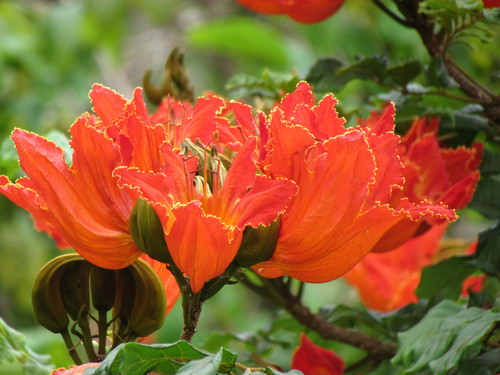


African Tulip Tree
spathodea campanulata
The African Tulip Tree (Spathodea campanulata) is a breathtakingly beautiful tropical tree famous for its large, fiery crimson-orange flowers that resemble tulips. Native to the tropical rainforests of West Africa, this fast-growing evergreen has been widely introduced across the globe as an ornamental and shade tree. While admired for its striking aesthetic appeal, it is also known for its aggressive growth and resilience, leading to its classification as a highly invasive weed in many Pacific islands, Australia, and parts of the Americas. The tree plays a vital role in its native ecosystem, providing food and shelter for various birds, bats, and insects. Its soft, hollow-prone wood and unique water-storing buds make it a fascinating subject for both ecologists and plant enthusiasts. However, its tendency to colonize disturbed areas rapidly demands careful management in non-native habitats.
Lebensraum: Typically found in tropical rainforests, forest edges, riparian zones, and disturbed agricultural lands.
This medium-to-large tree typically reaches heights of 7 to 25 meters, boasting a stout, pale grey-brown barked trunk and a dense, rounded canopy. Its leaves are pinnate, arranged in opposite pairs, with dark green, deeply veined leaflets. The most striking feature is the terminal, cup-shaped inflorescence containing clustered, bright orange-red or crimson flowers with wavy, yellow-margined edges. Before blooming, the buds are horn-shaped, bronze-green, and filled with a watery liquid.
Kategorie
PflanzenSeltenheit
Common
Gefahr
1/5 · Sehr gering
Snaps
Mach den ersten Snap!
Children in many tropical countries use the water-filled buds as natural water pistols, earning it the nickname 'fountain tree'.
Despite its beauty, the nectar and pollen of the African Tulip Tree are highly toxic to many species of stingless bees, making it an ecological hazard to native pollinators in introduced ranges.
The wood is extremely soft and light, historically used by native African communities to build drums, bellows, and lightweight canoes.
The unopened flower buds contain a pressurized watery sap that squirts out when squeezed, helping deter certain herbivores.
Possesses an incredibly fast growth rate and wind-dispersed winged seeds, allowing it to rapidly outcompete native vegetation in disturbed soils.
Capable of vigorous suckering and regrowth from root fragments or cut stumps, making it exceptionally resilient to physical damage.
As a photoautotrophic plant, it produces its own energy by converting sunlight, carbon dioxide, and water into sugars via photosynthesis.
Cinnyris chloropygius
Pollinates the flowers while feeding on the abundant nectar.
Apis mellifera
Visits the open flowers to collect nectar and pollen, aiding in pollination.
Tetragonula iridipennis
The nectar of this tree is toxic to stingless bees, often killing them when they forage on it.
Für dieses Objekt sind noch keine Merkmal-Badges vergeben.
Noch keine Alternativnamen vorhanden.
Sammlungen für dieses Objekt erscheinen hier, wenn weitere Themen hinzugefügt werden.
Gefahr
1/5 · Sehr gering
Noch keine besonderen Sicherheitshinweise.
Der einfachste Weg, African Tulip Tree zu bestimmen, ist die Verwendung der Naturführer-App Snappit.
700-2500 cm
40-100 Jahre
As a photoautotrophic plant, it produces its own energy by converting sunlight, carbon dioxide, and water into sugars via photosynthesis.
Typically found in tropical rainforests, forest edges, riparian zones, and disturbed agricultural lands.
Zoome hinein, um Cluster aufzulösen und zu sehen, wo dieses Objekt fotografiert wurde.
Neueste Snaps erscheinen hier, wenn neue Beobachtungen hinzukommen.

Hawaii, US
Hier kann man sehen Fackel-Ingwer, Red-Crested Cardinal und African Tulip Tree.
Führer anzeigen →
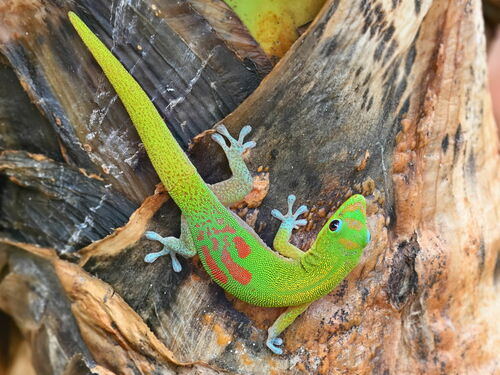
Hawaii, US
Hier kann man sehen Goldstaub-Taggecko, Meeresschildkröte und Saffron Finch.
Führer anzeigen →