

Air Plant
kalanchoe pinnata
The Air Plant, scientifically known as Kalanchoe pinnata, is an extraordinary succulent native to Madagascar that has captured the curiosity of botanists and gardeners worldwide. This resilient perennial is famous for its astonishing method of vegetative reproduction, where miniature plantlets sprout directly from the margins of its scalloped leaves. These tiny clones eventually fall to the ground and root, allowing the plant to rapidly colonize new areas. Beyond its reproductive feats, this species holds significant cultural and medicinal value in various traditional systems, earning it names like the 'Miracle Leaf' and 'Life Plant' for its hardiness and versatility.
Lebensraum: Thrives in tropical and subtropical regions, commonly found in dry, rocky soils, coastal cliffs, waste areas, and disturbed roadsides.
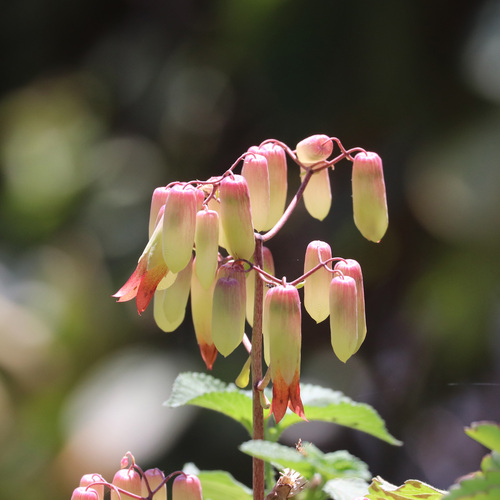
This succulent features upright, fleshy stems that can reach heights of up to 120 centimeters. Its thick, dark green leaves are arranged in opposite pairs and have distinctive scalloped edges often highlighted with a reddish-purple tint. Lower leaves are typically simple, while upper leaves may be pinnately divided into three to five leaflets. When the plant matures, it produces terminal clusters of nodding, hollow, bell-shaped flowers that are light green with reddish-pink tips, hanging gracefully from tall stalks.
Kategorie
PflanzenSeltenheit
Common
Gefahr
1/5 · Sehr gering
Snaps
Mach den ersten Snap!
In many traditional medicine systems, its leaves are gently warmed and placed on wounds, bruises, and insect bites to relieve pain and reduce swelling.
It is colloquially known as the 'Goethe Plant', 'Miracle Leaf', or 'Resurrection Plant' due to its ability to sprout new plants from a single detached leaf.
The famous German poet Johann Wolfgang von Goethe was so captivated by this plant's vegetative reproduction that he grew it himself and gave the tiny leaf clones to friends as tokens of friendship.
Produces adventitious buds along its leaf margins that can develop into miniature plants, even after the parent leaf is severed.
Utilizes Crassulacean Acid Metabolism to absorb carbon dioxide at night, conserving water during the hot, dry day.
Stores substantial reserves of water in its thick, fleshy leaves and stems, enabling survival in arid conditions.
As a photoautotrophic plant, it synthesizes its own organic compounds using solar energy, carbon dioxide, water, and soil minerals.
Aphis gossypii
Feeds on the sap of the plant, potentially causing stunting or transmitting plant diseases.
Apis mellifera
Visits the drooping bell-shaped flowers to feed on nectar and facilitates pollination.
Für dieses Objekt sind noch keine Merkmal-Badges vergeben.
Noch keine Alternativnamen vorhanden.
Sammlungen für dieses Objekt erscheinen hier, wenn weitere Themen hinzugefügt werden.
Gefahr
1/5 · Sehr gering
Noch keine besonderen Sicherheitshinweise.
Der einfachste Weg, Air Plant zu bestimmen, ist die Verwendung der Naturführer-App Snappit.
30-120 cm
2-5 Jahre
As a photoautotrophic plant, it synthesizes its own organic compounds using solar energy, carbon dioxide, water, and soil minerals.
Thrives in tropical and subtropical regions, commonly found in dry, rocky soils, coastal cliffs, waste areas, and disturbed roadsides.
Zoome hinein, um Cluster aufzulösen und zu sehen, wo dieses Objekt fotografiert wurde.
Neueste Snaps erscheinen hier, wenn neue Beobachtungen hinzukommen.