


alder buckthorn
Frangula alnus
Alder buckthorn is a small shrub that grows in wet places like riverbanks and marshes. It has shiny green leaves and produces small black berries that birds love to eat!
Lebensraum: Wetlands
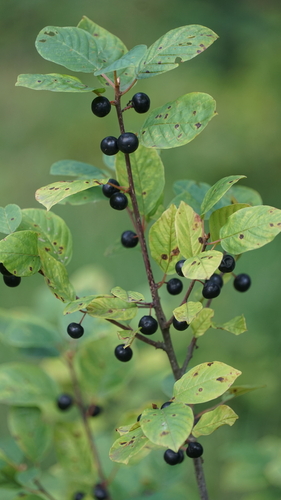
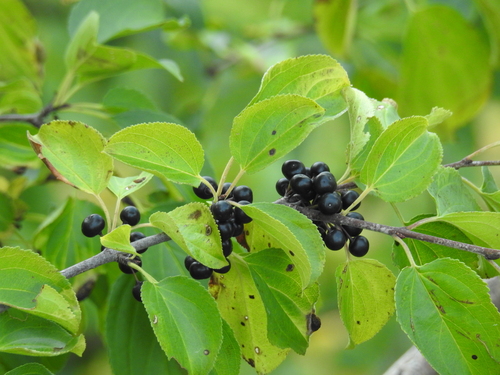
The alder buckthorn is a deciduous shrub or small tree, featuring smooth, dark bark often speckled with light lenticels. Its oval, untoothed leaves are glossy green, turning a bright yellow in autumn. Tiny greenish-white flowers give way to berries that ripen from red to shiny black.
Kategorie
PflanzenSeltenheit
Common
Gefahr
2/5 · Gering
Snaps
Mach den ersten Snap!
Wow! Its bark was once dried and used as a key ingredient for making charcoal for gunpowder!
Wow! Some gardeners use it to attract beautiful brimstone butterflies to their yards!
Wow! The berries of this plant dramatically change color from green, to red, then shiny black!
Wow! The wood is incredibly tough and dense, prized for making durable charcoal!
Alder buckthorn has leaves that provide essential food for the caterpillars of the Brimstone butterfly, helping them grow.
Alder buckthorn bark and berries contain compounds that act as a laxative, deterring animals from eating too many.
Alder buckthorn can flower and fruit continuously over several months, offering a steady food source for pollinators and birds.
Gonepteryx rhamni
Caterpillars feed on its leaves.
Turdus philomelos
Feeds on its ripe black berries.
Apis mellifera
Visits its small, nectar-rich flowers.
Laubabwerfende Pflanzen werfen regelmäßig all ihre Blätter ab, typischerweise im Herbst oder in Trockenzeiten.
Beschreibt Organismen, die in der Lage sind, atmosphärischen Stickstoff in für Pflanzen nutzbare Verbindungen umzuwandeln.
Ein Strauch ist eine verholzende Pflanze, die kleiner als ein Baum ist und typischerweise mehrere Stämme hat, die sich ab oder nahe dem Boden verzweigen.
Dieses Merkmal zur menschlichen Nutzung weist auf Arten hin, aus denen natürliche Farbstoffe gewonnen und zum Färben von Textilien, Lebensmitteln oder anderen Materialien verwendet werden können.

Fruchttragende Pflanzen produzieren Früchte, also die reifen Fruchtknoten von Blütenpflanzen, die Samen enthalten.

Beschreibt Pflanzen, die für eine Vielzahl von bestäubenden Organismen besonders attraktiv und nützlich sind.

Essbare Pflanzen sind diejenigen Pflanzenteile, die für den menschlichen Verzehr als unbedenklich gelten.

Dieses Lebensraummerkmal kennzeichnet Arten, die in Feuchtgebieten vorkommen. Dies sind Landflächen, die dauerhaft oder saisonal mit Wasser gesättigt sind, darunter Marschland, Sümpfe und Moore.
Noch keine Alternativnamen vorhanden.
Gefahr
2/5 · Gering
Do not eat the berries without asking an adult, as they can upset your tummy.
300-700 cm
200-500 cm
0.5-1 cm
Late spring to early summer
Nein
Mäßig
Mehrjährig
Insekten
Zoome hinein, um Cluster aufzulösen und zu sehen, wo dieses Objekt fotografiert wurde.
Neueste Snaps erscheinen hier, wenn neue Beobachtungen hinzukommen.