

Alpines
erebia
The 'Alpines' of the genus Erebia are a fascinating group of butterflies perfectly adapted to the harsh, high-altitude environments of mountains across the Northern Hemisphere. These resilient insects thrive in conditions where few other butterflies can survive, making them iconic inhabitants of alpine and subalpine zones. Their life cycles are intricately tied to their cold, short-season habitats, often taking two years to complete, with larvae overwintering. Erebia butterflies are particularly interesting for their diverse forms and subtle variations, which often reflect their isolation in specific mountain ranges, making them a captivating subject for both amateur naturalists and scientific researchers studying adaptation and speciation in extreme environments.
Lebensraum: Found in high-altitude alpine meadows, rocky slopes, subalpine grasslands, and tundra environments, typically above the tree line or in clearings within coniferous forests.
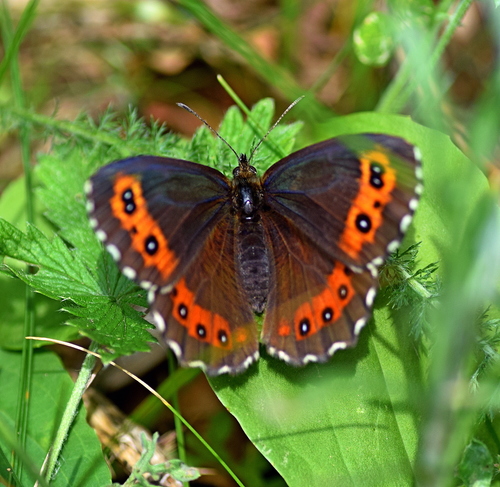
Erebia butterflies are typically medium-sized, characterized by their predominantly dark brown or black wings, which often have a velvety appearance. Many species feature prominent orange or reddish bands or patches, usually near the outer margins of the wings, which contain one or more distinctive black 'eyespots' (ocelli), often with a white pupil. These ocelli can vary greatly in number and size between species. Their bodies are stout and covered in fine hairs, providing insulation against cold. Wingspans generally range from 3 to 6 centimeters, with females often being slightly larger and having paler markings than males.
Kategorie
InsektenSeltenheit
Common
Gefahr
1/5 · Sehr gering
Snaps
Mach den ersten Snap!
Many Erebia species exhibit melanism (dark coloration), which is an adaptation to absorb more heat from the sun in their cold environments.
Some alpine Erebia species have a biennial life cycle, meaning they take two years to develop from egg to adult, with the larval stage overwintering twice.
The placement and number of eyespots (ocelli) on their wings are key characteristics used by entomologists to distinguish between the many similar-looking Erebia species.
Their flight is often described as 'bouncing' or 'skipping' close to the ground, which helps them navigate the windy conditions of high altitudes.
Their dark wing coloration allows Erebia butterflies to efficiently absorb solar radiation, warming their bodies quickly even in cool mountain air, enabling flight and activity at lower temperatures than most other butterfly species.
Erebia species possess specialized physiological adaptations, including a lower metabolic rate and enhanced cold tolerance, enabling them to survive extreme temperature fluctuations and short growing seasons typical of alpine regions.
The often drab, dark coloration and sometimes erratic flight patterns of Erebia butterflies provide effective camouflage against the rocky, grassy, and shadowed backgrounds of their alpine habitats, helping them evade predators.
Adult Erebia butterflies primarily feed on nectar from alpine flowers, gaining energy for flight and reproduction. Their larvae are herbivorous, feeding exclusively on various grasses and sedges found in their habitat.
Altersunterschiede: Larvae consume leaves of grasses and sedges, while adults feed on nectar.
Festuca spp.
The primary host plants for Erebia larvae, providing food for their development.
Saxifraga oppositifolia
A common alpine flower providing nectar for adult Erebia butterflies.
Oenanthe oenanthe
Generalist predators that will prey on adult butterflies, especially when they are less active in cooler temperatures.
Ichneumonidae spp.
Larvae and pupae can be parasitized by various wasp species.
Für dieses Objekt sind noch keine Merkmal-Badges vergeben.
Noch keine Alternativnamen vorhanden.
Sammlungen für dieses Objekt erscheinen hier, wenn weitere Themen hinzugefügt werden.
Gefahr
1/5 · Sehr gering
Noch keine besonderen Sicherheitshinweise.
Der einfachste Weg, Alpines zu bestimmen, ist die Verwendung der Naturführer-App Snappit.
1-4 cm
3-6 cm
0.0005-0.002 kg
1-2 Jahre
Adult Erebia butterflies primarily feed on nectar from alpine flowers, gaining energy for flight and reproduction. Their larvae are herbivorous, feeding exclusively on various grasses and sedges found in their habitat.
Found in high-altitude alpine meadows, rocky slopes, subalpine grasslands, and tundra environments, typically above the tree line or in clearings within coniferous forests.
Foraging
Zoome hinein, um Cluster aufzulösen und zu sehen, wo dieses Objekt fotografiert wurde.
Neueste Snaps erscheinen hier, wenn neue Beobachtungen hinzukommen.




_female_Belgium.jpg&width=800)








.jpg&width=800)



