

American Tree Sparrow
spizelloides arborea
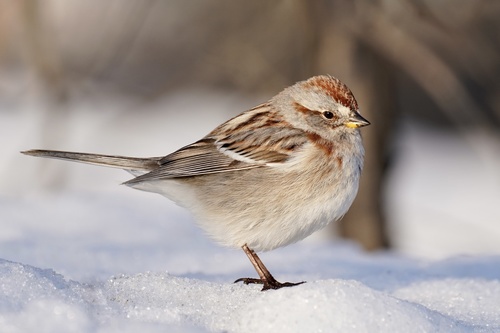
The American Tree Sparrow is a cheerful and hardy visitor to winter backyards across North America. Despite its name, this small sparrow actually spends most of its time foraging on the ground and nests on tundra shrubs rather than high in the canopy. Originally named by European settlers who noted its resemblance to the Eurasian Tree Sparrow, this bird is easily recognized by its bright rusty cap and a single dark spot in the center of its breast. In the summer, they migrate to the far north of Canada and Alaska, where they fill the open tundra with sweet, musical songs. During the winter, they travel south in cooperative flocks, bringing life to snowy fields and garden feeders alike.
Lebensraum: Found in open shrubby tundra during the breeding season, and weedy fields, forest edges, and suburban backyards during the winter.
A medium-sized sparrow measuring about 13 to 16 centimeters, the American Tree Sparrow is identified by its bright rufous-brown cap and a thin rufous line extending behind its eye. Its gray face contrasts with a clean, unstreaked gray-white breast, which is uniquely marked with a distinct dark spot right in the center. Its wings feature two distinct white bars on a background of warm brown and black streaks. Additionally, it has a prominent two-toned bill with a dark gray upper mandible and a bright yellow lower mandible.
Kategorie
VögelSeltenheit
Common
Gefahr
1/5 · Sehr gering
Snaps
Mach den ersten Snap!
An individual American Tree Sparrow must consume about thirty percent of its body weight in food and water every day to survive cold winter temperatures.
Despite its name, the American Tree Sparrow actually nests on or near the ground, not in trees, as early European settlers mistook them for the European Tree Sparrow.
They form foraging flocks during the winter, often mixing with other species like Dark-eyed Juncos and Harris's Sparrows.
They have a distinctive bicolored bill: the upper half is dark grey or black, while the lower half is a bright yellow.
They can survive temperatures as low as minus twenty degrees Fahrenheit by continuously shivering to raise their metabolic rate.
They use a specialized double-scratch hop technique with both feet to clear snow and leaf litter, exposing hidden seeds.
They utilize a constant stream of high-pitched, soft notes while feeding to keep flock members coordinated and safe in dense brush.
During the winter, they rely almost exclusively on the seeds of grasses, weeds, and birch trees. In summer, they shift to a high-protein diet of insects and spiders to support breeding.
Altersunterschiede: Chicks are fed entirely on insects and other small invertebrates, whereas adults gradually transition to a seed-based diet as winter approaches.
Accipiter striatus
Preys on wintering sparrows at garden feeders and forest edges.
Junco hyemalis
Competes for fallen seeds and space at winter foraging sites and backyard feeders.
Falco columbarius
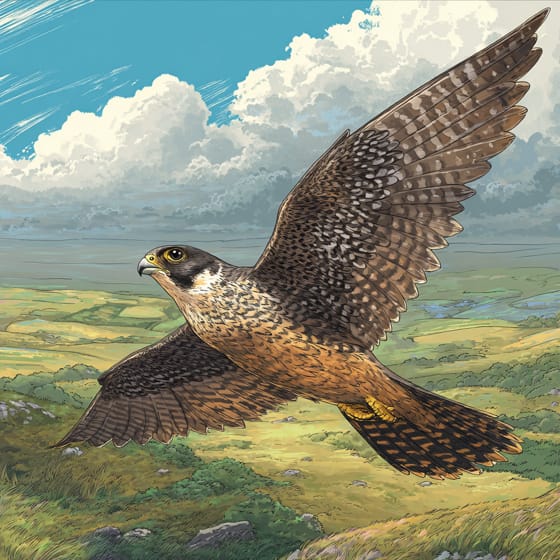
Preys on adult sparrows during their migration and in breeding territories.
Für dieses Objekt sind noch keine Merkmal-Badges vergeben.
Noch keine Alternativnamen vorhanden.
Sammlungen für dieses Objekt erscheinen hier, wenn weitere Themen hinzugefügt werden.
Gefahr
1/5 · Sehr gering
Noch keine besonderen Sicherheitshinweise.
Der einfachste Weg, American Tree Sparrow zu bestimmen, ist die Verwendung der Naturführer-App Snappit.
13-16 cm
20-24 cm
0.013-0.028 kg
2-8 Jahre
35 km/h
During the winter, they rely almost exclusively on the seeds of grasses, weeds, and birch trees. In summer, they shift to a high-protein diet of insects and spiders to support breeding.
Found in open shrubby tundra during the breeding season, and weedy fields, forest edges, and suburban backyards during the winter.
Zoome hinein, um Cluster aufzulösen und zu sehen, wo dieses Objekt fotografiert wurde.
Neueste Snaps erscheinen hier, wenn neue Beobachtungen hinzukommen.