Antelope Bitterbrush
Purshia tridentata
Antelope Bitterbrush is a bush that grows in dry places. It has bright yellow flowers and is very important for animals like deer and rabbits who eat its leaves.
Lebensraum: Desert
The Antelope Bitterbrush is a sturdy, multi-branched shrub with distinctive wedge-shaped, often three-lobed leaves. Its bright yellow, five-petaled flowers bloom in clusters, creating a vibrant contrast against its greyish-green foliage in spring.
Kategorie
PflanzenSeltenheit
Common
Gefahr
1/5 · Sehr gering
Snaps
Mach den ersten Snap!
If you taste a bitterbrush leaf, you'll know why it got its name – it's quite bitter!
Its seeds are often collected and hidden by animals, which helps new bitterbrush plants grow!
Native Americans used the very strong wood of bitterbrush to make tools and for building fires!
The tough, slightly fuzzy leaves of this plant help it stay hydrated under the hot desert sun!
Antelope Bitterbrush has an incredibly deep taproot that helps it find water far underground to survive dry spells.
Antelope Bitterbrush can sprout new growth from its base even after a fire, helping it quickly recover.
Antelope Bitterbrush has extensive roots that firmly hold soil in place, preventing erosion on slopes.
Odocoileus hemionus
A primary food source, especially in winter.
Peromyscus maniculatus
Eats seeds and helps disperse them to new areas.
Bombus occidentalis
Visits its yellow flowers to collect nectar and pollen.

Artemisia tridentata
Often grows alongside, creating a diverse plant community.
Blütenpflanzen sind alle Pflanzen, die als Teil ihres Fortpflanzungszyklus Blüten bilden.
Laubabwerfende Pflanzen werfen regelmäßig all ihre Blätter ab, typischerweise im Herbst oder in Trockenzeiten.
Ein Strauch ist eine verholzende Pflanze, die kleiner als ein Baum ist und typischerweise mehrere Stämme hat, die sich ab oder nahe dem Boden verzweigen.
Duftende Blüten verströmen ein angenehmes Aroma, oft um Bestäuber anzulocken oder zur Abwehr.

Trockenheitstolerante Pflanzen können unter Bedingungen mit begrenzter Wasserverfügbarkeit überleben und gedeihen.

Beschreibt Pflanzen, die für eine Vielzahl von bestäubenden Organismen besonders attraktiv und nützlich sind.

Essbare Pflanzen sind diejenigen Pflanzenteile, die für den menschlichen Verzehr als unbedenklich gelten.

Wüstenlebensräume sind trockene Regionen, die durch extrem geringen Niederschlag und oft extreme Temperaturen gekennzeichnet sind und eine spezialisierte Flora und Fauna beherbergen.

Dieses Merkmal kennzeichnet Organismen mit einer außergewöhnlich langen Lebensspanne im Vergleich zu anderen ihrer Art.

Beschreibt eine Art, deren Anwesenheit und Rolle einen unverhältnismäßig großen Einfluss auf ihre Umwelt haben.
Noch keine Alternativnamen vorhanden.
Gefahr
1/5 · Sehr gering
Don't eat any plants unless an adult says it's safe!
50-200 cm
50-150 cm
1-2 cm
Spring to early summer
Nein
Keine
Mehrjährig
Insekten
Zoome hinein, um Cluster aufzulösen und zu sehen, wo dieses Objekt fotografiert wurde.
Neueste Snaps erscheinen hier, wenn neue Beobachtungen hinzukommen.
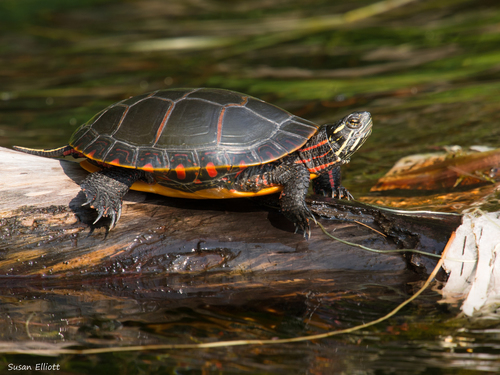
British Columbia, CA
Hier kann man sehen Zierschildkröte und Antelope Bitterbrush.
Führer anzeigen →
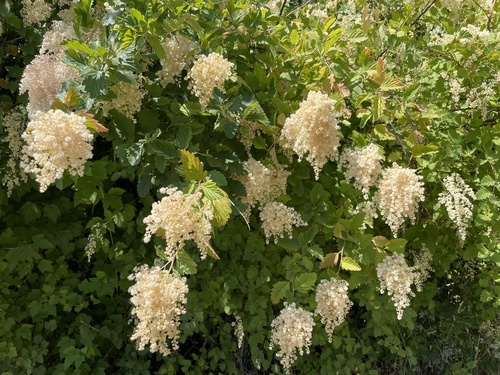
British Columbia, CA
Hier kann man sehen Ocean Spray, Rocky Mountain Woodsia und Prairie Smoke.
Führer anzeigen →
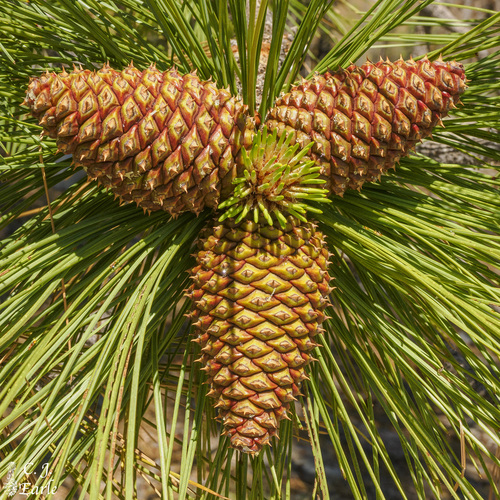
California, US
Hier kann man sehen Jeffrey Pine und Pandora Pinemoth.
Führer anzeigen →