






Arctic Butterbur
Petasites frigidus
Arctic Butterbur is a special plant that grows in cold places. It has big, round leaves and pretty flowers that can be purple or white. This plant loves to be near water and can be found in wet areas.
Lebensraum: Wetlands
The Arctic Butterbur has distinct, large kidney-shaped leaves that emerge after its early spring blooms. Its compact flower heads display numerous small, white to purplish-pink florets, carried on a sturdy, often fuzzy stem, making it stand out in cold, damp environments.
Kategorie
PflanzenSeltenheit
Common
Gefahr
1/5 · Sehr gering
Snaps
Mach den ersten Snap!
Arctic Butterbur is often one of the first plants to bloom after winter!
It spreads using underground stems, creating vast green carpets on the tundra!
Its huge leaves were traditionally used to wrap and keep butter cool!
This plant can grow in places so wet and cold, few others survive!
Arctic Butterbur can emerge and bloom even when snow covers the ground, allowing it to capture early spring sunlight.
Arctic Butterbur has large leaves that quickly cover the ground, helping to retain soil moisture and regulate temperature.
Arctic Butterbur blooms very early in spring, providing vital first food for emerging pollinators when other plants are dormant.
Rangifer tarandus
Early leaves provide food for migrating herds.
Bombus polaris
Provides crucial nectar and pollen when scarce.
Alces alces
Young shoots and leaves are a food source.
Blütenpflanzen sind alle Pflanzen, die als Teil ihres Fortpflanzungszyklus Blüten bilden.
Frühlingsblüher bilden ihre Blüten im Frühjahr und kündigen oft das Ende des Winters und den Beginn neuen Wachstums an.
Laubbäume sind Bedecktsamer, die sich durch flache, breite Blätter auszeichnen, welche in gemäßigten Klimazonen typischerweise jährlich abgeworfen werden.
Heilpflanzen besitzen chemische Verbindungen, die für therapeutische Zwecke zur Behandlung von Krankheiten oder zur Erhaltung der Gesundheit eingesetzt werden können.

Winterharte Pflanzen können niedrigen Temperaturen und Frost ohne nennenswerte Schäden standhalten.

Beschreibt Pflanzen, die für eine Vielzahl von bestäubenden Organismen besonders attraktiv und nützlich sind.

Essbare Pflanzen sind diejenigen Pflanzenteile, die für den menschlichen Verzehr als unbedenklich gelten.

Dieses Lebensraummerkmal kennzeichnet Arten, die in Feuchtgebieten vorkommen. Dies sind Landflächen, die dauerhaft oder saisonal mit Wasser gesättigt sind, darunter Marschland, Sümpfe und Moore.
Noch keine Alternativnamen vorhanden.
Gefahr
1/5 · Sehr gering
Do not touch or eat any wild plants without asking an adult first.
5-30 cm
10-50 cm
1-3 cm
Early Spring (March-May)
Ja
Keine
Mehrjährig
Insekten
Zoome hinein, um Cluster aufzulösen und zu sehen, wo dieses Objekt fotografiert wurde.
Neueste Snaps erscheinen hier, wenn neue Beobachtungen hinzukommen.
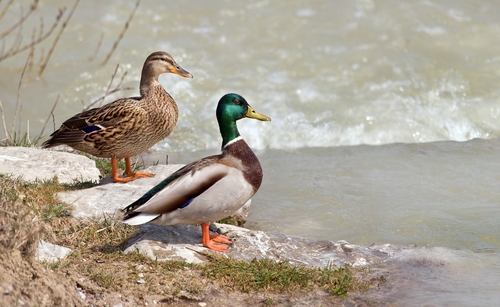
Washington, US
Hier kann man sehen Ente, American Tuliptree und Kanadareiher.
Führer anzeigen →

British Columbia, CA
Hier kann man sehen Bananenschnecke, Arctic Butterbur und Coastal Brookfoam.
Führer anzeigen →
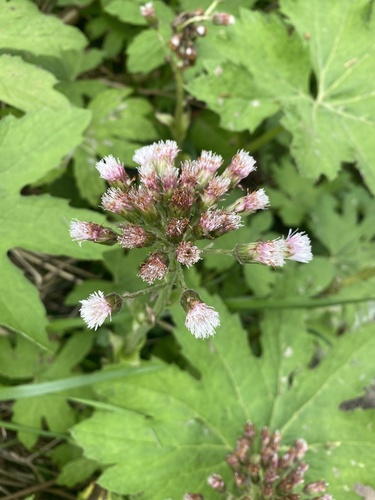
Washington, US
Hier kann man sehen Arctic Butterbur, Red Valerian und American Brooklime.
Führer anzeigen →













.jpg&width=800)



_(7119963547).jpg&width=800)

