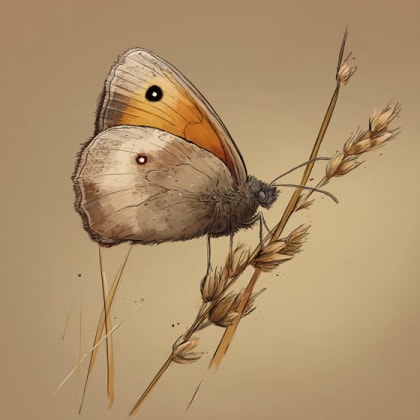
Arctic Fritillary
Boloria chariclea
The Arctic Fritillary is a beautiful butterfly with bright orange and black patterns. It flutters around in cold, northern areas, bringing color to the chilly landscape.
Lebensraum: Tundra and mountain regions
The Arctic Fritillary is a small to medium-sized butterfly with vibrant orange wings patterned boldly with black spots and lines. Its undersides are a duller, mottled orange and brown, often with distinctive silvery or cream-colored spots, which helps it blend into its rocky, lichen-covered Arctic habitat. It stands out from other fritillaries by its specific tundra adaptations and markings.
Kategorie
InsektenSeltenheit
Common
Gefahr
1/5 · Sehr gering
Snaps
Mach den ersten Snap!
Even on cloudy days, these tough butterflies can find enough energy to flutter about!
Its amazing wing patterns help it camouflage perfectly on tundra rocks and lichens!
Sometimes, they rest on the ground sideways to catch extra warmth from the sun!
Wow, these butterflies live further north than almost any other butterfly on Earth!
Arctic Fritillary can absorb heat from the sun because its dark wing patterns help it warm up quickly in cold Arctic air.
Arctic Fritillary larvae have special chemicals in their bodies that act like antifreeze, helping them survive freezing winter temperatures.
Arctic Fritillary caterpillars can take two or more years to fully grow, allowing them to complete their life cycle in short, cold summers.
Adults sip sweet nectar; caterpillars munch on Arctic plant leaves.
Altersunterschiede: Larvae feed on leaves of various low-growing Arctic plants, while adults primarily feed on nectar.
Salix arctica
Larvae feed on its leaves for growth and energy.

Vaccinium vitis-idaea
Adults visit flowers for nectar, helping spread pollen.

Plectrophenax nivalis
Adult butterflies can be a food source for these tundra birds.
Beschreibt Pflanzen, die für eine Vielzahl von bestäubenden Organismen besonders attraktiv und nützlich sind.
Farbenfroh beschreibt Organismen oder Objekte, die eine große Vielfalt an leuchtenden und deutlich erkennbaren Farben aufweisen.
Dieses Merkmal kennzeichnet Lebewesen, deren Ernährung vollständig oder hauptsächlich aus pflanzlichem Material besteht.
Dieses Lebensraummerkmal kennzeichnet Arten, die in Bergregionen vorkommen, welche sich durch große Höhen, steile Hänge und unterschiedliche Klimazonen auszeichnen.

Dieses Lebensraummerkmal bezieht sich auf Arten, die in der Tundra leben, also in baumlosen Biomen, die durch Permafrost, kalte Temperaturen und niedrig wachsende Vegetation gekennzeichnet sind.

Tagaktive Tiere sind hauptsächlich bei Tageslicht aktiv und ruhen oder schlafen in der Regel nachts.

Wandertiere unternehmen saisonale Wanderungen von einer Region in eine andere, meist als Reaktion auf Klimaänderungen oder Nahrungsverfügbarkeit.

Beschreibt Organismen, die Pollen übertragen und so die Befruchtung und Fortpflanzung von Pflanzen ermöglichen.
Noch keine Alternativnamen vorhanden.
Gefahr
1/5 · Sehr gering
Always watch butterflies from a distance so you don't scare them away.
30-45 mm
15-20 mm
10-30 Tage
10 km/h
Adults sip sweet nectar; caterpillars munch on Arctic plant leaves.
Tundra and mountain regions
Foraging
6
Zoome hinein, um Cluster aufzulösen und zu sehen, wo dieses Objekt fotografiert wurde.
Neueste Snaps erscheinen hier, wenn neue Beobachtungen hinzukommen.

New Hampshire, US
Hier kann man sehen Diapensia, Eastern Mountain Avens und Bog Bilberry.
Führer anzeigen →

British Columbia, CA
Hier kann man sehen Subalpine Larch, Arrowleaf Senecio und Moss Campion.
Führer anzeigen →