Arizona Mantis
Stagmomantis limbata
The Arizona Mantis is a cool insect that can be green or brown! It loves to hide among plants and is known for its big eyes and long legs, which help it catch food.
Lebensraum: Desert
The Arizona Mantis is slender and typically comes in shades of green or brown, helping it blend perfectly with desert foliage. It has a distinctive brown "collar" on its long neck-like segment, and large, widely spaced compound eyes on its triangular head.
Kategorie
InsektenSeltenheit
Common
Gefahr
2/5 · Gering
Snaps
Mach den ersten Snap!
A mantis lays eggs in a hardened, protective case called an ootheca!
Male mantises can fly well, but females often just glide short distances!
Mantises have just one ear, located on their belly between their front legs!
Their super-fast reflexes let them snatch flying insects right out of the air!
Arizona Mantis can rapidly extend its spiky forelegs to snatch prey because of powerful muscles that help them ambush insects.
Arizona Mantis has a green or brown body that helps them blend perfectly with desert plants, making them nearly invisible.
Arizona Mantis can turn its triangular head almost 180 degrees to spot prey or danger without moving its body.
Arizona Mantis sways gently back and forth, mimicking a leaf in the wind, which helps them hide and surprise prey.
This skilled hunter loves to munch on many different kinds of small insects.
Gryllus assimilis
Common desert prey for hungry mantises.
Musca domestica
A frequent meal for mantises in many habitats.
Geococcyx californianus
A swift desert bird that preys on insects.

Amblycorypha oblongifolia
A good source of protein for mantises.
Einzelgänger leben den größten Teil ihres Lebens allein und interagieren mit Artgenossen nur zur Paarung oder zur Aufzucht der Jungen.
Farbenfroh beschreibt Organismen oder Objekte, die eine große Vielfalt an leuchtenden und deutlich erkennbaren Farben aufweisen.
Getarnt beschreibt Organismen, die über eine Färbung oder Musterung verfügen, durch die sie mit ihrer Umgebung verschmelzen.
Dieses Merkmal kennzeichnet Organismen, deren Nahrung hauptsächlich aus Insekten und anderen kleinen Wirbellosen besteht.

Wüstenlebensräume sind trockene Regionen, die durch extrem geringen Niederschlag und oft extreme Temperaturen gekennzeichnet sind und eine spezialisierte Flora und Fauna beherbergen.

Ein Lauerjäger jagt, indem er geduldig wartet und sich versteckt, um dann einen plötzlichen Angriff zu starten, wenn arglose Beute in Reichweite kommt.

Dieses Merkmal kennzeichnet Organismen, deren Ernährung vollständig oder hauptsächlich aus tierischem Gewebe besteht.

Tagaktive Tiere sind hauptsächlich bei Tageslicht aktiv und ruhen oder schlafen in der Regel nachts.
Noch keine Alternativnamen vorhanden.
Gefahr
2/5 · Gering
Look but don't touch! Some insects can bite or sting.
60-120 mm
40-60 mm
120-270 Tage
5 km/h
This skilled hunter loves to munch on many different kinds of small insects.
Desert
Ambush
6
Zoome hinein, um Cluster aufzulösen und zu sehen, wo dieses Objekt fotografiert wurde.
Neueste Snaps erscheinen hier, wenn neue Beobachtungen hinzukommen.

California, US
Hier kann man sehen Eastern Fox Squirrel, Kolkrabe und Carolinataube.
Führer anzeigen →
California, US
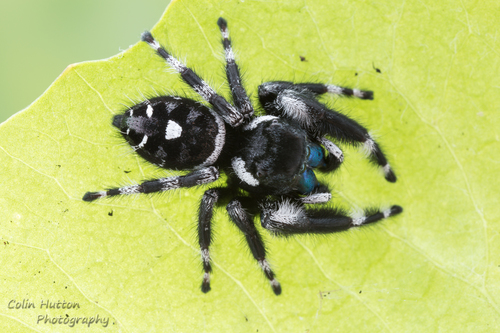
Hier kann man sehen Bold Jumping Spider, Marbled Cellar Spider und Black Phoebe.
Führer anzeigen →
California, US
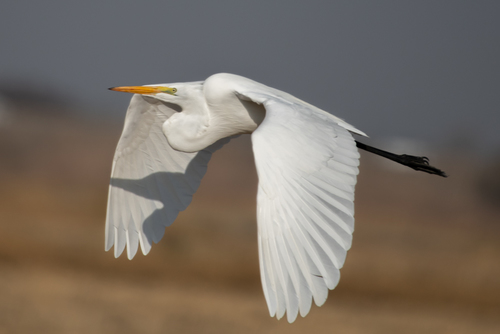
Hier kann man sehen Great Egret, Ente und Kanadareiher.
Führer anzeigen →
California, US
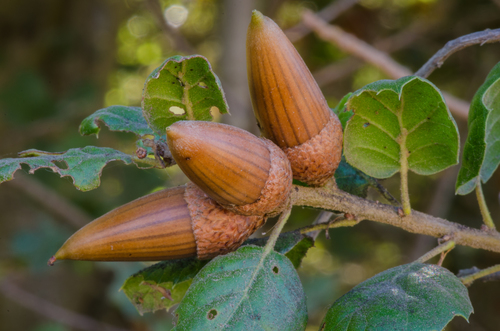
Hier kann man sehen Coast Live Oak, Lesser Goldfinch und California Scrub-Jay.
Führer anzeigen →

California, US
Hier kann man sehen Gänseblümchen und Bird's-Eye Speedwell.
Führer anzeigen →