

Bacterial Crown Gall
agrobacterium radiobacter
Bacterial Crown Gall is a fascinating and highly consequential plant disease caused by the soil-dwelling bacterium Agrobacterium radiobacter (specifically the pathogenic biovars historically known as Agrobacterium tumefaciens). Known as nature's premier genetic engineer, this single-celled organism possesses the extraordinary ability to naturally transfer a segment of its own DNA directly into the genome of host plants. This horizontal gene transfer reprogrammes the host's cellular machinery to produce swollen, tumor-like growths called galls at the crown or roots, while simultaneously forcing the plant to manufacture specialized nutrients called opines that only the bacteria can digest. While agriculturalists view it as a destructive pest that stunts growth and lowers crop yields in vineyards and orchards, biotechnologists revere it. By replacing the disease-causing genes on its tumor-inducing (Ti) plasmid with beneficial traits, scientists transformed this bacterium into a vital vector for plant genetic engineering.
Lebensraum: Found globally in agricultural soils, home gardens, and nurseries, particularly in close association with the root systems of susceptible woody and herbaceous plants.
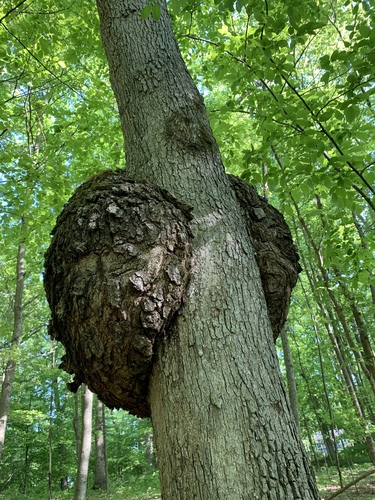
While the microscopic bacterial cells themselves are invisible to the naked eye, the infections they cause are easily recognized by the presence of rough, swollen, tumor-like growths called galls. These galls typically develop near the soil line on the plant's crown, main stem, or roots. Initially, the young galls appear as light-colored, soft, fleshy swellings that blend with the plant tissue. As they age, they enlarge significantly, turning dark brown to black, becoming highly woody, cracked, and rough in texture, mimicking natural bark irregularities but in a distinctly globose or irregular form.
Kategorie
AnimalSeltenheit
Common
Gefahr
1/5 · Sehr gering
Snaps
Mach den ersten Snap!
It is often referred to as nature's genetic engineer because it is the only known organism that naturally transfers its genes into a completely different kingdom of life.
Strains of the non-pathogenic bacterium Agrobacterium radiobacter strain K84 are used as a biological control agent to protect crop seeds from infection by pathogenic strains.
The woody tumors (galls) it creates can grow larger than a grapefruit, cutting off the plant's nutrient flow and eventually stunting its growth.
The bacterium transfers a specific segment of DNA, known as T-DNA, from its tumor-inducing plasmid into the genome of a host plant, permanently altering the host's genetic makeup.
It utilizes highly sensitive chemotaxis to detect plant wound signals, such as phenolic compounds, swimming toward damaged roots to initiate infection.
By forcing the host plant to synthesize opines, the bacterium creates an exclusive chemical food source that neighboring soil microbes cannot easily utilize.
Feeds primarily on plant-emitted chemical compounds, including specialized nutrient molecules called opines synthesized by infected host plants, along with general organic carbon in the rhizosphere.
Vitis vinifera
Serves as a host plant, where the bacterium causes crown gall disease on stems and roots.
Prunus persica
Commonly infected by the bacterium, developing large galls at the graft union or root crown.
Rosa rubiginosa
Infects wild and cultivated roses, creating unsightly galls that weaken the plant's overall vigor.
Für dieses Objekt sind noch keine Merkmal-Badges vergeben.
Noch keine Alternativnamen vorhanden.
Sammlungen für dieses Objekt erscheinen hier, wenn weitere Themen hinzugefügt werden.
Gefahr
1/5 · Sehr gering
Noch keine besonderen Sicherheitshinweise.
Der einfachste Weg, Bacterial Crown Gall zu bestimmen, ist die Verwendung der Naturführer-App Snappit.
0+ cm
Feeds primarily on plant-emitted chemical compounds, including specialized nutrient molecules called opines synthesized by infected host plants, along with general organic carbon in the rhizosphere.
Found globally in agricultural soils, home gardens, and nurseries, particularly in close association with the root systems of susceptible woody and herbaceous plants.
Foraging
Zoome hinein, um Cluster aufzulösen und zu sehen, wo dieses Objekt fotografiert wurde.
Neueste Snaps erscheinen hier, wenn neue Beobachtungen hinzukommen.