Bigelow'S Sneezeweed
helenium bigelovii
Bigelow's Sneezeweed is a cheerful, moisture-loving perennial wildflower native to the damp meadows, marshes, and riparian zones of western North America, especially in California and Oregon. Belonging to the aster family, this plant is celebrated for its striking, daisy-like yellow flowers that brighten wetland landscapes from mid to late summer. It plays a critical ecological role, serving as a vital nectar source for a variety of native pollinators, including bees and butterflies. Despite its name, it is a pleasant sight for hikers and nature enthusiasts rather than a nuisance.
Lebensraum: Found in wet montane meadows, fens, bogs, and along stream banks.
This erect herb typically grows between 30 and 100 centimeters tall, featuring lance-shaped, alternate green leaves that merge into distinctively 'winged' stems. Each stem is topped with one or more vibrant flower heads, characterized by a prominent, spherical, yellowish-brown central dome surrounded by 13 to 30 drooping yellow ray petals. The unique, globe-like center of the flower becomes increasingly dark and textured as it matures, making it easy to identify.
Kategorie
PflanzenSeltenheit
Common
Gefahr
1/5 · Sehr gering
Snaps
Mach den ersten Snap!
The common name 'sneezeweed' comes from a historic practice where the dried, powdered leaves were used as snuff to induce sneezing and clear the head.
The toxic chemical helenalin found in the plant has been studied for its potential anti-inflammatory and anti-tumor properties.
Unlike many other wildflowers, the pollen of Bigelow's Sneezeweed is heavy and sticky, meaning it does not cause seasonal wind-borne allergies.
Possesses specialized root adaptations that prevent rot and allow efficient gas exchange in waterlogged, anaerobic soils.
Produces bitter-tasting sesquiterpene lactones like helenalin to discourage grazing by mammalian herbivores.
Features a specialized spherical dome layout of florets that maximizes pollen production and structural support for visiting insects.
As a photosynthetic plant, Bigelow's Sneezeweed converts sunlight, water, and carbon dioxide into energy while absorbing key soil nutrients.
Bombus vosnesenskii
Utilizes the plant's nectar and pollen, acting as a primary pollinator.
Odocoileus hemionus
Occasionally browses the foliage despite the bitter defensive chemicals.
Für dieses Objekt sind noch keine Merkmal-Badges vergeben.
Noch keine Alternativnamen vorhanden.
Sammlungen für dieses Objekt erscheinen hier, wenn weitere Themen hinzugefügt werden.
Gefahr
1/5 · Sehr gering
Noch keine besonderen Sicherheitshinweise.
Der einfachste Weg, Bigelow'S Sneezeweed zu bestimmen, ist die Verwendung der Naturführer-App Snappit.
30+ cm
2+ Jahre
As a photosynthetic plant, Bigelow's Sneezeweed converts sunlight, water, and carbon dioxide into energy while absorbing key soil nutrients.
Found in wet montane meadows, fens, bogs, and along stream banks.
Zoome hinein, um Cluster aufzulösen und zu sehen, wo dieses Objekt fotografiert wurde.
Neueste Snaps erscheinen hier, wenn neue Beobachtungen hinzukommen.
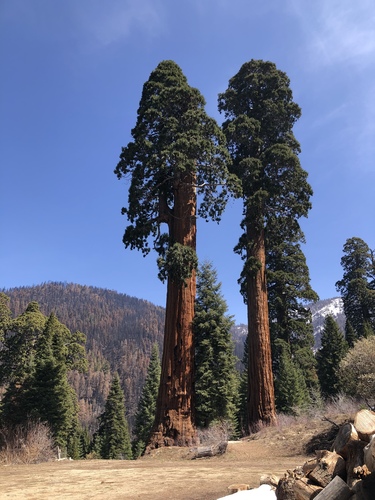
California, US
Hier kann man sehen Mammutbaum, Mountain Misery und Schneepflanze.
Führer anzeigen →

California, US
Hier kann man sehen Mammutbaum, Maultierhirsch und Gelbbauchmurmeltier.
Führer anzeigen →

California, US
Hier kann man sehen Schwarzbär, Westlicher Zaunleguan und Wald-Fichtenspargel.
Führer anzeigen →