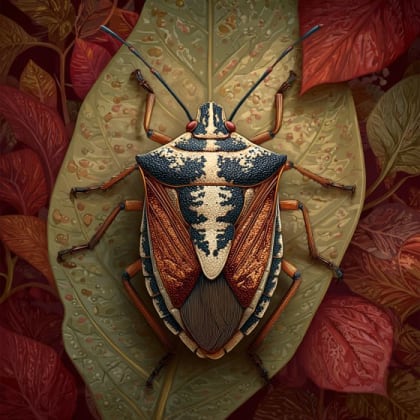
Black snail beetle
Phosphuga atrata
The black snail beetle is a shiny black bug that loves to munch on snails! It has a smooth body and can be found hiding under leaves or logs.
Lebensraum: Forests
The Black snail beetle has a distinct, elongated, and flattened body that is shiny black, often appearing metallic. Its head and the segment behind it (prothorax) can be a contrasting reddish-orange or brown, making it visually stand out. It has prominent antennae and a somewhat constricted "neck" area.
Kategorie
InsektenSeltenheit
Common
Gefahr
1/5 · Sehr gering
Snaps
Mach den ersten Snap!
It belongs to a family of beetles famous for cleaning up dead things, but prefers snails!
Its head and "neck" can be a surprising orange-red color, contrasting its shiny black body!
The Black snail beetle's larvae are also hungry snail predators, just like the adults!
This beetle can "play dead" when scared, lying motionless until danger passes!
Black snail beetle can safely eat slippery snails because it has a special waxy coating that prevents snail mucus from sticking to its body.
Black snail beetle can deter predators because it releases a smelly, yellowish fluid from glands when threatened, making it unpleasant to eat.
Black snail beetle has a narrow "neck" and head that helps it push into snail shells, allowing it to reach and devour the soft snail body.
This beetle mostly eats snails, which it can devour thanks to its specialized body.
Cornu aspersum
A primary food source for this beetle.
Turdus merula
Birds often hunt these beetles.
Erinaceus europaeus
Hedgehogs forage for beetles.
Einzelgänger leben den größten Teil ihres Lebens allein und interagieren mit Artgenossen nur zur Paarung oder zur Aufzucht der Jungen.
Waldlebensräume sind terrestrische Lebensräume, die von dichtem Baumbestand dominiert werden und eine große Vielfalt an Pflanzen- und Tierarten beherbergen.
Beschreibt Organismen, die totes organisches Material abbauen und Nährstoffe in das Ökosystem zurückführen.
Dieses Merkmal kennzeichnet Organismen, deren Ernährung vollständig oder hauptsächlich aus tierischem Gewebe besteht.

Nachtaktive Tiere sind hauptsächlich in den Nachtstunden aktiv und ruhen oder schlafen normalerweise tagsüber.
Noch keine Alternativnamen vorhanden.
Gefahr
1/5 · Sehr gering
Always look but don't touch insects unless a grown-up says it's okay.
20-30 mm
10-15 mm
60-120 Tage
5-10 km/h
This beetle mostly eats snails, which it can devour thanks to its specialized body.
Forests
Foraging
6
Zoome hinein, um Cluster aufzulösen und zu sehen, wo dieses Objekt fotografiert wurde.
Neueste Snaps erscheinen hier, wenn neue Beobachtungen hinzukommen.