






Black-throated Sparrow
Amphispiza bilineata
The Black-throated Sparrow is a small, cheerful bird with a black throat and a lovely song. They are often found hopping around in the desert, looking for seeds and insects to eat.
Lebensraum: Desert
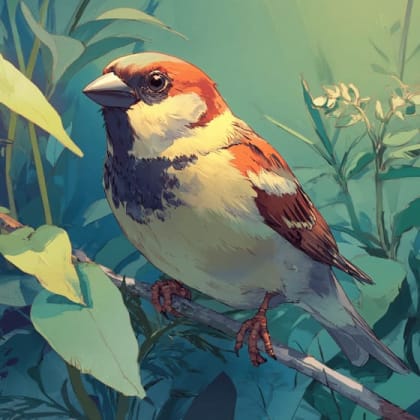
The Black-throated Sparrow has a striking pattern with a solid black throat and lore, contrasted by a bold white stripe above its eye. Its back is grey-brown, and its belly is plain white, making it distinct from other desert sparrows.
Kategorie
VögelSeltenheit
Common
Gefahr
1/5 · Sehr gering
Snaps
Mach den ersten Snap!
Sometimes called "desert songsters," they masterfully blend into sandy landscapes!
Their sweet, tinkling song sounds like tiny bells ringing across the quiet desert!
They often build cozy nests hidden inside spiky cacti or desert shrubs for safety!
Wow! This tiny bird can survive in scorching deserts without needing to drink water daily!
Black-throated Sparrows can get most of their water from food, helping them survive and thrive in very arid, dry environments.
This sparrow has special adaptations that help it tolerate extreme desert temperatures, staying active when other animals seek shade.
The Black-throated Sparrow has a distinct, musical song with bell-like phrases that helps it communicate and defend its territory.
They munch on tiny seeds and juicy insects found foraging on the desert floor.
Geococcyx californianus
hunts for agile desert sparrows
Pituophis catenifer
preys on nests and ground-foraging birds

Larrea tridentata
nests and finds seeds among its branches
Formica fusca
forages for ants and other insects
Gefiedert beschreibt Tiere, hauptsächlich Vögel, die ein Federkleid besitzen.
Soziale Tiere leben in organisierten Gruppen und kooperieren, um ihr Überleben zu sichern, beispielsweise bei der Nahrungssuche, Verteidigung und Aufzucht der Jungen.
Singende Tiere erzeugen komplexe Lautäußerungen, oft um Partner anzulocken, ihr Revier zu verteidigen oder innerhalb ihrer Art zu kommunizieren.
Dieses Merkmal kennzeichnet Organismen, deren Nahrung hauptsächlich aus Insekten und anderen kleinen Wirbellosen besteht.

Wüstenlebensräume sind trockene Regionen, die durch extrem geringen Niederschlag und oft extreme Temperaturen gekennzeichnet sind und eine spezialisierte Flora und Fauna beherbergen.

Tagaktive Tiere sind hauptsächlich bei Tageslicht aktiv und ruhen oder schlafen in der Regel nachts.
Noch keine Alternativnamen vorhanden.
Gefahr
1/5 · Sehr gering
Enjoy watching birds from a distance and don't try to touch them.
12.5-14.5 cm
20-22 cm
0.012-0.016 kg
2-5 Jahre
40 km/h
They munch on tiny seeds and juicy insects found foraging on the desert floor.
Desert
Foraging
Zoome hinein, um Cluster aufzulösen und zu sehen, wo dieses Objekt fotografiert wurde.
Neueste Snaps erscheinen hier, wenn neue Beobachtungen hinzukommen.





_on_top_of_cactus.jpg&width=800)





_at_G%C3%B6teborgs_Naturhistoriska_Museum_8980.jpg&width=800)







