






Blackbead
Pithecellobium keyense
The Blackbead is a beautiful plant with shiny black seeds that look like beads! It grows in warm places and is loved by many animals for its tasty seeds.
Lebensraum: Tropical forests
The Blackbead is a small to medium-sized tree with dark green, bipinnately compound leaves. It produces clusters of fluffy white, brush-like flowers. Its most distinctive feature is its twisted, reddish-brown pods containing shiny, hard black seeds, which resemble tiny beads.
Kategorie
PflanzenSeltenheit
Common
Gefahr
1/5 · Sehr gering
Snaps
Mach den ersten Snap!
Ancient peoples once collected its incredibly shiny, hard black seeds to make beautiful jewelry!
Its scientific name means 'monkey's earring' because of its wonderfully coiled seed pods!
The Blackbead's tiny white flowers look just like mini bottle brushes!
This tough tree helps other plants grow by enriching soil with nutrients from the air!
Blackbead has special root nodules that host tiny bacteria, allowing it to pull nitrogen from the air and enrich the soil around it.
Blackbead can survive long dry spells thanks to its deep roots and small leaves that efficiently conserve precious water.
Blackbead produces sweet, edible pulp around its seeds, enticing animals to eat them and help spread its offspring.
Apis mellifera
Visits flowers for nectar and pollen
Procyon lotor
Consumes the sweet pulp and seeds
Cardinalis cardinalis
Feeds on the seeds from the pods
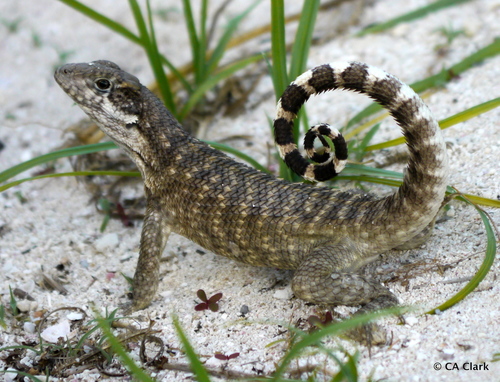
Anolis carolinensis
Uses branches and leaves for cover
Rhizobium leguminosarum
Lives in roots, helps tree grow
Blütenpflanzen sind alle Pflanzen, die als Teil ihres Fortpflanzungszyklus Blüten bilden.
Schattenverträgliche Pflanzen sind an das Wachstum und Gedeihen in Bereichen mit wenig Licht angepasst und benötigen weniger direkte Sonneneinstrahlung.
Fruchttragende Pflanzen produzieren Früchte, also die reifen Fruchtknoten von Blütenpflanzen, die Samen enthalten.
Immergrüne Pflanzen behalten ihr Laub das ganze Jahr über und werfen nie alle Blätter auf einmal ab.

Laubbäume sind Bedecktsamer, die sich durch flache, breite Blätter auszeichnen, welche in gemäßigten Klimazonen typischerweise jährlich abgeworfen werden.

Beschreibt Pflanzen, die für eine Vielzahl von bestäubenden Organismen besonders attraktiv und nützlich sind.

Essbare Pflanzen sind diejenigen Pflanzenteile, die für den menschlichen Verzehr als unbedenklich gelten.
Noch keine Alternativnamen vorhanden.
Gefahr
1/5 · Sehr gering
Always look but don't touch plants without asking an adult first.
500-1000 cm
300-600 cm
1-2.5 cm
Late spring to summer
Ja
Keine
Mehrjährig
Insekten
Zoome hinein, um Cluster aufzulösen und zu sehen, wo dieses Objekt fotografiert wurde.
Neueste Snaps erscheinen hier, wenn neue Beobachtungen hinzukommen.




.jpg&width=800)





_Hibiscus_moscheutos_-_Red_swamp_rose-mallow_flower_-_Les_Martels%2C_Giroussens_Tarn.jpg&width=800)


.jpg&width=800)

