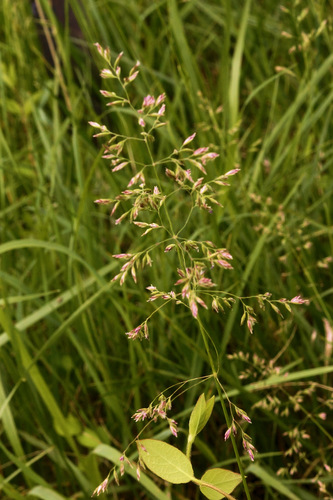
Bluegrass
Poa L.
Bluegrass is a type of grass that is often found in lawns and meadows. It has thin, blue-green leaves and produces delicate flowers that sway in the breeze.
Lebensraum: Grasslands
The Bluegrass is a slender green plant with narrow, blade-like leaves that often have a distinct bluish-green hue, especially when mature. Its delicate flower clusters appear as light, airy plumes above the dense mats of foliage, giving fields a soft, wavy texture.
Kategorie
PflanzenSeltenheit
Common
Gefahr
1/5 · Sehr gering
Snaps
Mach den ersten Snap!
Kentucky's famous horse racing tracks are often covered in lush, fast-growing bluegrass!
Some bluegrass species can grow high up in cold mountains, even above the tree line!
The 'blue' in Bluegrass comes from its unique purplish seed heads, not just the leaves!
There are over 500 different kinds of bluegrass plants found all around the world!
Bluegrass has underground stems called rhizomes that help it spread widely and form dense mats, making it super tough against foot traffic.
Many bluegrass species are 'cool-season' grasses, meaning they thrive and stay green even in colder temperatures, unlike other grasses.
Its dense root system holds soil firmly in place, stopping erosion and keeping valuable topsoil from washing away.
Equus caballus
a main food source in pastures worldwide

Bos taurus
grazes on its nutritious blades in fields
Microtus pennsylvanicus
finds cover and builds nests within dense mats
Odocoileus virginianus
browses on its blades, especially during winter
Frühlingsblüher bilden ihre Blüten im Frühjahr und kündigen oft das Ende des Winters und den Beginn neuen Wachstums an.
Grasartige Pflanzen sind krautige Pflanzen, die echten Gräsern optisch ähneln und typischerweise lange, schmale Blätter haben.
Schattenverträgliche Pflanzen sind an das Wachstum und Gedeihen in Bereichen mit wenig Licht angepasst und benötigen weniger direkte Sonneneinstrahlung.
Grasland-Lebensräume sind terrestrische Biome, die von Gräsern und krautigen Pflanzen dominiert werden und einer Vielzahl von Weidetieren als Lebensraum dienen.
Gefahr
1/5 · Sehr gering
Enjoy looking at bluegrass but avoid picking or eating it.
15-60 cm
30-100 cm
0.2-0.5 cm
Frühling
Nein
Keine
Mehrjährig
Wind
Zoome hinein, um Cluster aufzulösen und zu sehen, wo dieses Objekt fotografiert wurde.
Neueste Snaps erscheinen hier, wenn neue Beobachtungen hinzukommen.