California Pitcher Sage
lepechinia calycina
The California Pitcher Sage is a beautiful plant with tall, colorful flowers that attract many bees and butterflies! It loves to grow in sunny spots and can often be found in gardens and parks.
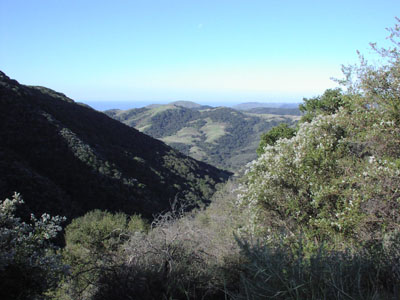
Lebensraum: California chaparral and coastal areas.
The California Pitcher Sage is a bushy perennial with wrinkled, oval-shaped leaves and distinctive cup-shaped, green calyces that enclose tubular, pale lavender to white flowers. Its calyces give it a unique pitcher-like appearance.
Kategorie
PflanzenSeltenheit
Common
Gefahr
0/5 · Keine bekannte Gefahr
Snaps
Mach den ersten Snap!
Its "pitcher" name comes from the cup-like calyx, not for holding water!
Native Californians traditionally brewed its leaves for refreshing teas and soothing remedies.
Rub its leaves gently to release a unique minty-citrus aroma, a natural perfume!
This resilient sage often thrives on dry, sunny slopes where other plants struggle.
California Pitcher Sage has deep roots and small leaves that help it survive long, dry periods with very little water.
California Pitcher Sage can release a strong, aromatic scent from its leaves that deters hungry herbivores from nibbling.
California Pitcher Sage can quickly re-sprout from its roots after wildfires, allowing it to recover and thrive in burned areas.
Apis mellifera
Gathers nectar and pollen for its hive.
Bombus vosnesenskii
An important native pollinator of its flowers.

Archilochus anna
Feeds on nectar from its tubular blooms.
Odocoileus hemionus
May browse its leaves, especially young growth.
Farbenfroh beschreibt Organismen oder Objekte, die eine große Vielfalt an leuchtenden und deutlich erkennbaren Farben aufweisen.
Dieses Merkmal kennzeichnet Lebewesen, deren Ernährung vollständig oder hauptsächlich aus pflanzlichem Material besteht.
Küstenlebensräume sind dynamische Umgebungen an der Schnittstelle zwischen Land und Meer, die von Gezeiten, Wellen und Salzwasser geprägt sind.
Tagaktive Tiere sind hauptsächlich bei Tageslicht aktiv und ruhen oder schlafen in der Regel nachts.

Beschreibt Organismen, die Pollen übertragen und so die Befruchtung und Fortpflanzung von Pflanzen ermöglichen.
Gefahr
0/5 · Keine bekannte Gefahr
Noch keine besonderen Sicherheitshinweise.
50-150 cm
50-100 cm
2-3 cm
Late spring to early summer
Ja
Keine
Mehrjährig
Insekten
Zoome hinein, um Cluster aufzulösen und zu sehen, wo dieses Objekt fotografiert wurde.
Neueste Snaps erscheinen hier, wenn neue Beobachtungen hinzukommen.