






Carolina horsenettle
Solanum carolinense
The Carolina horsenettle is a plant with spiky leaves and pretty purple flowers. It grows in sunny places and can be found in fields and gardens. Be careful, as its berries can be harmful if eaten!
Lebensraum: Fields and gardens
The Carolina horsenettle is a prickly plant featuring thorny stems and small, star-shaped flowers typically purple or white with yellow centers. Its distinctive yellow-orange berries, resembling tiny tomatoes, grow in clusters and are a key identification feature.
Kategorie
PflanzenSeltenheit
Common
Gefahr
3/5 · Mittel
Snaps
Mach den ersten Snap!
Each plant can produce hundreds of berries, spreading thousands of tiny seeds!
It's a cousin to tomatoes and potatoes, even though its berries are not safe to eat!
Its name comes from the plant's prickliness and its potential to harm grazing animals!
The seeds can stay alive in the soil for over 100 years, waiting to grow!
Carolina horsenettle has sharp thorns on its stems and leaves that help it defend against hungry animals trying to eat it.
Carolina horsenettle can grow deep, spreading roots that help it survive droughts and sprout new plants after being cut.
Carolina horsenettle produces toxic compounds throughout its parts, which helps deter most herbivores from making it their meal.

Lema trilineata
Its larvae and adults feed on the leaves.
Apis mellifera
Visits its flowers for nectar and pollen collection.
Turdus migratorius
Birds eat the berries, helping to disperse the seeds.
Blütenpflanzen sind alle Pflanzen, die als Teil ihres Fortpflanzungszyklus Blüten bilden.
Sommerblühende Pflanzen bringen ihre Blüten während der Sommersaison hervor und sorgen oft für leuchtende Farben, wenn viele andere Pflanzen bereits verblüht sind.
Fruchttragende Pflanzen produzieren Früchte, also die reifen Fruchtknoten von Blütenpflanzen, die Samen enthalten.
Farbenfroh beschreibt Organismen oder Objekte, die eine große Vielfalt an leuchtenden und deutlich erkennbaren Farben aufweisen.

Grasland-Lebensräume sind terrestrische Biome, die von Gräsern und krautigen Pflanzen dominiert werden und einer Vielzahl von Weidetieren als Lebensraum dienen.

Besitzt scharfe, spitze Vorsprünge oder Stacheln auf dem Körper oder der Oberfläche.

Giftige Organismen enthalten Substanzen, die toxisch sind und bei Kontakt schädliche Auswirkungen haben können.

Giftige Organismen produzieren Toxine, die beim Verschlucken, Einatmen oder durch Kontakt schädlich sein können.
Noch keine Alternativnamen vorhanden.
Gefahr
3/5 · Mittel
Don't eat the berries or touch the spiky parts of the plant.
30-100 cm
30-60 cm
1-2.5 cm
Late spring to early fall
Nein
Mäßig
Mehrjährig
Insekten
Zoome hinein, um Cluster aufzulösen und zu sehen, wo dieses Objekt fotografiert wurde.
Neueste Snaps erscheinen hier, wenn neue Beobachtungen hinzukommen.

Pennsylvania, US
Hier kann man sehen Weißwedelhirsch und Mile-A-Minute Weed.
Führer anzeigen →

Iowa, US
Hier kann man sehen Weißwedelhirsch und Nordamerikanischer Ochsenfrosch.
Führer anzeigen →
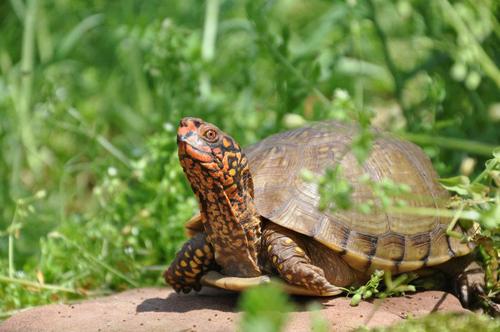
Oklahoma, US
Hier kann man sehen Three-Toed Box Turtle, Blackjack Oak und American Persimmon.
Führer anzeigen →

Virginia, US
Hier kann man sehen Common Watersnake, Multiflora Rose und Carolina Ruellia.
Führer anzeigen →
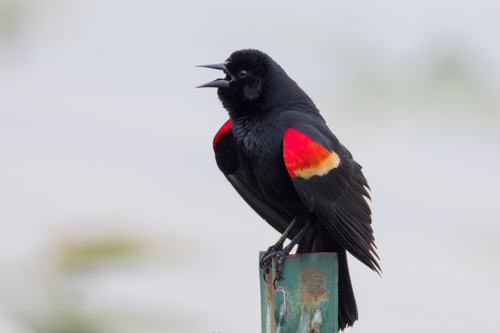
Virginia, US
Hier kann man sehen Rotschulterstärling und Kanadagans.
Führer anzeigen →

District of Columbia, US
Hier kann man sehen östliches Grauhörnchen, Haussperling und Wanderdrossel.
Führer anzeigen →


















