

Cattle Tyrant
machetornis rixosa
The Cattle Tyrant is a lively, opportunistic flycatcher native to South America, known for its bold personality and unique foraging behaviors. Often observed hitching a ride on the backs of large mammals, this clever bird uses its hosts as mobile hunting platforms. As these giant beasts walk through grasslands, they flush out a buffet of insects, which the Cattle Tyrant swiftly snatches up from mid-air or the ground. Historically a bird of open savannas and pastures, the Cattle Tyrant has adapted remarkably well to human-modified landscapes, expanding its range into suburban lawns and urban parks.
Lebensraum: Found in open country, pastures, savannas, and urban parks, frequently associating with grazing livestock or large native mammals.
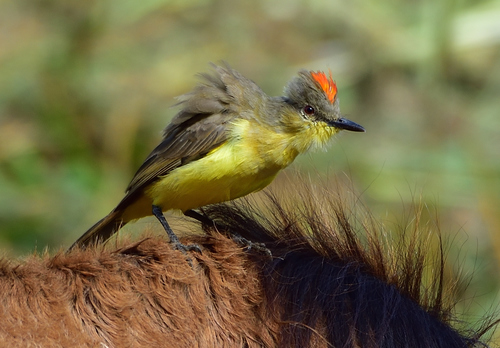
This medium-sized flycatcher measures around 19 to 20 centimeters in length and is easily recognized by its olive-brown upperparts and bright, contrasting lemon-yellow belly and chest. It has a relatively long, slender dark bill, dark eyes, and a diagnostic but rarely visible reddish-orange crest hidden on its crown. Its wings and tail are warm brown, and its long, dark legs are built for running on the ground, a trait that sets it apart from many other aerial-hunting tyrant flycatchers.
Kategorie
VögelSeltenheit
Common
Gefahr
1/5 · Sehr gering
Snaps
Mach den ersten Snap!
Despite being flycatchers, they spend a significant amount of time running on the ground like thrushes or pipits.
Their scientific genus name 'Machetornis' comes from Greek words meaning 'fighting bird', referring to their aggressive defense of territories and nests.
They are famous nest thieves, often taking over the heavy, domed mud nests of Rufous Horneros rather than building their own from scratch.
They ride on the backs of large herbivores like horses, cows, and capybaras, using them as mobile perches to spot and catch disturbed insects.
Unlike most flycatchers that hunt strictly from the air, the Cattle Tyrant has exceptionally long legs that allow it to run quickly across the ground to pursue prey.
These birds fiercely defend their nesting sites against much larger intruders and are even known to pirate the closed nests of other bird species.
Primarily feeds on flying and crawling insects that are stirred up by grazing livestock or large native mammals.
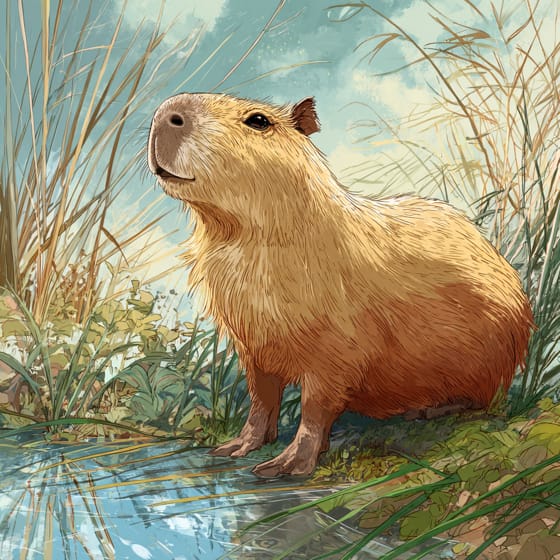
Hydrochoerus hydrochaeris
Rides on the back of this large rodent to forage for flushed insects and sometimes picks parasites off its skin.
Bos taurus
Follows and perches on grazing cattle to capture insects kicked up from the grass.
Molothrus bonariensis
Frequently parasitized by this bird, which lays its eggs in the Cattle Tyrant's nest.
Für dieses Objekt sind noch keine Merkmal-Badges vergeben.
Noch keine Alternativnamen vorhanden.
Sammlungen für dieses Objekt erscheinen hier, wenn weitere Themen hinzugefügt werden.
Gefahr
1/5 · Sehr gering
Noch keine besonderen Sicherheitshinweise.
Der einfachste Weg, Cattle Tyrant zu bestimmen, ist die Verwendung der Naturführer-App Snappit.
18+ cm
28+ cm
0.026+ kg
4+ Jahre
40 km/h
Primarily feeds on flying and crawling insects that are stirred up by grazing livestock or large native mammals.
Found in open country, pastures, savannas, and urban parks, frequently associating with grazing livestock or large native mammals.
Zoome hinein, um Cluster aufzulösen und zu sehen, wo dieses Objekt fotografiert wurde.
Neueste Snaps erscheinen hier, wenn neue Beobachtungen hinzukommen.









.jpg&width=800)






_Stampf_2011-04-24_15-55-50.jpg&width=800)