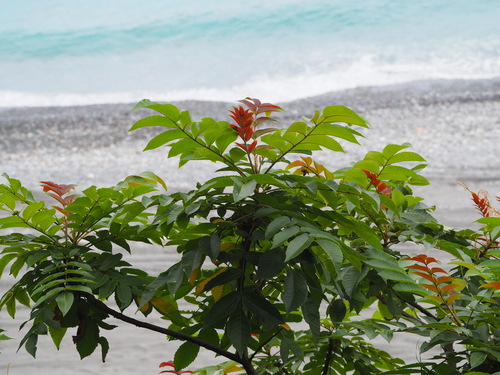


Chinese Sumac
rhus chinensis
The Chinese Sumac (Rhus chinensis), also known as the Nutgall Tree, is a deciduous shrub or small tree native to East and South Asia. Highly valued for its ecological and ethnobotanical importance, this resilient plant is famous for hosting specialized aphids that trigger the formation of large, tannin-rich galls on its leaves. These galls have been harvested for thousands of years for use in traditional medicine, dyes, and tanning. In addition to its cultural value, the tree is a vital early-successional species that helps stabilize soil on disturbed slopes and provides critical food for native pollinators and migrating birds.
Lebensraum: Typically found in open woodlands, forest margins, thickets, and disturbed mountain slopes across East Asia.
Growing between 2 and 10 meters tall, the Chinese Sumac features pinnately compound leaves with a highly distinctive winged leaf stem (rachis) between the leaflets. Each leaf has 7 to 13 tooth-edged, oval leaflets that are dark green above and covered in velvety brownish hair underneath. In late summer, the tree produces large, upright, branched clusters of creamy-yellow or off-white flowers, which eventually give way to dense bunches of small, hairy, reddish-orange fruits. During autumn, the entire canopy turns a fiery crimson and bright orange.
Kategorie
PflanzenSeltenheit
Common
Gefahr
1/5 · Sehr gering
Snaps
Mach den ersten Snap!
Its fruits are coated in a salty, acidic substance that traditional foragers have long used to sour soups or wash into a tart, lemonade-like drink.
The genus name Rhus is derived from an ancient Greek word meaning 'red', paying homage to the spectacular autumn foliage and colorful berries.
The hollow leaf galls produced by this tree contain up to 70% tannic acid, making them one of the richest natural sources of tannins in the world.
Successfully hosts parasitic aphids that stimulate the tree to grow large, nutrient-rich galls, which serve as protective insect nurseries while enriching the plant's defense chemicals.
Features a rapidly spreading, fibrous root system that binds loose soil, making it highly effective at preventing erosion on steep, degraded hillsides.
Accumulates exceptionally high levels of chemical tannins in its tissues to deter herbivores and fungal pathogens.
The Chinese Sumac produces its own energy via photosynthesis, utilizing sunlight, atmospheric carbon dioxide, and water while absorbing essential nutrients from the soil.
Schlechtendalia chinensis
Hosts the aphid that stimulates the tree to form highly sought-after medicinal galls on the leaves.
Apis mellifera
Attracts various honey bees to its large clusters of summer blossoms for nectar and pollen.
Hypsipetes amaurotis
Feeds on the small, acidic fruits during late autumn and winter, dispersing the seeds in the process.
Für dieses Objekt sind noch keine Merkmal-Badges vergeben.
Noch keine Alternativnamen vorhanden.
Sammlungen für dieses Objekt erscheinen hier, wenn weitere Themen hinzugefügt werden.
Gefahr
1/5 · Sehr gering
Noch keine besonderen Sicherheitshinweise.
Der einfachste Weg, Chinese Sumac zu bestimmen, ist die Verwendung der Naturführer-App Snappit.
200-1000 cm
20-50 Jahre
The Chinese Sumac produces its own energy via photosynthesis, utilizing sunlight, atmospheric carbon dioxide, and water while absorbing essential nutrients from the soil.
Typically found in open woodlands, forest margins, thickets, and disturbed mountain slopes across East Asia.
Zoome hinein, um Cluster aufzulösen und zu sehen, wo dieses Objekt fotografiert wurde.
Neueste Snaps erscheinen hier, wenn neue Beobachtungen hinzukommen.




_Epilobium_ciliatum_-_flowers.jpg&width=800)