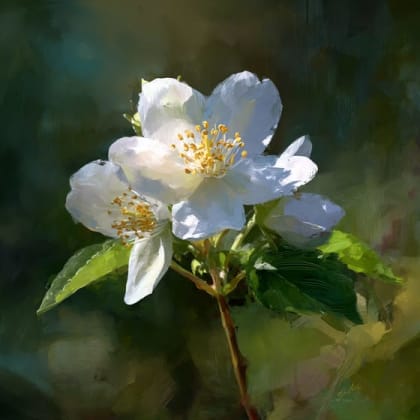
Christmas berry
Pourthiaea villosa
Christmas berry is a cheerful plant that grows bright red berries during the holiday season. Its shiny leaves and colorful fruits make it a favorite in gardens and decorations.
Lebensraum: Urban areas
The Christmas berry is a deciduous shrub or small tree with glossy green leaves that ignite into fiery reds and oranges in autumn. It displays clusters of small white flowers in spring, followed by abundant, bright scarlet berries that persist through winter, making it distinctively vibrant.
Kategorie
PflanzenSeltenheit
Common
Gefahr
2/5 · Gering
Snaps
Mach den ersten Snap!
Birds love its juicy red berries so much, they accidentally help plant new Christmas berry trees!
Even though it's called Christmas berry, it's actually a relative of roses, but without the thorns!
In autumn, its leaves turn such a vibrant red, it looks like the tree is on fire with color!
Its scientific name, *villosa*, means 'hairy,' referring to the tiny fuzz on its new twigs!
Christmas berry has bright red berries that stay on its branches all winter, providing crucial food for birds when other food is scarce.
Christmas berry can change its green leaves into stunning shades of red and orange in fall, attracting attention and helping it thrive.
Christmas berry has the ability to grow in many different soil types and conditions, helping it survive in various environments.
Apis mellifera
They visit its small white flowers for nectar and pollen.
Turdus migratorius
Robins feast on its persistent red berries in winter, spreading seeds.
Sialia sialis
Bluebirds also rely on its berries for food during colder months.
Blütenpflanzen sind alle Pflanzen, die als Teil ihres Fortpflanzungszyklus Blüten bilden.
Zierpflanzen werden hauptsächlich wegen ihres ästhetischen Reizes angebaut und verschönern Landschaften und Gärten mit ihrem attraktiven Laub, ihren Blüten oder ihrer Form.
Ein Strauch ist eine verholzende Pflanze, die kleiner als ein Baum ist und typischerweise mehrere Stämme hat, die sich ab oder nahe dem Boden verzweigen.
Fruchttragende Pflanzen produzieren Früchte, also die reifen Fruchtknoten von Blütenpflanzen, die Samen enthalten.

Immergrüne Pflanzen behalten ihr Laub das ganze Jahr über und werfen nie alle Blätter auf einmal ab.

Beschreibt Pflanzen, die für eine Vielzahl von bestäubenden Organismen besonders attraktiv und nützlich sind.

Essbare Pflanzen sind diejenigen Pflanzenteile, die für den menschlichen Verzehr als unbedenklich gelten.

Farbenfroh beschreibt Organismen oder Objekte, die eine große Vielfalt an leuchtenden und deutlich erkennbaren Farben aufweisen.

Waldlebensräume sind terrestrische Lebensräume, die von dichtem Baumbestand dominiert werden und eine große Vielfalt an Pflanzen- und Tierarten beherbergen.

Dieses Lebensraummerkmal weist auf Arten hin, die in städtischen und vorstädtischen Umgebungen mit Menschen zusammenleben können und von Menschen geschaffene Strukturen sowie Grünflächen nutzen.
Noch keine Alternativnamen vorhanden.
Gefahr
2/5 · Gering
Do not eat the berries without asking an adult, as some plants can be harmful.
300-600 cm
300-600 cm
0.5-1 cm
Frühling
Nein
Leicht
Mehrjährig
Insekten
Zoome hinein, um Cluster aufzulösen und zu sehen, wo dieses Objekt fotografiert wurde.
Neueste Snaps erscheinen hier, wenn neue Beobachtungen hinzukommen.







_02.jpg&width=800)