Cochranella granulosa
Cochranella granulosa
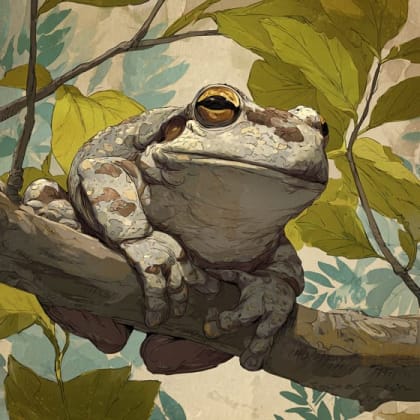
The Cochranella granulosa is a small, colorful frog that loves to live in wet places like rainforests. It has a special ability to change its color to blend in with its surroundings, making it a little magician of the jungle!
Lebensraum: Rainforests
The Cochranella granulosa is a small, vibrant green frog with a distinct granular texture on its back and often small, pale spots. Its most striking feature is its transparent belly, allowing a clear view of its internal organs. A white stripe typically outlines the edges of its limbs.
Kategorie
AmphibienSeltenheit
Common
Gefahr
1/5 · Sehr gering
Snaps
Mach den ersten Snap!
These frogs lay their eggs on leaves hanging right over fast-flowing streams!
They are mostly active at night when the forest is cool and damp.
Through their clear skin, you can actually see their tiny heart beating!
When the tadpoles hatch, they wriggle and drop straight into the water below!
Cochranella granulosa has see-through skin on its belly that helps it blend into leafy backgrounds, making it harder for predators to spot.
Cochranella granulosa males guard their egg clutches on leaves, protecting them from hungry insects until tadpoles hatch.
Cochranella granulosa can climb high on leaves and branches using special pads on its fingers and toes, allowing it to live safely above ground.
Tiny glass frogs munch on small bugs like crickets and flies for their meals.
Altersunterschiede: Tadpoles primarily feed on algae and detritus in the water, switching to insects as adults.
Leptophis ahaetulla
Fast, slender snakes are known predators of these small tree frogs.
Drosophila melanogaster
The frog actively hunts small flies and other tiny invertebrates.
Anolis biporcatus
Arboreal lizards may occasionally consume small frogs they encounter.
Einzelgänger leben den größten Teil ihres Lebens allein und interagieren mit Artgenossen nur zur Paarung oder zur Aufzucht der Jungen.
Farbenfroh beschreibt Organismen oder Objekte, die eine große Vielfalt an leuchtenden und deutlich erkennbaren Farben aufweisen.
Getarnt beschreibt Organismen, die über eine Färbung oder Musterung verfügen, durch die sie mit ihrer Umgebung verschmelzen.
Dieses Merkmal kennzeichnet Organismen, deren Nahrung hauptsächlich aus Insekten und anderen kleinen Wirbellosen besteht.
Dieses Lebensraum-Merkmal bezieht sich auf Arten, die in tropischen Regenwäldern vorkommen, welche durch hohe jährliche Niederschlagsmengen, eine hohe Artenvielfalt und einen dichten Baumbestand gekennzeichnet sind.

Bezieht sich auf Arten, die deutlich kleiner sind als der Durchschnitt oder das Typische ihrer Art.

Giftige Organismen enthalten Substanzen, die toxisch sind und bei Kontakt schädliche Auswirkungen haben können.

Nachtaktive Tiere sind hauptsächlich in den Nachtstunden aktiv und ruhen oder schlafen normalerweise tagsüber.

Der Status 'Stark gefährdet' bedeutet, dass eine Art in naher Zukunft einem sehr hohen Risiko ausgesetzt ist, in freier Wildbahn auszusterben.
Noch keine Alternativnamen vorhanden.
Gefahr
1/5 · Sehr gering
Don't touch wild frogs; they can be very delicate and might not like it.
1.9-3.1 cm
0.001-0.005 kg
2-5 Jahre
1 km/h
Tiny glass frogs munch on small bugs like crickets and flies for their meals.
Rainforests
Ambush
18-30
Zoome hinein, um Cluster aufzulösen und zu sehen, wo dieses Objekt fotografiert wurde.
Neueste Snaps erscheinen hier, wenn neue Beobachtungen hinzukommen.