

Cockroaches And Termites
blattodea
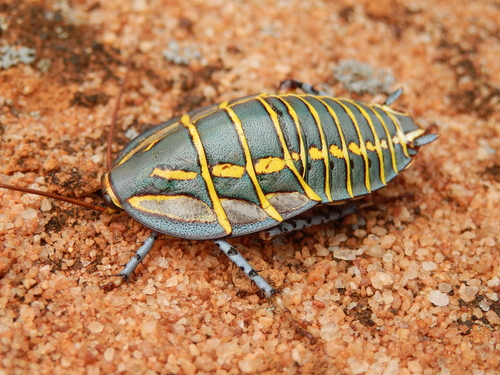
Representing one of the most resilient and ancient insect groups on Earth, the order Blattodea encompasses both cockroaches and highly social termites. Though historically viewed as separate, genetic research has revealed that termites are actually social cockroaches. These incredible insects emerged over 300 million years ago and have survived multiple mass extinctions, evolving to become vital decomposers in terrestrial ecosystems globally. While a few notorious species have adapted to live alongside humans in urban environments, the vast majority of Blattodea species play critical ecological roles in forests, savannas, and deserts. By breaking down tough organic matter like dead wood and leaf litter, they recycle essential nutrients back into the soil, sustaining entire food webs.
Lebensraum: Found primarily in warm, humid environments, they thrive in forest leaf litter, rotting logs, under bark, and within subterranean soil nests.
Members of Blattodea typically possess a flattened, oval-shaped body with a shielding pronotum that covers the head from above, along with long, highly sensitive filiform antennae. Their coloration ranges widely from cryptic browns, blacks, and tans to vibrant oranges and greens in tropical species. Cockroaches often feature leathery forewings protecting membranous hindwings, while termites are often paler, soft-bodied, and wingless, except during their brief reproductive swarming stage when they develop two pairs of equal-sized translucent wings.
Kategorie
InsektenSeltenheit
Common
Gefahr
1/5 · Sehr gering
Snaps
Mach den ersten Snap!
Some cockroach species can survive for up to a week without their heads, eventually dying only because they cannot drink water.
Termites are actually highly evolved, social cockroaches, branching off from a common wood-eating cockroach ancestor millions of years ago.
The collective biomass of all termites on Earth is estimated to equal or exceed the total biomass of all humans.
Through symbiotic gut microbes, many species can efficiently digest tough cellulose, transforming dead wood and leaf litter into usable energy.
They utilize long, highly sensitive antennae and specialized abdominal cerci to detect minute vibrations and air currents, allowing them to rapidly evade predators.
Termites, as eusocial Blattodeans, construct intricate colonies with specialized castes, including workers, soldiers, and reproductive queens, to coordinate survival.
The majority of Blattodea species feed on decaying organic matter, plant material, and wood, though some cockroach species are highly opportunistic omnivores.
Ampulex compressa
The wasp paralyzes the cockroach with a sting to the brain, leading it back to its burrow to serve as living food for its larva.
Myrmecophaga tridactyla
This specialized mammal tears open complex termite mounds with its powerful claws to consume thousands of termites daily.
Dysdera crocata
This predatory arachnid actively hunts and preys upon various ground-dwelling insects, including small cockroaches, in dark and damp microhabitats.
Für dieses Objekt sind noch keine Merkmal-Badges vergeben.
Noch keine Alternativnamen vorhanden.
Sammlungen für dieses Objekt erscheinen hier, wenn weitere Themen hinzugefügt werden.
Gefahr
1/5 · Sehr gering
Noch keine besonderen Sicherheitshinweise.
Der einfachste Weg, Cockroaches And Termites zu bestimmen, ist die Verwendung der Naturführer-App Snappit.
1-10 cm
1-18 cm
0.0001-0.05 kg
1-10 Jahre
5 km/h
The majority of Blattodea species feed on decaying organic matter, plant material, and wood, though some cockroach species are highly opportunistic omnivores.
Found primarily in warm, humid environments, they thrive in forest leaf litter, rotting logs, under bark, and within subterranean soil nests.
Zoome hinein, um Cluster aufzulösen und zu sehen, wo dieses Objekt fotografiert wurde.
Neueste Snaps erscheinen hier, wenn neue Beobachtungen hinzukommen.








.jpg&width=800)