






common comfrey
Symphytum officinale
Common comfrey is a leafy plant with beautiful purple flowers. It grows in gardens and fields and is loved by bees and butterflies for its sweet nectar.
Lebensraum: Urban areas, Gardens
The common comfrey has large, dark green leaves covered in coarse hairs, giving them a rough, bristly feel. Its bell-shaped flowers, often purple, blue, or white, hang downwards in charming clusters.
Kategorie
PflanzenSeltenheit
Common
Gefahr
2/5 · Gering
Snaps
Mach den ersten Snap!
Ancient Romans called comfrey 'knitbone' because they used its leaves to help heal broken bones!
Comfrey is a super plant, pulling up minerals like calcium and potassium from deep in the ground!
Gardeners often grow comfrey as a 'green manure' plant to naturally fertilize their vegetable patches!
Its bell-shaped flowers are perfect for long-tongued bumblebees to reach their sweet nectar.
Common comfrey can send its roots incredibly deep to draw up water and nutrients from the soil that other plants can't reach.
Common comfrey has lush foliage that, when it dies back, returns valuable minerals to the soil, enriching it for other plants.
Common comfrey has stiff hairs covering its leaves and stems, which can deter hungry insects from taking a bite.
Bombus terrestris
Visits flowers for nectar
Apis mellifera
Collects pollen and nectar
Helix aspersa
Feeds on young leaves
Blütenpflanzen sind alle Pflanzen, die als Teil ihres Fortpflanzungszyklus Blüten bilden.
Laubabwerfende Pflanzen werfen regelmäßig all ihre Blätter ab, typischerweise im Herbst oder in Trockenzeiten.
Duftende Blüten verströmen ein angenehmes Aroma, oft um Bestäuber anzulocken oder zur Abwehr.
Laubbäume sind Bedecktsamer, die sich durch flache, breite Blätter auszeichnen, welche in gemäßigten Klimazonen typischerweise jährlich abgeworfen werden.

Heilpflanzen besitzen chemische Verbindungen, die für therapeutische Zwecke zur Behandlung von Krankheiten oder zur Erhaltung der Gesundheit eingesetzt werden können.

Beschreibt Pflanzen, die für eine Vielzahl von bestäubenden Organismen besonders attraktiv und nützlich sind.

Farbenfroh beschreibt Organismen oder Objekte, die eine große Vielfalt an leuchtenden und deutlich erkennbaren Farben aufweisen.

Schnellwachsende Pflanzen weisen eine beschleunigte Wachstumsrate auf und nehmen innerhalb kurzer Zeit schnell an Größe und Biomasse zu.

Dieses Lebensraummerkmal weist auf Arten hin, die in städtischen und vorstädtischen Umgebungen mit Menschen zusammenleben können und von Menschen geschaffene Strukturen sowie Grünflächen nutzen.
Noch keine Alternativnamen vorhanden.
Gefahr
2/5 · Gering
Do not eat any part of the comfrey plant without asking an adult first.
30-120 cm
30-60 cm
1-2 cm
Late spring to mid-summer
Nein
Mäßig
Mehrjährig
Insekten
Zoome hinein, um Cluster aufzulösen und zu sehen, wo dieses Objekt fotografiert wurde.
Neueste Snaps erscheinen hier, wenn neue Beobachtungen hinzukommen.

South Moravian Region, CZ
Hier kann man sehen Buchfink, Nine-Spotted Moth und Greater Stitchwort.
Führer anzeigen →
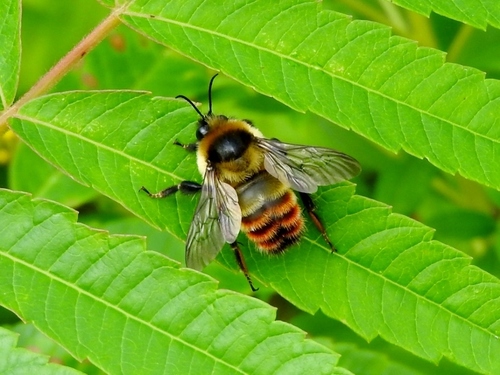
Wisconsin, US
Hier kann man sehen Red-Belted Bumble Bee, Red-Breasted Merganser und Ente.
Führer anzeigen →

Québec, CA
Hier kann man sehen Common Eastern Bumble Bee und Asiatischer Marienkäfer.
Führer anzeigen →









.jpg&width=800)




