






Common Green June Beetle
Cotinis nitida
The Common Green June Beetle is a shiny green insect that loves warm weather. It can often be seen flying around gardens and fields, where it munches on fruits and flowers.
Lebensraum: Urban areas
The Common Green June Beetle is a large, sturdy insect with a vibrant, metallic green body that shines in the sun, often featuring bronze or yellowish-tan edges on its wing covers. It has a broad, flattened shape and a fuzzy, golden-orange underside, distinguishing it from other scarab beetles.
Kategorie
InsektenSeltenheit
Common
Gefahr
1/5 · Sehr gering
Snaps
Mach den ersten Snap!
Before flying, they often lie on their back and spin around to get enough momentum to launch into the air!
Their grubs, or larvae, are unique because they crawl on their backs, not their bellies, to move faster!
When startled, they sometimes play dead by flipping over and staying perfectly still until the danger passes!
Wow! Unlike most beetles, they fly with their hardened wing covers *closed*, making them super aerodynamic!
Common Green June Beetle can perform unique low-altitude flights because of their fast-beating wings that allow them to fly without lifting their wing covers.
Common Green June Beetle has a tough, iridescent green exoskeleton that helps protect them from predators and accidental impacts.
Common Green June Beetle larvae can efficiently break down decaying organic matter because of their strong mandibles that help enrich soil.
These beetles feast on sweet ripe fruits and plant sap as adults, while their larvae munch on decaying organic matter and roots.
Altersunterschiede: Yes, larvae consume decaying organic matter and roots underground, while adults primarily feed on ripe fruits and plant sap.
Prunus persica
Adult beetles feed on ripe peach fruits, causing damage.
Cyanocitta cristata
Blue Jays are common avian predators that hunt these beetles.
Solenopsis invicta
Fire ants prey on the larvae and pupae within the soil.
Didelphis virginiana
Opossums dig up and consume the nutritious grubs and adult beetles.
Beschreibt Pflanzen, die für eine Vielzahl von bestäubenden Organismen besonders attraktiv und nützlich sind.
Farbenfroh beschreibt Organismen oder Objekte, die eine große Vielfalt an leuchtenden und deutlich erkennbaren Farben aufweisen.
Dieses Merkmal kennzeichnet Lebewesen, deren Ernährung vollständig oder hauptsächlich aus pflanzlichem Material besteht.
Dieses Merkmal kennzeichnet Lebewesen, die bei der Jagd, Flucht oder Fortbewegung eine außergewöhnliche Schnelligkeit aufweisen.

Tagaktive Tiere sind hauptsächlich bei Tageslicht aktiv und ruhen oder schlafen in der Regel nachts.

Dieses Lebensraummerkmal weist auf Arten hin, die in städtischen und vorstädtischen Umgebungen mit Menschen zusammenleben können und von Menschen geschaffene Strukturen sowie Grünflächen nutzen.

Bezieht sich auf Organismen, die durch Biolumineszenz oder Fluoreszenz Licht abgeben.

Beschreibt Organismen, die Pollen übertragen und so die Befruchtung und Fortpflanzung von Pflanzen ermöglichen.
Noch keine Alternativnamen vorhanden.
Gefahr
1/5 · Sehr gering
These beetles are harmless, but it's best to watch them from a distance.
30-50 mm
15-25 mm
30-60 Tage
12 km/h
These beetles feast on sweet ripe fruits and plant sap as adults, while their larvae munch on decaying organic matter and roots.
Urban areas
Foraging
6
Zoome hinein, um Cluster aufzulösen und zu sehen, wo dieses Objekt fotografiert wurde.
Neueste Snaps erscheinen hier, wenn neue Beobachtungen hinzukommen.

District of Columbia, US
Hier kann man sehen östliches Grauhörnchen, Biene und Purpletop Vervain.
Führer anzeigen →

Virginia, US
Hier kann man sehen Conifers, Virginia Creeper und Schwarznuss.
Führer anzeigen →
Florida, US
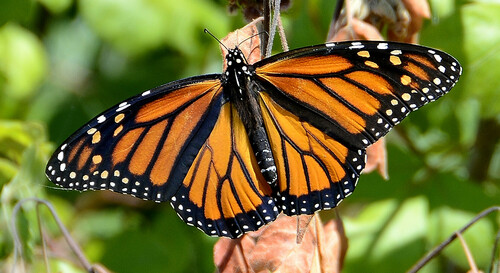
Hier kann man sehen Monarch, Pin-Tailed Pondhawk und Polydamas Swallowtail.
Führer anzeigen →















