.jpg&width=800)





Common Squirrel Monkey
Saimiri sciureus
Common Squirrel Monkeys are playful little monkeys with bright yellow fur and long tails! They love to jump around in trees and are very social, often seen playing with their friends.
Lebensraum: Forests
The Common Squirrel Monkey has olive-green fur on its back and limbs, with striking white fur around its eyes forming a distinctive mask and a dark muzzle. Its underparts are often yellowish-orange, and it possesses a long, non-prehensile tail with a black tip.
Kategorie
SäugetiereSeltenheit
Common
Gefahr
2/5 · Gering
Snaps
Mach den ersten Snap!
Female squirrel monkeys gather together to raise their babies in a 'nursery' group!
Males can puff up their chests to look bigger, especially during mating season!
These clever monkeys sometimes follow larger capuchin monkeys to snatch leftovers!
They often form massive groups of up to 100 monkeys to forage and stay safe!
Common Squirrel Monkey can leap impressive distances between branches because of strong leg muscles and incredible agility.
Common Squirrel Monkey has a unique habit of 'urine washing' to scent-mark trails and communicate with its group.
Common Squirrel Monkey can use a complex repertoire of over 25 different calls to warn, greet, and locate others.
Common Squirrel Monkey has excellent vision and quick reflexes that help them spot tiny insects and ripe fruits.
This omnivore loves to eat a delicious mix of juicy fruits, crunchy insects, and even some flowers!
Harpia harpyja
A powerful raptor that preys on arboreal monkeys.
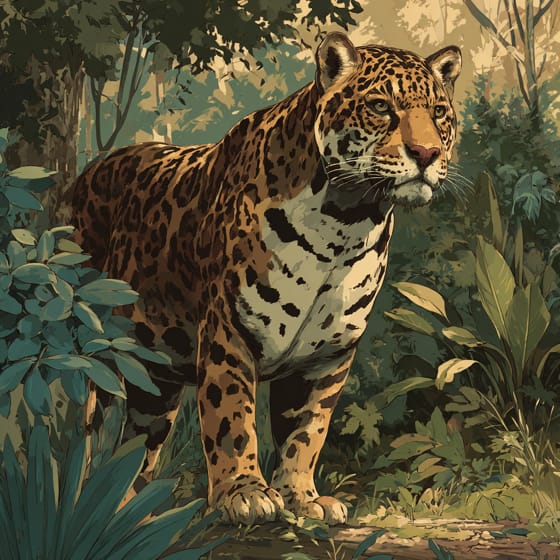
Panthera onca
A large cat that hunts them from the forest floor.
Ficus insipida
Consumes the sweet fruits of this common fig tree.
Gryllus assimilis
Forages for various insects, including crickets.
Pelzig beschreibt Tiere, die eine dichte Schicht aus weichen Haaren oder Fell besitzen.
Soziale Tiere leben in organisierten Gruppen und kooperieren, um ihr Überleben zu sichern, beispielsweise bei der Nahrungssuche, Verteidigung und Aufzucht der Jungen.
Dieses Merkmal kennzeichnet Organismen, deren Ernährung sowohl pflanzliche als auch tierische Bestandteile umfasst.
Baumbewohnende Tiere leben hauptsächlich in Bäumen und nutzen diese als Unterschlupf, Nahrungsquelle und zum Schutz vor Raubtieren.

Farbenfroh beschreibt Organismen oder Objekte, die eine große Vielfalt an leuchtenden und deutlich erkennbaren Farben aufweisen.

Waldlebensräume sind terrestrische Lebensräume, die von dichtem Baumbestand dominiert werden und eine große Vielfalt an Pflanzen- und Tierarten beherbergen.

Tagaktive Tiere sind hauptsächlich bei Tageslicht aktiv und ruhen oder schlafen in der Regel nachts.
Noch keine Alternativnamen vorhanden.
Gefahr
2/5 · Gering
Always watch from a distance and never try to touch wild animals.
25-35 cm
0.7-1.1 kg
15-20 Jahre
25 km/h
This omnivore loves to eat a delicious mix of juicy fruits, crunchy insects, and even some flowers!
Forests
Foraging
1
Zoome hinein, um Cluster aufzulösen und zu sehen, wo dieses Objekt fotografiert wurde.
Neueste Snaps erscheinen hier, wenn neue Beobachtungen hinzukommen.