

Common Tussock Grass
poa labillardierei
Common Tussock Grass is an iconic Australian native grass that forms large, dense, and exceptionally graceful hummocks of weeping foliage. Widely distributed across the moist, fertile soils of southeastern Australia, this hardy perennial plant plays a crucial role in maintaining its local ecosystems. It provides excellent, dense shelter for small birds, lizards, and beneficial insects while its extensive, fibrous root system actively prevents soil erosion along waterways, slopes, and embankments. Beyond its undeniable ecological benefits, its beautiful blue-green coloration and fine, arching texture make it a highly favored species in modern landscape design, urban parks, and home gardens. It is appreciated not only for its low-maintenance nature but also for its remarkable ability to withstand both heavy frosts and dry spells, showcasing the resilience of Australia's native flora.
Lebensraum: Found in moist, low-lying areas, river flats, open forests, and mountain slopes throughout southeastern Australia.
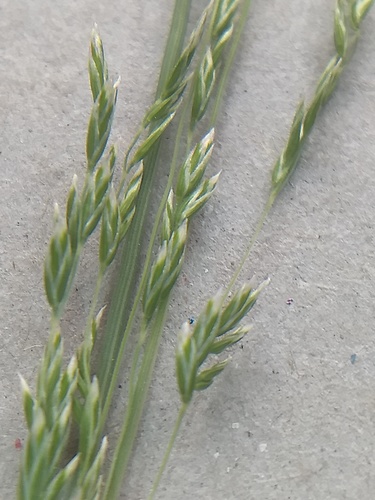
This species is easily recognized by its dense, upright clump of fine, arching leaves that grow up to 80 cm long. The foliage typically displays a striking color palette ranging from deep green to a distinct blue-grey hue. In late spring and summer, the plant produces tall, feathery flower panicles that rise well above the foliage, reaching up to 120 cm in height. These delicate seed heads emerge with green and purplish tones before maturing into a light, shimmering straw color that dances beautifully in the wind.
Kategorie
PflanzenSeltenheit
Common
Gefahr
1/5 · Sehr gering
Snaps
Mach den ersten Snap!
It is a highly popular plant for soil erosion control because its massive, fibrous root system aggressively binds riverbanks and slopes.
Its specific epithet, 'labillardierei', honors the French naturalist Jacques Labillardière, who collected plants in Australia in the late 18th century.
The fine, sharp-edged leaves were traditionally used by Indigenous Australians to weave baskets and strong string.
Possesses an incredibly deep, dense, and fibrous root system that tightly binds soil particles together, stabilizing banks and preventing land slippage.
After a bushfire burns away its foliage, the protected underground crown can quickly regenerate and sprout fresh, green shoots.
Capable of surviving severe frost and freezing temperatures, as well as prolonged dry spells once established.
As a photosynthetic plant, it produces its own energy using sunlight, water, and carbon dioxide, while absorbing water and essential nutrients through its roots.
Heteronympha merope
The caterpillars of this butterfly feed extensively on the green leaves of the tussock grass.
Macropus giganteus
Eastern Grey Kangaroos graze on the fresh, tender green shoots of the grass.
Vombatus ursinus
Wombats consume the tough foliage and occasionally use dry leaves to line their underground burrows.
Für dieses Objekt sind noch keine Merkmal-Badges vergeben.
Noch keine Alternativnamen vorhanden.
Sammlungen für dieses Objekt erscheinen hier, wenn weitere Themen hinzugefügt werden.
Gefahr
1/5 · Sehr gering
Noch keine besonderen Sicherheitshinweise.
Der einfachste Weg, Common Tussock Grass zu bestimmen, ist die Verwendung der Naturführer-App Snappit.
50-120 cm
0.5-3 kg
5-15 Jahre
As a photosynthetic plant, it produces its own energy using sunlight, water, and carbon dioxide, while absorbing water and essential nutrients through its roots.
Found in moist, low-lying areas, river flats, open forests, and mountain slopes throughout southeastern Australia.
Zoome hinein, um Cluster aufzulösen und zu sehen, wo dieses Objekt fotografiert wurde.
Neueste Snaps erscheinen hier, wenn neue Beobachtungen hinzukommen.