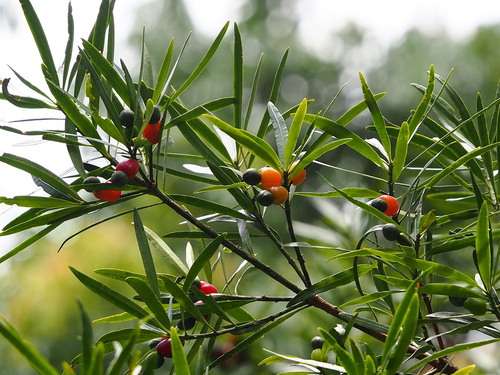
Coralbush
jatropha multifida
The Coralbush has vibrant, colorful leaves that look like they belong in a treasure chest! This plant loves to soak up the sun and attracts many butterflies with its pretty flowers.
Lebensraum: Coralbush typically grows in tropical and subtropical regions, often found in gardens and along roadsides.
The Coralbush is a striking shrub with large, deeply lobed, palm-like green leaves. It produces vibrant clusters of coral-red to scarlet star-shaped flowers that stand out against its foliage.
Kategorie
PflanzenSeltenheit
Common
Gefahr
1/5 · Sehr gering
Snaps
Mach den ersten Snap!
Its Latin name 'Jatropha' surprisingly means 'physician's food,' despite being toxic!
The plant can be called 'Gout Plant' due to its swollen stem base in older, mature specimens.
The unusual, deeply cut leaves of the Coralbush look like tiny green hands or coral formations.
This tropical beauty is often used in traditional medicine, but only by trained specialists!
Coralbush has a milky, toxic sap that helps it defend against hungry herbivores trying to take a bite.
Its ripe seed capsules can explosively eject seeds several meters, helping them spread far and wide.
Bright red, star-shaped flowers act as a beacon, attracting hummingbirds and various insects for pollination.
Amazilia rutila
Feeds on nectar from its flowers
Apis mellifera
Gathers nectar and pollen from blooms
Stenoma cecropia
Larvae feed on Coralbush foliage
Glomus intraradices
Forms beneficial relationship with roots
Farbenfroh beschreibt Organismen oder Objekte, die eine große Vielfalt an leuchtenden und deutlich erkennbaren Farben aufweisen.
Dieses Merkmal kennzeichnet Lebewesen, deren Ernährung vollständig oder hauptsächlich aus pflanzlichem Material besteht.
Waldlebensräume sind terrestrische Lebensräume, die von dichtem Baumbestand dominiert werden und eine große Vielfalt an Pflanzen- und Tierarten beherbergen.
Tagaktive Tiere sind hauptsächlich bei Tageslicht aktiv und ruhen oder schlafen in der Regel nachts.

Beschreibt Organismen, die Pollen übertragen und so die Befruchtung und Fortpflanzung von Pflanzen ermöglichen.
Gefahr
1/5 · Sehr gering
Noch keine besonderen Sicherheitshinweise.
100-300 cm
100-150 cm
1-2 cm
Year-round in tropics, summer to fall elsewhere
Nein
Hoch
Mehrjährig
Insekten
Zoome hinein, um Cluster aufzulösen und zu sehen, wo dieses Objekt fotografiert wurde.
Neueste Snaps erscheinen hier, wenn neue Beobachtungen hinzukommen.