






cutleaf coneflower
Rudbeckia laciniata
The cutleaf coneflower is a bright yellow flower with unique, jagged leaves. It loves to grow in sunny places and can reach up to 6 feet tall, making it a cheerful sight in gardens and fields.
Lebensraum: Grasslands
The cutleaf coneflower is a tall plant with upright stems. It has deeply lobed, 'cut-like' leaves and bright yellow ray petals that droop downwards, surrounding a prominent, often greenish-yellow central cone. Its distinctive form stands out in meadows.
Kategorie
PflanzenSeltenheit
Common
Gefahr
1/5 · Sehr gering
Snaps
Mach den ersten Snap!
Early settlers learned from Native Americans to use its roots for health teas.
Its name 'laciniata' means 'slashed' in Latin, referring to its deeply cut leaves!
Sometimes called 'goldenglow' because its bright blooms shine in the autumn landscape!
The tall green center isn't one flower, but hundreds of tiny flowers packed together!
Cutleaf coneflower can spread through underground stems (rhizomes) that help it form colonies and claim new ground.
Cutleaf coneflower can grow over 10 feet tall, allowing it to reach above other plants and capture more sunlight.
Cutleaf coneflower has bright, nectar-rich flowers that attract many bees and butterflies, ensuring its reproduction.
Cutleaf coneflower roots have traditionally been used to make medicinal teas, showcasing its historical value.
Apis mellifera
collects nectar and pollen
Danaus plexippus
feeds on its nectar
Carduelis tristis
enjoys its nutritious seeds
Bombus impatiens
collects nectar and pollen
Blütenpflanzen sind alle Pflanzen, die als Teil ihres Fortpflanzungszyklus Blüten bilden.
Sommerblühende Pflanzen bringen ihre Blüten während der Sommersaison hervor und sorgen oft für leuchtende Farben, wenn viele andere Pflanzen bereits verblüht sind.
Beschreibt Pflanzen, die für eine Vielzahl von bestäubenden Organismen besonders attraktiv und nützlich sind.
Essbare Pflanzen sind diejenigen Pflanzenteile, die für den menschlichen Verzehr als unbedenklich gelten.

Farbenfroh beschreibt Organismen oder Objekte, die eine große Vielfalt an leuchtenden und deutlich erkennbaren Farben aufweisen.

Grasland-Lebensräume sind terrestrische Biome, die von Gräsern und krautigen Pflanzen dominiert werden und einer Vielzahl von Weidetieren als Lebensraum dienen.

Schnellwachsende Pflanzen weisen eine beschleunigte Wachstumsrate auf und nehmen innerhalb kurzer Zeit schnell an Größe und Biomasse zu.
Noch keine Alternativnamen vorhanden.
Gefahr
1/5 · Sehr gering
Always look but don't pick flowers, so everyone can enjoy them!
100-300 cm
60-120 cm
5-10 cm
Late summer to fall
Ja
Keine
Mehrjährig
Insekten
Zoome hinein, um Cluster aufzulösen und zu sehen, wo dieses Objekt fotografiert wurde.
Neueste Snaps erscheinen hier, wenn neue Beobachtungen hinzukommen.
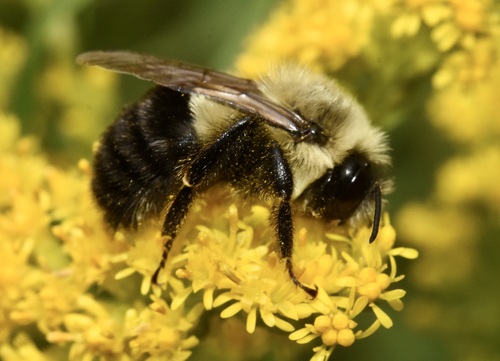
Minnesota, US
Hier kann man sehen Common Eastern Bumble Bee, Wood Nettle und Weißwedelhirsch.
Führer anzeigen →
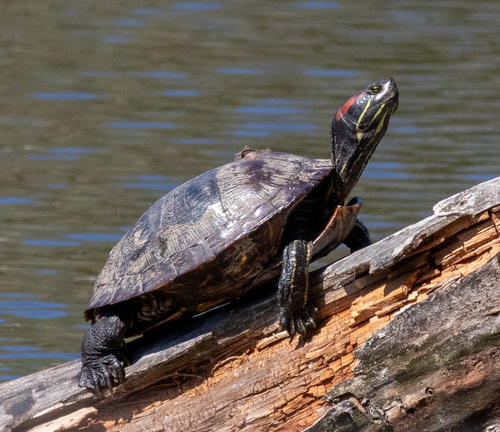
Illinois, US
Hier kann man sehen Pond Slider, Kanadareiher und Black-Crowned Night Heron.
Führer anzeigen →













