

Dasineura Epilobii
dasineura epilobii
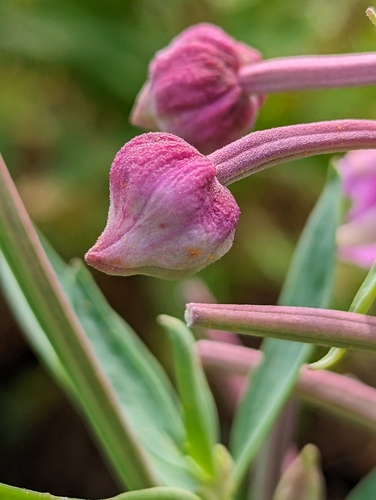
Dasineura epilobii is a tiny, delicate species of gall midge best known not for its adult form, but for the distinct swollen flower buds it creates on willowherbs. As an adult, this fly is incredibly small and fleeting, living only a few days to mate and lay eggs. However, its larvae are masterful botanical architects. By secreting specific chemicals, the larvae manipulate the host plant's growth, causing the flower buds to remain closed, enlarge, and form a protective, nutrient-rich gall. Inside this cozy botanical nursery, the distinctive orange or reddish larvae feed safely hidden from many predators. This fascinating relationship highlights the incredible ways insects can hack plant biology for their own survival.
Lebensraum: Found in meadows, woodland clearings, riverbanks, and disturbed grounds where their host willowherb plants aggressively grow.
Adult Dasineura epilobii are minute, fragile, mosquito-like flies measuring only 1 to 2 millimeters in length, possessing long legs, beaded antennae, and somewhat hairy, translucent wings. Because the adults are so difficult to spot, the species is primarily identified by its distinctive galls on willowherb plants. These galls appear as abnormally swollen, unopened flower buds that may take on a reddish or purplish tinge compared to healthy green buds. If a gall is carefully opened, observers can typically find several tiny, bright orange or yellowish legless larvae wriggling inside.
Kategorie
InsektenSeltenheit
Common
Gefahr
1/5 · Sehr gering
Snaps
Mach den ersten Snap!
Because the gall prevents the flower bud from opening, a heavy infestation can significantly reduce the host plant's ability to produce seeds.
If you open a mature gall, you can often find a vibrant, wriggling mass of tiny orange larvae sharing the same enclosed space.
The adults of Dasineura epilobii lack functional mouthparts and survive just long enough to mate and reproduce.
To protect themselves, the larvae essentially hijack the willowherb plant's biological programming, tricking it into building a safe house instead of a flower.
Larvae secrete specialized chemicals that alter the normal development of the host plant, forcing it to grow a protective gall instead of a normal flower.
The gall not only provides physical shelter but also helps mask the larvae from foraging predators and parasitic wasps by enclosing them in host plant tissue.
Adults do not need to feed, dedicating their brief lifespan entirely to rapid mating and precise egg-laying on specific host plants.
Larvae feed exclusively on the nutrient-rich, hyperplastic tissue inside the galls they induce on willowherb flower buds.
Altersunterschiede: Larvae are obligate herbivores of gall tissue, whereas short-lived adults do not feed at all.
Chamaenerion angustifolium
Lays eggs in the flower buds, causing them to form galls.
Epilobium hirsutum
Another frequent host for these gall-inducing midges in damp habitats.
Torymus sp.
Larvae are often parasitized by specialized tiny wasps that use an ovipositor to pierce the gall.
Für dieses Objekt sind noch keine Merkmal-Badges vergeben.
Noch keine Alternativnamen vorhanden.
Sammlungen für dieses Objekt erscheinen hier, wenn weitere Themen hinzugefügt werden.
Gefahr
1/5 · Sehr gering
Noch keine besonderen Sicherheitshinweise.
Der einfachste Weg, Dasineura Epilobii zu bestimmen, ist die Verwendung der Naturführer-App Snappit.
bis zu 0 cm
0 cm
0 kg
0 Jahre
Larvae feed exclusively on the nutrient-rich, hyperplastic tissue inside the galls they induce on willowherb flower buds.
Found in meadows, woodland clearings, riverbanks, and disturbed grounds where their host willowherb plants aggressively grow.
Gall Inducing Herbivory
Zoome hinein, um Cluster aufzulösen und zu sehen, wo dieses Objekt fotografiert wurde.
Neueste Snaps erscheinen hier, wenn neue Beobachtungen hinzukommen.















