

Eastern Gamagrass
tripsacum dactyloides
Eastern Gamagrass (Tripsacum dactyloides) is a magnificent, native warm-season perennial bunchgrass that stands as a pillar of North American prairie ecosystems. Growing in large, robust clumps that can reach heights of up to three meters, this resilient plant is often mistaken for corn during its early vegetative stage. Historically, it blanketed vast stretches of the tallgrass prairie, providing essential food and cover for a diverse array of wildlife. Today, it is highly valued not only for its ecological benefits but also as a nutritious forage crop for livestock, often referred to as the 'queen of grasses' or 'ice cream grass' due to its extreme palatability. Beyond its agricultural utility, Eastern Gamagrass plays a vital role in soil conservation. Its deep, aggressive root system acts as a natural anchor, preventing erosion along riverbanks and filtering agricultural runoff. It is also a fascinating relative of modern corn, offering scientists crucial genetic insights into crop resilience.
Lebensraum: Typically found in moist, fertile soils of low-lying prairies, wet meadows, riverbanks, and floodplains.
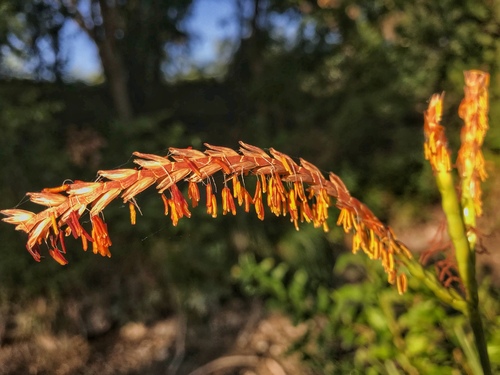
This tall, clump-forming grass is characterized by wide, corn-like leaves that are bright green with a prominent white midrib running down the center. In mid-to-late summer, it produces distinctive, spike-like flowering stalks that stand high above the foliage. These inflorescences are split into female flowers at the bottom, which sport striking, feathery purple-red stigmas, and male flowers at the top, which boast bright yellow dangling anthers. The plant grows from thick, tough, scaly rhizomes that form dense, heavy crowns at the soil surface.
Kategorie
PflanzenSeltenheit
Common
Gefahr
1/5 · Sehr gering
Snaps
Mach den ersten Snap!
Eastern Gamagrass is a close relative of corn (maize) and can be hybridized with it in scientific laboratories.
It is often nicknamed the 'Ice Cream Grass' because livestock find it exceptionally sweet, delicious, and palatable.
Its thick, woody rhizomes are so tough they were known to break the wooden plows of early American settlers.
Possesses an extensive root system that penetrates up to 4.5 meters deep, allowing the plant to access deep water tables and survive severe droughts.
Can survive weeks of complete submersion under floodwaters by utilizing specialized air channels in its roots to maintain oxygen flow.
Certain variants can produce viable seeds without fertilization, ensuring successful reproduction even in isolated environments.
As a photoautotrophic plant, Eastern Gamagrass produces its own organic compounds using sunlight, carbon dioxide, and water via C4 photosynthesis.
Bison bison
Provides critical, high-quality forage for grazing wild herds.
Anatrytone logan
Serves as a vital host plant for the caterpillars of this skipper butterfly.
Für dieses Objekt sind noch keine Merkmal-Badges vergeben.
Noch keine Alternativnamen vorhanden.
Sammlungen für dieses Objekt erscheinen hier, wenn weitere Themen hinzugefügt werden.
Gefahr
1/5 · Sehr gering
Noch keine besonderen Sicherheitshinweise.
Der einfachste Weg, Eastern Gamagrass zu bestimmen, ist die Verwendung der Naturführer-App Snappit.
120-300 cm
10-50 Jahre
As a photoautotrophic plant, Eastern Gamagrass produces its own organic compounds using sunlight, carbon dioxide, and water via C4 photosynthesis.
Typically found in moist, fertile soils of low-lying prairies, wet meadows, riverbanks, and floodplains.
Zoome hinein, um Cluster aufzulösen und zu sehen, wo dieses Objekt fotografiert wurde.
Neueste Snaps erscheinen hier, wenn neue Beobachtungen hinzukommen.