






F-winged Barklouse
Graphopsocus cruciatus
The F-winged Barklouse is a tiny insect that loves to live on tree bark. It has special wings that look like a beautiful fan, making it unique among insects!
Lebensraum: Forests
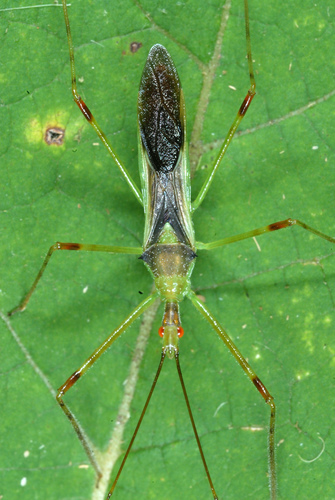
The F-winged Barklouse is a small, soft-bodied insect, typically pale yellow to light brown. It has delicate, transparent wings marked with a distinctive dark F-shaped pattern, which it holds tent-like over its back. These unique wing markings help distinguish it.
Kategorie
InsektenSeltenheit
Common
Gefahr
1/5 · Sehr gering
Snaps
Mach den ersten Snap!
Baby barklice, called nymphs, look like mini adults but often don't have wings yet!
Some barklouse species tap their abdomens on leaves to communicate with each other!
Their delicate wings are surprisingly strong, allowing them to flutter quickly between leaves.
These tiny tree dwellers are more closely related to true bugs than actual lice!
F-winged Barklouse can break down tiny bits of dead plants and fungi because of specialized mouthparts that help them clean tree surfaces.
F-winged Barklouse can create protective silken webs because of glands near its mouth that help them build shelters for their colonies.
F-winged Barklouse has a dappled body and patterned wings that help them blend perfectly with tree bark to avoid watchful predators.
These tiny insects munch on fungi, algae, and dead plant matter, helping to clean up trees.
Misumena vatia
A common predator that ambushes barklice on foliage.
%2C_Parc_de_Woluw%C3%A9%2C_Brussels_(13042792905).jpg&width=800)
Parus major
A common bird that forages for insects on tree bark.
Xanthoria parietina
Feeds on this widespread lichen growing on tree bark.
Alternaria alternata
Grazes on spores and hyphae of this ubiquitous mold.
Einzelgänger leben den größten Teil ihres Lebens allein und interagieren mit Artgenossen nur zur Paarung oder zur Aufzucht der Jungen.
Farbenfroh beschreibt Organismen oder Objekte, die eine große Vielfalt an leuchtenden und deutlich erkennbaren Farben aufweisen.
Dieses Merkmal kennzeichnet Lebewesen, deren Ernährung vollständig oder hauptsächlich aus pflanzlichem Material besteht.
Waldlebensräume sind terrestrische Lebensräume, die von dichtem Baumbestand dominiert werden und eine große Vielfalt an Pflanzen- und Tierarten beherbergen.

Beschreibt Organismen, die totes organisches Material abbauen und Nährstoffe in das Ökosystem zurückführen.

Bezieht sich auf Arten, die deutlich kleiner sind als der Durchschnitt oder das Typische ihrer Art.

Tagaktive Tiere sind hauptsächlich bei Tageslicht aktiv und ruhen oder schlafen in der Regel nachts.

Beschreibt Organismen, die Pollen übertragen und so die Befruchtung und Fortpflanzung von Pflanzen ermöglichen.
Noch keine Alternativnamen vorhanden.
Gefahr
1/5 · Sehr gering
These little insects are harmless, so you can watch them without worry!
5-12 mm
2-5 mm
30-90 Tage
1-5 km/h
These tiny insects munch on fungi, algae, and dead plant matter, helping to clean up trees.
Forests
Foraging
6
Zoome hinein, um Cluster aufzulösen und zu sehen, wo dieses Objekt fotografiert wurde.
Neueste Snaps erscheinen hier, wenn neue Beobachtungen hinzukommen.







_-_Jupiter_Ridge_Natural_Area_-_Palm_Beach_County%2C_Florida_-_(1).jpg&width=800)

_Cerceris_rybyensis_dorsal_view_on_Tordylium_maximum.jpg&width=800)




