Fall Cankerworm Moth
Alsophila pometaria
The Fall Cankerworm Moth is a small moth that comes out in the fall. It has soft wings and is often seen fluttering around trees, especially apple trees!
Lebensraum: Forests
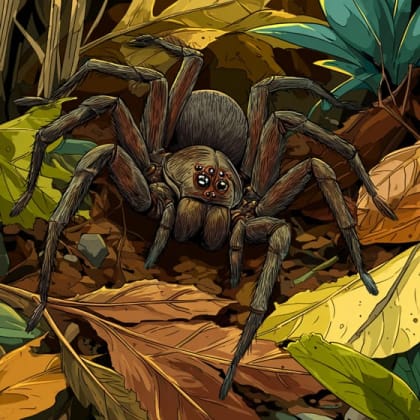
The Fall Cankerworm Moth's male has mottled, brownish-gray forewings and lighter hindwings, sometimes with a darker band. Females are distinctively wingless, with a small, spider-like gray body, often resembling a tiny knot on a tree branch.
Kategorie
InsektenSeltenheit
Common
Gefahr
1/5 · Sehr gering
Snaps
Mach den ersten Snap!
Mass outbreaks of caterpillars can completely strip forests bare of leaves!
Only male Fall Cankerworm Moths have wings and can fly!
Their caterpillars are called 'inchworms' because of their unique looping walk.
Wingless females crawl up trees to lay their eggs in the canopy!
Fall Cankerworm Moth caterpillars can drop from trees on a silk thread to escape predators or move to new leaves.
Their caterpillars can vary in color from green to brown, allowing them to perfectly blend in with twigs and leaves.
Female Fall Cankerworm Moths are unique because they have no wings, which helps them conserve energy to crawl up trees.
As caterpillars, they munch on tree leaves; adults don't need to eat!
Altersunterschiede: Caterpillars are voracious leaf-eaters, while adult moths do not feed.
Quercus rubra
Caterpillars feed on its leaves during spring.
Acer saccharum
Caterpillars are known to defoliate its leaves.
Parus atricapillus
Birds prey on both cankerworm caterpillars and adult moths.
Telenomus alsophilae
Tiny wasps lay eggs inside cankerworm moth eggs.
Pelzig beschreibt Tiere, die eine dichte Schicht aus weichen Haaren oder Fell besitzen.
Einzelgänger leben den größten Teil ihres Lebens allein und interagieren mit Artgenossen nur zur Paarung oder zur Aufzucht der Jungen.
Getarnt beschreibt Organismen, die über eine Färbung oder Musterung verfügen, durch die sie mit ihrer Umgebung verschmelzen.
Dieses Merkmal kennzeichnet Lebewesen, deren Ernährung vollständig oder hauptsächlich aus pflanzlichem Material besteht.

Waldlebensräume sind terrestrische Lebensräume, die von dichtem Baumbestand dominiert werden und eine große Vielfalt an Pflanzen- und Tierarten beherbergen.

Nachtaktive Tiere sind hauptsächlich in den Nachtstunden aktiv und ruhen oder schlafen normalerweise tagsüber.

Beschreibt Organismen, die Pollen übertragen und so die Befruchtung und Fortpflanzung von Pflanzen ermöglichen.
Noch keine Alternativnamen vorhanden.
Gefahr
1/5 · Sehr gering
It's best to watch these moths from a distance and not touch them.
25-35 mm
7-15 mm
7-21 Tage
5 km/h
As caterpillars, they munch on tree leaves; adults don't need to eat!
Forests
Foraging
6
Zoome hinein, um Cluster aufzulösen und zu sehen, wo dieses Objekt fotografiert wurde.
Neueste Snaps erscheinen hier, wenn neue Beobachtungen hinzukommen.