Florida False Sunflower
phoebanthus grandiflorus
The Florida False Sunflower is a bright and cheerful flower that can bring a smile to anyone's face! Its sunny yellow petals look like a little piece of sunshine in the garden.
Lebensraum: They thrive in sunny fields, gardens, and along roadsides in Florida.
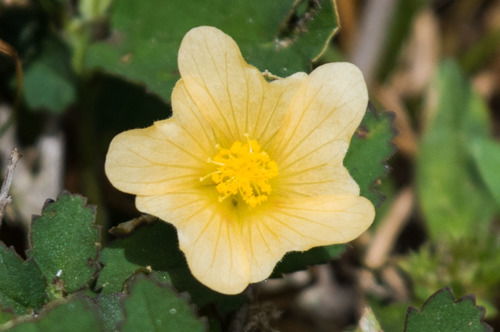
The Florida False Sunflower has vibrant yellow, daisy-like flowers with many thin petals surrounding a darker yellow center. Its rough, hairy stems and leaves, often growing upright, make it visually distinct from true sunflowers, despite its sunny appearance. It forms clumps of bright color.
Kategorie
PflanzenSeltenheit
Common
Gefahr
0/5 · Keine bekannte Gefahr
Snaps
Mach den ersten Snap!
It loves sandy soil so much, it's often found growing near ancient beach dunes!
Its 'false' name means it's related to, but not a true member of the sunflower family!
The scientific name 'Phoebanthus' cleverly means 'sun flower' in ancient Greek!
This sunny flower grows wild only in Florida, making it a true Sunshine State native!
Florida False Sunflower can thrive in dry, sandy soils that other plants struggle in, thanks to its deep root system.
Its bright yellow petals and abundant nectar act like a flashing sign, attracting many bees and butterflies to help it reproduce.
Florida False Sunflower has underground stems (rhizomes) that help it spread and form new plants, creating large colonies.
Apis mellifera
Gathers nectar and pollen
Bombus pennsylvanicus
Visits flowers for nectar and pollen
Danaus plexippus
Sips nectar from the flower heads
Farbenfroh beschreibt Organismen oder Objekte, die eine große Vielfalt an leuchtenden und deutlich erkennbaren Farben aufweisen.
Grasland-Lebensräume sind terrestrische Biome, die von Gräsern und krautigen Pflanzen dominiert werden und einer Vielzahl von Weidetieren als Lebensraum dienen.
Dieses Merkmal kennzeichnet Lebewesen, deren Ernährung vollständig oder hauptsächlich aus pflanzlichem Material besteht.
Tagaktive Tiere sind hauptsächlich bei Tageslicht aktiv und ruhen oder schlafen in der Regel nachts.

Beschreibt Organismen, die Pollen übertragen und so die Befruchtung und Fortpflanzung von Pflanzen ermöglichen.
Gefahr
0/5 · Keine bekannte Gefahr
Noch keine besonderen Sicherheitshinweise.
30-90 cm
30-60 cm
2.5-5 cm
Fall-winter, occasionally year-round
Nein
Keine
Mehrjährig
Insekten
Zoome hinein, um Cluster aufzulösen und zu sehen, wo dieses Objekt fotografiert wurde.
Neueste Snaps erscheinen hier, wenn neue Beobachtungen hinzukommen.