






Forest Tent Caterpillar Moth
Malacosoma disstria
The Forest Tent Caterpillar Moth is a fluffy, brown moth that loves to fly around in the woods. It starts its life as a caterpillar, munching on leaves before transforming into a beautiful moth!
Lebensraum: Forests
The Forest Tent Caterpillar Moth is typically dull yellowish-tan to brownish, often with a darker diagonal band across its forewings. Males are usually smaller and darker than females. Unlike many other moths, its wings lack prominent spots or complex patterns, making it appear quite plain.
Kategorie
InsektenSeltenheit
Common
Gefahr
1/5 · Sehr gering
Snaps
Mach den ersten Snap!
Adult moths have no working mouthparts; they live only days, focused solely on finding a mate.
Despite their name, Forest Tent Caterpillars spin silk mats on branches, not large communal tents!
During outbreaks, millions of caterpillars can strip entire forests bare of leaves in just weeks!
Massive caterpillar marches across roads during outbreaks can make surfaces slippery, like ice!
Forest Tent Caterpillar Moth can blend seamlessly with tree bark because of its mottled brown and gray wings that mimic its surroundings.
The moth can find mates in the dark because females release powerful chemical signals called pheromones that males detect from afar.
Females can protect their future offspring by laying eggs in a durable, waterproof mass covered with a protective cement-like substance.
Its eggs can survive freezing winters because they are laid in a tough, insulated case on tree branches, waiting to hatch in spring.
As caterpillars, they feast on tree leaves; adult moths famously do not eat at all!
Altersunterschiede: Larvae (caterpillars) are voracious leaf-eaters, while adult moths do not feed.
Acer saccharum
Larvae consume its leaves, sometimes causing defoliation during outbreaks.
Populus tremuloides
A primary food source for the caterpillars, especially in northern regions.
.jpg&width=800)
Coccyzus americanus
This bird is one of the few avian predators that readily eats hairy caterpillars.
Sarcophaga aldrichi
Larvae of this parasitic fly infest and consume the caterpillar's pupae.
Pelzig beschreibt Tiere, die eine dichte Schicht aus weichen Haaren oder Fell besitzen.
Soziale Tiere leben in organisierten Gruppen und kooperieren, um ihr Überleben zu sichern, beispielsweise bei der Nahrungssuche, Verteidigung und Aufzucht der Jungen.
Getarnt beschreibt Organismen, die über eine Färbung oder Musterung verfügen, durch die sie mit ihrer Umgebung verschmelzen.
Dieses Merkmal kennzeichnet Lebewesen, deren Ernährung vollständig oder hauptsächlich aus pflanzlichem Material besteht.

Waldlebensräume sind terrestrische Lebensräume, die von dichtem Baumbestand dominiert werden und eine große Vielfalt an Pflanzen- und Tierarten beherbergen.

Tagaktive Tiere sind hauptsächlich bei Tageslicht aktiv und ruhen oder schlafen in der Regel nachts.

Beschreibt Organismen, die Pollen übertragen und so die Befruchtung und Fortpflanzung von Pflanzen ermöglichen.
Noch keine Alternativnamen vorhanden.
Gefahr
1/5 · Sehr gering
It's best to watch these moths from a distance and not touch them.
25-45 mm
15-25 mm
5-10 Tage
10-25 km/h
As caterpillars, they feast on tree leaves; adult moths famously do not eat at all!
Forests
Foraging
6
Zoome hinein, um Cluster aufzulösen und zu sehen, wo dieses Objekt fotografiert wurde.
Neueste Snaps erscheinen hier, wenn neue Beobachtungen hinzukommen.
.jpg)
Pennsylvania, US
Hier kann man sehen Admiral-Schmetterling.
Führer anzeigen →
Ontario, CA
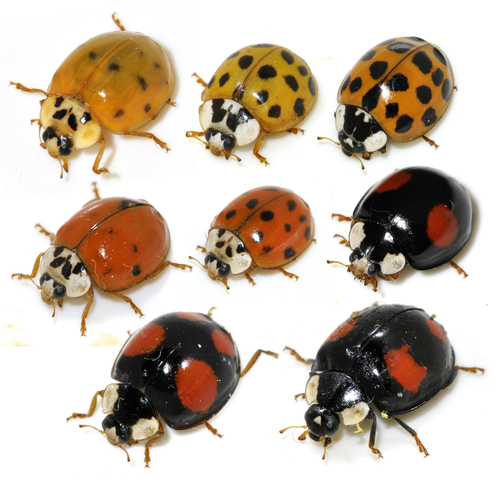
Hier kann man sehen Asiatischer Marienkäfer und Forest Tent Caterpillar Moth.
Führer anzeigen →
Tennessee, US
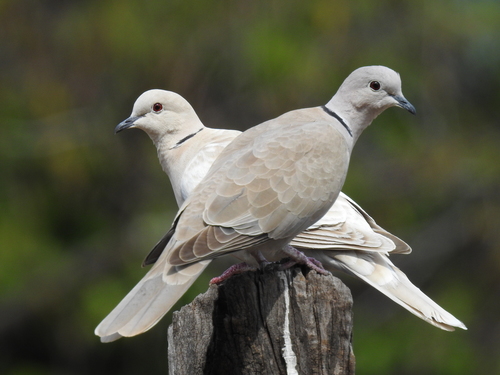
Hier kann man sehen Eurasian Collared-Dove und Hallimasch.
Führer anzeigen →

Ontario, CA
Hier kann man sehen Common Eastern Bumble Bee und Two-Spotted Bumble Bee.
Führer anzeigen →







_Thyatira_batis_-_Kunstat_Czech_Republic_-_male.jpg&width=800)


.jpg&width=800)

