


Glacier Lily
Erythronium grandiflorum
The Glacier Lily is a bright yellow flower that blooms in the spring. It grows in cool, mountainous areas and is a favorite for butterflies and bees!
Lebensraum: Mountain regions
The Glacier Lily has vibrant yellow, nodding flowers with gracefully recurved petals, often appearing in clusters. Its lance-shaped leaves are typically green, sometimes mottled with brownish-purple, making it stand out against the melting snow.
Kategorie
PflanzenSeltenheit
Common
Gefahr
1/5 · Sehr gering
Snaps
Mach den ersten Snap!
Each seed has a tasty treat for ants, convincing them to carry it far away!
Glacier Lily flowers actually tilt their heads to follow the sun's path all day long!
Its leaves and flowers burst forth so quickly, they can melt tunnels through fresh snow!
The underground bulb, sometimes called a "dogtooth," stores energy for years!
Glacier Lily can burst into bloom immediately after snowmelt, thanks to energy stored in its bulb, letting it grab sunlight before trees leaf out.
Glacier Lily has tiny fatty attachments on its seeds that ants love, prompting them to carry and disperse the seeds to new spots.
Glacier Lily's flowers track the sun across the sky during the day, maximizing warmth and pollination opportunities.
Bombus occidentalis
collects nectar and pollen
Formica fusca
eats elaiosomes, disperses seeds
Ursus americanus
digs up and consumes bulbs

Marmota flaviventris
grazes on leaves and bulbs
Odocoileus hemionus
browses on the plant's foliage
Glockenförmige Blüten besitzen Blütenblätter, die verwachsen oder so angeordnet sind, dass sie eine becher- oder glockenähnliche Struktur bilden.
Frühlingsblüher bilden ihre Blüten im Frühjahr und kündigen oft das Ende des Winters und den Beginn neuen Wachstums an.
Winterharte Pflanzen können niedrigen Temperaturen und Frost ohne nennenswerte Schäden standhalten.
Beschreibt Pflanzen, die für eine Vielzahl von bestäubenden Organismen besonders attraktiv und nützlich sind.

Essbare Pflanzen sind diejenigen Pflanzenteile, die für den menschlichen Verzehr als unbedenklich gelten.

Dieses Lebensraummerkmal kennzeichnet Arten, die in Bergregionen vorkommen, welche sich durch große Höhen, steile Hänge und unterschiedliche Klimazonen auszeichnen.

Beschreibt Organismen, die Pollen übertragen und so die Befruchtung und Fortpflanzung von Pflanzen ermöglichen.
Noch keine Alternativnamen vorhanden.
Gefahr
1/5 · Sehr gering
Always look but don't pick flowers in nature; they help the environment!
15-40 cm
3-5 cm
Early spring to early summer
Ja
Keine
Mehrjährig
Insekten
Mountain regions
Zoome hinein, um Cluster aufzulösen und zu sehen, wo dieses Objekt fotografiert wurde.
Neueste Snaps erscheinen hier, wenn neue Beobachtungen hinzukommen.

British Columbia, CA
Hier kann man sehen White Pasqueflower und Hoary Marmot.
Führer anzeigen →
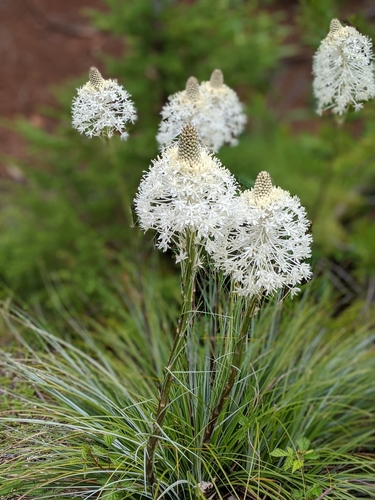
British Columbia, CA
Hier kann man sehen Common Beargrass und White-Flowered Rhododendron.
Führer anzeigen →

British Columbia, CA
Hier kann man sehen White Pasqueflower und Columbian Ground Squirrel.
Führer anzeigen →

British Columbia, CA
Hier kann man sehen Blaubeerstrauch, Common Selfheal und Common Cowparsnip.
Führer anzeigen →

British Columbia, CA
Hier kann man sehen Western Rattlesnake Plantain und Shinyleaf Meadowsweet.
Führer anzeigen →








_7146.jpg&width=800)