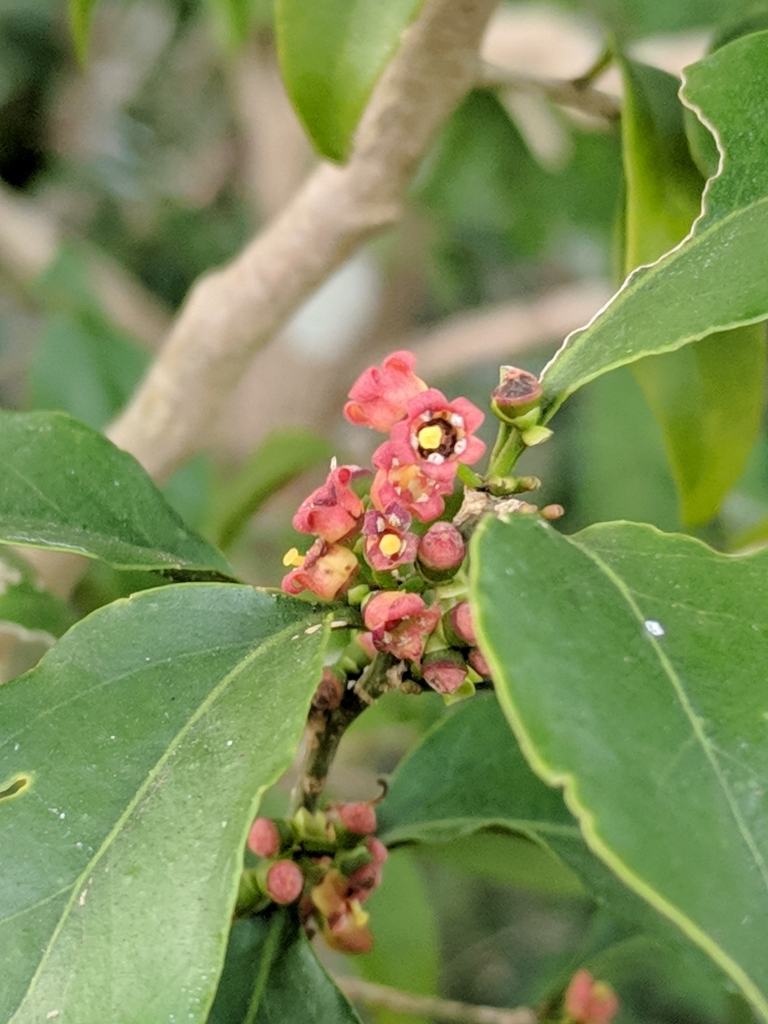





Graytwig
Schoepfia schreberi
Graytwig is a special shrub with thin, gray branches. It grows in forests and can be a fun place for little animals to hide and play.
Lebensraum: Forests
The Graytwig is a modest shrub with smooth, grayish-brown bark and glossy green leaves. Its tiny, yellowish-green flowers bloom in clusters, later developing into small, round, bright orange fruits that stand out against the foliage.
Kategorie
PflanzenSeltenheit
Common
Gefahr
1/5 · Sehr gering
Snaps
Mach den ersten Snap!
It belongs to an ancient family of plants, with relatives going back millions of years!
Its roots can connect to other plants, secretly sharing their food!
The sweet, orange fruits of the Graytwig are a tasty treat for many animals!
Tiny, unassuming flowers transform into brightly colored, jewel-like fruits!
Graytwig can secretly connect its roots to nearby plants, borrowing water and nutrients to help it grow stronger.
Graytwig grows bright orange fruits that signal to birds and other animals that a tasty snack is ready for dispersal.
Mangifera indica
Graytwig taps into the roots of this tree for water and nutrients.
Pycnonotus jocosus
This bird enjoys eating Graytwig's sweet orange fruits.
Apis cerana
The bee visits Graytwig's small flowers to collect nectar and pollen.
Laubabwerfende Pflanzen werfen regelmäßig all ihre Blätter ab, typischerweise im Herbst oder in Trockenzeiten.
Schattenverträgliche Pflanzen sind an das Wachstum und Gedeihen in Bereichen mit wenig Licht angepasst und benötigen weniger direkte Sonneneinstrahlung.
Ein Strauch ist eine verholzende Pflanze, die kleiner als ein Baum ist und typischerweise mehrere Stämme hat, die sich ab oder nahe dem Boden verzweigen.
Herbstfärbung bezeichnet den jahreszeitlichen Wechsel der Blattpigmentierung, der vor allem bei Laubpflanzen leuchtende Farbtöne hervorbringt.

Waldlebensräume sind terrestrische Lebensräume, die von dichtem Baumbestand dominiert werden und eine große Vielfalt an Pflanzen- und Tierarten beherbergen.
Noch keine Alternativnamen vorhanden.
Gefahr
1/5 · Sehr gering
Always stay on paths when exploring nature and don't touch plants without asking an adult.
150-400 cm
100-300 cm
0.3-0.5 cm
Late Spring to Early Summer
Ja
Keine
Mehrjährig
Insekten
Zoome hinein, um Cluster aufzulösen und zu sehen, wo dieses Objekt fotografiert wurde.
Neueste Snaps erscheinen hier, wenn neue Beobachtungen hinzukommen.