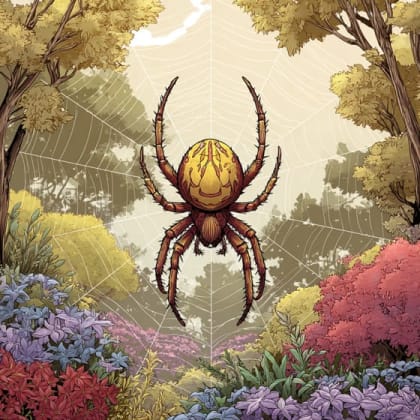
Great Grig
cyphoderris monstrosa
The Great Grig is a fascinating insect known for its loud chirping sounds! Kids love to listen to it during warm summer nights!
Lebensraum: Great Grigs live in grassy areas, gardens, and fields, especially where it's warm and sunny.
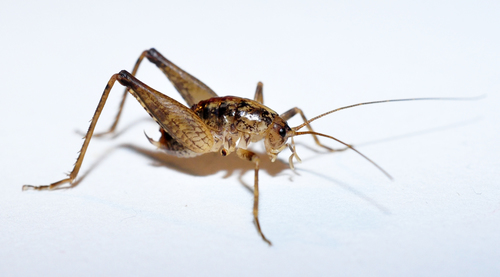
The Great Grig is a robust, mostly flightless katydid with a thick, squat body, typically brown or reddish-brown. It has short, rounded wing pads and notably long, powerful hind legs adapted for jumping. Its overall appearance is stout and somewhat bumpy, distinct from slender flying grasshoppers.
Kategorie
InsektenSeltenheit
Common
Gefahr
0/5 · Keine bekannte Gefahr
Snaps
Mach den ersten Snap!
Even though they have wings, Great Grigs prefer to hop or walk, not fly!
Males offer females a special yummy 'nuptial meal' during mating!
Their antennae are super long, often much longer than their whole body!
These amazing insects are often called "ice bugs" because they survive freezing!
Great Grig can leap impressive distances because of its powerful hind legs that help it escape predators quickly.
Great Grig can 'sing' loudly by rubbing its wing pads together, a sound that helps males attract mates in the darkness.
Great Grig has natural antifreeze in its blood, allowing it to survive freezing temperatures that would kill most insects.
Great Grig can blend into its environment using cryptic coloration that helps it hide from predators among vegetation.
Great Grigs are omnivores, munching on small insects and various plants found in their habitat.
Corvus brachyrhynchos
Predatory birds often hunt them.
Peromyscus maniculatus
Rodents find them a tasty meal.
Populus tremuloides
Feeds on leaves and shoots.
Aphis gossypii
Grigs prey on small, soft-bodied insects.
Soziale Tiere leben in organisierten Gruppen und kooperieren, um ihr Überleben zu sichern, beispielsweise bei der Nahrungssuche, Verteidigung und Aufzucht der Jungen.
Farbenfroh beschreibt Organismen oder Objekte, die eine große Vielfalt an leuchtenden und deutlich erkennbaren Farben aufweisen.
Grasland-Lebensräume sind terrestrische Biome, die von Gräsern und krautigen Pflanzen dominiert werden und einer Vielzahl von Weidetieren als Lebensraum dienen.
Dieses Merkmal kennzeichnet Organismen, deren Ernährung vollständig oder hauptsächlich aus tierischem Gewebe besteht.

Nachtaktive Tiere sind hauptsächlich in den Nachtstunden aktiv und ruhen oder schlafen normalerweise tagsüber.
Gefahr
0/5 · Keine bekannte Gefahr
Noch keine besonderen Sicherheitshinweise.
15-30 mm
60-120 Tage
Great Grigs are omnivores, munching on small insects and various plants found in their habitat.
Great Grigs live in grassy areas, gardens, and fields, especially where it's warm and sunny.
Foraging
6
Zoome hinein, um Cluster aufzulösen und zu sehen, wo dieses Objekt fotografiert wurde.
Neueste Snaps erscheinen hier, wenn neue Beobachtungen hinzukommen.







_Caterpillar_(7571203452).jpg&width=800)