



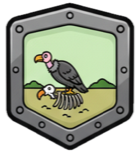


Greater Adjutant
Leptoptilos dubius
The Greater Adjutant is a large bird with long legs and a big beak. It often stands tall and can be found near wetlands, where it looks for food like fish and frogs.
Lebensraum: Wetlands
The Greater Adjutant is a very large, grey-bodied stork with whitish underparts and a massive, wedge-shaped bill. It has a bare, reddish head and neck featuring a distinctive large gular pouch hanging from its throat.
Kategorie
VögelSeltenheit
Rare
Gefahr
1/5 · Sehr gering
Snaps
Mach den ersten Snap!
Once common, they are now one of the world's most endangered stork species.
Sometimes, Greater Adjutants swallow really large bones whole after eating carrion!
Their bare head and neck help them stay clean when eating messy meals.
These giant storks make loud clattering sounds with their huge bills, not vocal calls!
Greater Adjutants have a large gular pouch that helps them cool down by releasing excess body heat.
Greater Adjutants can tear apart large carcasses because they have a powerful, thick bill for tough scavenging.
Greater Adjutants can soar high in the sky for hours because their huge wings catch warm air currents.
These giant birds are important scavengers, often eating rotting meat, but also hunting small animals.
Bos indicus
cleans up carcasses of dead livestock.
Rana tigrina
preys on frogs in wetland habitats.
Varanus salvator
sometimes preys on eggs and chicks.
Corvus splendens
occasionally raids nests for eggs or chicks.
Gefiedert beschreibt Tiere, hauptsächlich Vögel, die ein Federkleid besitzen.
Soziale Tiere leben in organisierten Gruppen und kooperieren, um ihr Überleben zu sichern, beispielsweise bei der Nahrungssuche, Verteidigung und Aufzucht der Jungen.
Aasfresser ernähren sich von toter organischer Substanz und helfen dabei, Kadaver und andere Abfälle im Ökosystem abzubauen.
Filtrierer nehmen Nährstoffe auf, indem sie schwebende Nahrungspartikel und kleine Organismen aus dem Wasser filtern.

Fischfressende Organismen sind Tiere, die sich hauptsächlich von Fisch ernähren.

Dieses Lebensraummerkmal kennzeichnet Arten, die in Feuchtgebieten vorkommen. Dies sind Landflächen, die dauerhaft oder saisonal mit Wasser gesättigt sind, darunter Marschland, Sümpfe und Moore.

Tagaktive Tiere sind hauptsächlich bei Tageslicht aktiv und ruhen oder schlafen in der Regel nachts.

Riesig beschreibt Organismen oder Objekte, die deutlich größer sind als der Durchschnitt ihrer Art oder ihres Typs.

Der Status 'Stark gefährdet' bedeutet, dass eine Art in naher Zukunft einem sehr hohen Risiko ausgesetzt ist, in freier Wildbahn auszusterben.
Gefahr
1/5 · Sehr gering
Always watch birds from a distance and don't try to touch them.
130-150 cm
200-280 cm
8-15 kg
15-25 Jahre
45 km/h
These giant birds are important scavengers, often eating rotting meat, but also hunting small animals.
Wetlands
Scavenging
Zoome hinein, um Cluster aufzulösen und zu sehen, wo dieses Objekt fotografiert wurde.
Neueste Snaps erscheinen hier, wenn neue Beobachtungen hinzukommen.















_-_Meleagris_gallopavo%2C_Occoquan_Bay_National_Wildlife_Refuge%2C_Woodbridge%2C_Virginia.jpg&width=800)

