Grouse Whortleberry
Vaccinium scoparium
The Grouse Whortleberry is a small shrub that grows tasty berries. These berries are loved by birds and other animals. They are often found in the wild, making them a special treat in nature!
Lebensraum: Forests
The Grouse Whortleberry is a small, upright shrub with slender, reddish-brown twigs. It has tiny, bright green oval leaves that turn brilliant red-orange in fall. Its delicate, pinkish-white bell-shaped flowers mature into small, shiny red to dark blue berries.
Kategorie
PflanzenSeltenheit
Common
Gefahr
1/5 · Sehr gering
Snaps
Mach den ersten Snap!
Even though it's called 'whortleberry,' it's actually a close relative of the popular blueberry!
In autumn, its small green leaves put on a spectacular show, transforming into vibrant shades of red and orange!
It can thrive in challenging, rocky mountain soils where most other plants struggle to grow!
These tiny berries were once a key food source for Native American tribes in mountain regions!
Grouse Whortleberry thrives in acidic, nutrient-poor soils where many plants struggle, thanks to specialized root fungi helping it absorb nutrients.
Grouse Whortleberry spreads through underground stems (rhizomes), forming dense patches and quickly colonizing disturbed areas for survival.
Grouse Whortleberry produces abundant small, tart berries, providing a vital food source for birds and mammals, ensuring seed dispersal.
Ursus americanus
Forages on berries in late summer
Turdus migratorius
Eats berries for energy

Bombus vosnesenskii
Collects nectar and pollen
Rhizoscyphus ericae
Aids nutrient absorption in poor soils
Schattenverträgliche Pflanzen sind an das Wachstum und Gedeihen in Bereichen mit wenig Licht angepasst und benötigen weniger direkte Sonneneinstrahlung.
Ein Strauch ist eine verholzende Pflanze, die kleiner als ein Baum ist und typischerweise mehrere Stämme hat, die sich ab oder nahe dem Boden verzweigen.
Fruchttragende Pflanzen produzieren Früchte, also die reifen Fruchtknoten von Blütenpflanzen, die Samen enthalten.
Essbare Pflanzen sind diejenigen Pflanzenteile, die für den menschlichen Verzehr als unbedenklich gelten.

Herbstfärbung bezeichnet den jahreszeitlichen Wechsel der Blattpigmentierung, der vor allem bei Laubpflanzen leuchtende Farbtöne hervorbringt.

Dieses Lebensraummerkmal kennzeichnet Arten, die in Bergregionen vorkommen, welche sich durch große Höhen, steile Hänge und unterschiedliche Klimazonen auszeichnen.

Waldlebensräume sind terrestrische Lebensräume, die von dichtem Baumbestand dominiert werden und eine große Vielfalt an Pflanzen- und Tierarten beherbergen.
Noch keine Alternativnamen vorhanden.
Gefahr
1/5 · Sehr gering
Always check with an adult before eating any berries in nature.
10-60 cm
15-75 cm
0.3-0.5 cm
Late spring to early summer
Ja
Keine
Mehrjährig
Insekten
Zoome hinein, um Cluster aufzulösen und zu sehen, wo dieses Objekt fotografiert wurde.
Neueste Snaps erscheinen hier, wenn neue Beobachtungen hinzukommen.
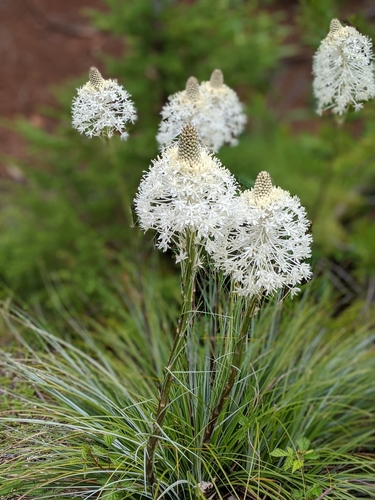
British Columbia, CA
Hier kann man sehen Common Beargrass, Subalpine Larch und Mountain Bog Gentian.
Führer anzeigen →
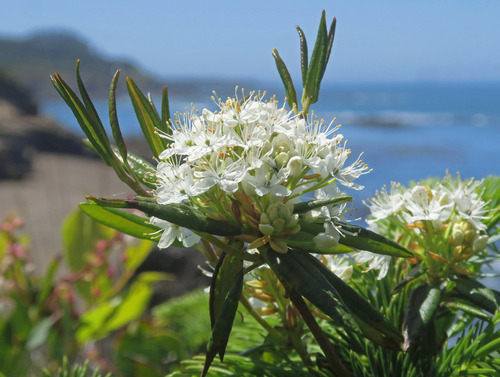
British Columbia, CA
Hier kann man sehen Western Labrador Tea, Grouse Whortleberry und Küsten-Kiefer.
Führer anzeigen →