Hairy Bittercress
cardamine hirsuta
Hairy Bittercress is a small plant with pretty white flowers that bloom in the spring. It's fun to spot in gardens and parks because it often grows in clusters!
Lebensraum: Moist and shady places like gardens, parks, and woodlands.
The Hairy Bittercress is a small, low-growing plant with a rosette of lobed, dark green leaves often tinged purple at the base. It has slender stems topped with clusters of tiny white, four-petaled flowers, which distinguish it from many larger garden weeds.
Kategorie
PflanzenSeltenheit
Common
Gefahr
0/5 · Keine bekannte Gefahr
Snaps
Mach den ersten Snap!
Even when cut back, this plant can quickly regrow and produce more seeds!
It can produce over 5,000 tiny seeds from just one plant in a single season!
Its peppery leaves are a favorite addition to salads, adding a zesty mustard flavor.
The 'bittercress' part of its name comes from its slightly bitter, peppery taste.
Hairy Bittercress can launch its seeds up to several meters away using spring-loaded pods, helping it spread rapidly across areas.
This plant can germinate and grow even in cold winter months, giving it a head start over many other plants in spring.
Hairy Bittercress matures and produces seeds incredibly fast, allowing it to complete its life cycle before competitors take over.

Helix aspersa
Snails often munch on its leaves.
Arion lusitanicus
Slugs are known to feed on its foliage.
Apis mellifera
Honey bees visit its small white flowers.
Farbenfroh beschreibt Organismen oder Objekte, die eine große Vielfalt an leuchtenden und deutlich erkennbaren Farben aufweisen.
Grasland-Lebensräume sind terrestrische Biome, die von Gräsern und krautigen Pflanzen dominiert werden und einer Vielzahl von Weidetieren als Lebensraum dienen.
Dieses Merkmal kennzeichnet Lebewesen, deren Ernährung vollständig oder hauptsächlich aus pflanzlichem Material besteht.
Waldlebensräume sind terrestrische Lebensräume, die von dichtem Baumbestand dominiert werden und eine große Vielfalt an Pflanzen- und Tierarten beherbergen.

Beschreibt Organismen, die Pollen übertragen und so die Befruchtung und Fortpflanzung von Pflanzen ermöglichen.
Gefahr
0/5 · Keine bekannte Gefahr
Noch keine besonderen Sicherheitshinweise.
5-30 cm
10-20 cm
0.2-0.4 cm
Spring to autumn
Ja
Keine
Einjährig
Selbstbestäubung
Zoome hinein, um Cluster aufzulösen und zu sehen, wo dieses Objekt fotografiert wurde.
Neueste Snaps erscheinen hier, wenn neue Beobachtungen hinzukommen.
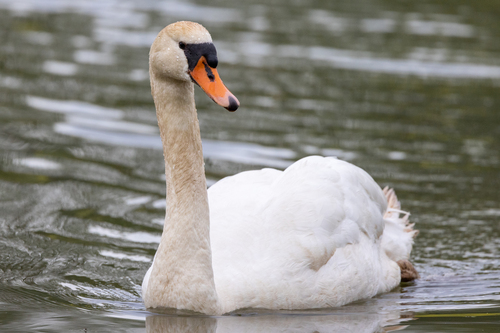
New York, US
Hier kann man sehen Höckerschwan, Ente und Haussperling.
Führer anzeigen →
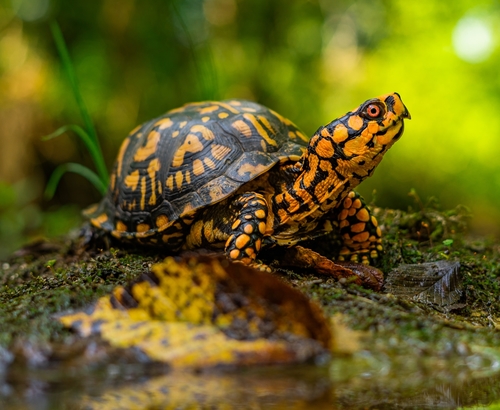
Virginia, US
Hier kann man sehen östliche Dosenschildkröte und Amerikanische Platane.
Führer anzeigen →
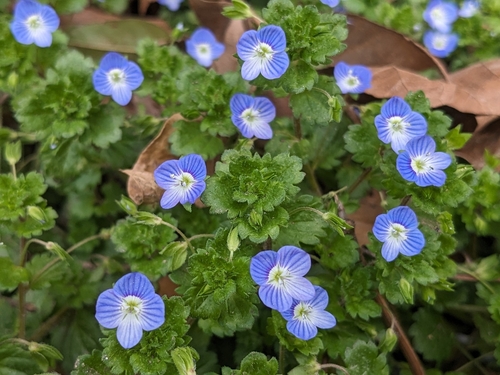
Virginia, US
Hier kann man sehen Bird's-Eye Speedwell und Mulberries.
Führer anzeigen →