






Hornbills
Bucerotidae
Hornbills are colorful birds known for their large, curved bills. They live in forests and are fun to watch as they fly and make sounds. Some hornbills even help trees by spreading seeds!
Lebensraum: Forests
The Hornbills have remarkably large, often brightly colored bills topped with a prominent, bony structure called a casque. Their plumage is typically black and white, sometimes with vibrant patches of red, yellow, or blue around the face or wings, making them visually striking.
Kategorie
VögelSeltenheit
Common
Gefahr
2/5 · Gering
Snaps
Mach den ersten Snap!
Hornbills have long, thick eyelashes that help protect their eyes from sun and debris.
Some hornbill species can toss fruit into the air with their bill and catch it to eat!
The wings of a flying hornbill make a loud 'whooshing' sound that can be heard from afar!
Unlike most birds, some hornbill species have fused neck vertebrae to support their giant bills.
Hornbills can seal the female inside a tree cavity during nesting, protecting her and chicks from predators.
Hornbills have a hollow casque on their bill that amplifies their calls, allowing them to communicate loudly across distances.
Hornbills have large, strong bills that help them pluck and swallow big fruits, then spread their seeds far away.
Hornbills are omnivores that enjoy a varied diet of fruits, insects, and small animals.
Ficus benghalensis
Hornbills are vital for dispersing the seeds of fig trees.
Naja naja
Some hornbill species prey on small snakes.
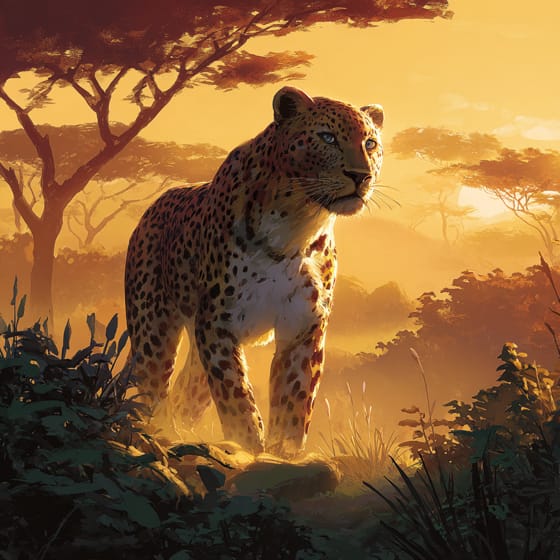
Panthera pardus
Large predators like leopards can sometimes hunt hornbills.
Gefiedert beschreibt Tiere, hauptsächlich Vögel, die ein Federkleid besitzen.
Soziale Tiere leben in organisierten Gruppen und kooperieren, um ihr Überleben zu sichern, beispielsweise bei der Nahrungssuche, Verteidigung und Aufzucht der Jungen.
Dieses Merkmal kennzeichnet Organismen, deren Ernährung sowohl pflanzliche als auch tierische Bestandteile umfasst.
Farbenfroh beschreibt Organismen oder Objekte, die eine große Vielfalt an leuchtenden und deutlich erkennbaren Farben aufweisen.

Waldlebensräume sind terrestrische Lebensräume, die von dichtem Baumbestand dominiert werden und eine große Vielfalt an Pflanzen- und Tierarten beherbergen.

Beschreibt eine Art, deren Anwesenheit und Rolle einen unverhältnismäßig großen Einfluss auf ihre Umwelt haben.

Tagaktive Tiere sind hauptsächlich bei Tageslicht aktiv und ruhen oder schlafen in der Regel nachts.

Beschreibt Organismen, die Pollen übertragen und so die Befruchtung und Fortpflanzung von Pflanzen ermöglichen.

Der Status 'Stark gefährdet' bedeutet, dass eine Art in naher Zukunft einem sehr hohen Risiko ausgesetzt ist, in freier Wildbahn auszusterben.
Noch keine Alternativnamen vorhanden.
Gefahr
2/5 · Gering
Always watch hornbills from a distance and don't try to touch them.
30-120 cm
40-180 cm
0.15-4.2 kg
15-50 Jahre
40 km/h
Hornbills are omnivores that enjoy a varied diet of fruits, insects, and small animals.
Forests
Foraging
Zoome hinein, um Cluster aufzulösen und zu sehen, wo dieses Objekt fotografiert wurde.
Neueste Snaps erscheinen hier, wenn neue Beobachtungen hinzukommen.




.jpg&width=800)










