King colobus
Colobus polykomos
The King colobus is a beautiful monkey with long, fluffy fur and a special black and white coat. They love to swing through the trees in their forest homes and are very playful and social animals.
Lebensraum: Forests
The King colobus has a strikingly beautiful coat of glossy black fur, dramatically contrasted by a long, flowing white cape around its shoulders. It features a bright white tail tuft and white facial markings, making it instantly recognizable among other forest primates.
Kategorie
SäugetiereSeltenheit
Common
Gefahr
2/5 · Gering
Snaps
Mach den ersten Snap!
King colobus babies are born with pure white fur, but they quickly turn black as they grow!
King colobus spend most of their lives high up in the trees, rarely coming down to the ground!
These monkeys got their name 'colobus' because they have a very tiny, almost missing, thumb!
They communicate with each other using a variety of booming calls that echo through the forest.
King colobus can digest tough leaves because it has a specialized multi-chambered stomach, helping it get nutrients from food others can't.
King colobus has long, powerful limbs and a balancing tail that helps it swing and leap gracefully through high forest trees.
King colobus has a reduced thumb (vestigial) and strong fingers that help it grip branches tightly for incredible, silent leaps.
Mostly eats leaves, but also enjoys fruits, flowers, and seeds found high in the forest trees.
%2C_at_Ndumo_Nature_Reserve%2C_KwaZulu-Natal%2C_South_Africa_(28947411865).jpg&width=800)
Stephanoaetus coronatus
a primary aerial predator of young and adult colobus.
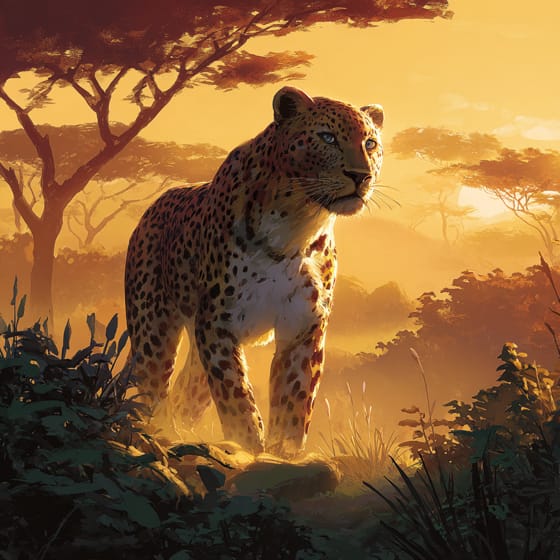
Panthera pardus
a significant ground predator in the colobus habitat.
Ficus exasperata
colobus consume its leaves and fruits, aiding seed dispersal.
Pelzig beschreibt Tiere, die eine dichte Schicht aus weichen Haaren oder Fell besitzen.
Soziale Tiere leben in organisierten Gruppen und kooperieren, um ihr Überleben zu sichern, beispielsweise bei der Nahrungssuche, Verteidigung und Aufzucht der Jungen.
Baumbewohnende Tiere leben hauptsächlich in Bäumen und nutzen diese als Unterschlupf, Nahrungsquelle und zum Schutz vor Raubtieren.
Dieses Merkmal kennzeichnet Lebewesen, deren Ernährung vollständig oder hauptsächlich aus pflanzlichem Material besteht.

Waldlebensräume sind terrestrische Lebensräume, die von dichtem Baumbestand dominiert werden und eine große Vielfalt an Pflanzen- und Tierarten beherbergen.

Tagaktive Tiere sind hauptsächlich bei Tageslicht aktiv und ruhen oder schlafen in der Regel nachts.

Der Status 'Stark gefährdet' bedeutet, dass eine Art in naher Zukunft einem sehr hohen Risiko ausgesetzt ist, in freier Wildbahn auszusterben.
Gefahr
2/5 · Gering
Always watch from a distance and never try to touch wild animals like monkeys.
60-70 cm
6-14 kg
15-25 Jahre
30 km/h
Mostly eats leaves, but also enjoys fruits, flowers, and seeds found high in the forest trees.
Forests
Foraging
1
Zoome hinein, um Cluster aufzulösen und zu sehen, wo dieses Objekt fotografiert wurde.
Neueste Snaps erscheinen hier, wenn neue Beobachtungen hinzukommen.