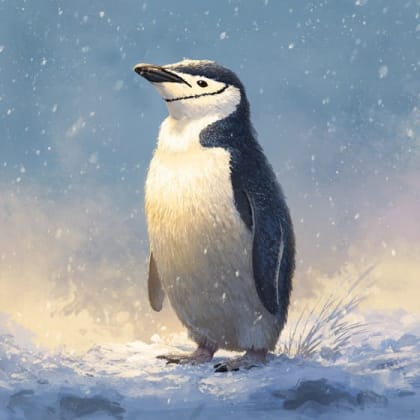



Knob-billed Duck
Sarkidiornis melanotos
The Knob-billed Duck is a unique bird with a big, funny knob on its bill! It loves to swim in lakes and rivers, and its beautiful feathers can be black and white.
Lebensraum: Wetlands
The Knob-billed Duck has an iridescent black back and head, contrasting with a clean white belly and grey flanks. Males feature a large, prominent black knob atop their bill, which is noticeably larger during the breeding season. Its large size and unique bill knob make it easily identifiable among other waterfowl.
Kategorie
VögelSeltenheit
Common
Gefahr
1/5 · Sehr gering
Snaps
Mach den ersten Snap!
Males develop a dramatic, oversized knob on their bill when it's time to find a partner!
Sometimes, multiple female Knob-billed Ducks will share one giant nest for their eggs!
Their feathers shimmer with beautiful green and purple colors in the bright sunlight.
These ducks often lay their eggs in tree hollows, a very unusual nesting spot for ducks.
Knob-billed Ducks can dive deep underwater to find food because of their strong, webbed feet that help them propel through the water.
The male Knob-billed Duck has a prominent fleshy knob on its bill that grows larger in breeding season, which helps attract a mate.
Knob-billed Ducks possess strong wings and streamlined bodies that enable powerful, swift flight, helping them travel between wetland habitats.
They eat mostly plants, seeds, and aquatic insects found in wetland areas.
Crocodylus niloticus
Large crocodiles sometimes prey on adult ducks or ducklings.
Haliaeetus vocifer
Fish eagles are powerful raptors that hunt ducks.
Nymphaea lotus
Ducks consume seeds and parts of this common water plant.
Oryza sativa
Found feeding on rice grains and sprouts in paddies.
Gefiedert beschreibt Tiere, hauptsächlich Vögel, die ein Federkleid besitzen.
Zeichnet sich durch Zehen aus, die durch eine Membran verbunden sind und normalerweise das Schwimmen erleichtern.
Soziale Tiere leben in organisierten Gruppen und kooperieren, um ihr Überleben zu sichern, beispielsweise bei der Nahrungssuche, Verteidigung und Aufzucht der Jungen.
Farbenfroh beschreibt Organismen oder Objekte, die eine große Vielfalt an leuchtenden und deutlich erkennbaren Farben aufweisen.

Filtrierer nehmen Nährstoffe auf, indem sie schwebende Nahrungspartikel und kleine Organismen aus dem Wasser filtern.

Dieses Merkmal kennzeichnet Lebewesen, deren Ernährung vollständig oder hauptsächlich aus pflanzlichem Material besteht.

Dieses Lebensraummerkmal kennzeichnet Arten, die in Feuchtgebieten vorkommen. Dies sind Landflächen, die dauerhaft oder saisonal mit Wasser gesättigt sind, darunter Marschland, Sümpfe und Moore.

Süßwasserlebensräume umfassen nicht-salzige Gewässer wie Flüsse, Seen, Teiche und Feuchtgebiete, die für zahlreiche Arten lebenswichtig sind.

Tagaktive Tiere sind hauptsächlich bei Tageslicht aktiv und ruhen oder schlafen in der Regel nachts.
Gefahr
1/5 · Sehr gering
Always watch ducks from a distance and do not feed them bread.
56-76 cm
105-145 cm
1.2-2.9 kg
5-10 Jahre
60 km/h
They eat mostly plants, seeds, and aquatic insects found in wetland areas.
Wetlands
Foraging
Zoome hinein, um Cluster aufzulösen und zu sehen, wo dieses Objekt fotografiert wurde.
Neueste Snaps erscheinen hier, wenn neue Beobachtungen hinzukommen.