






largeflower bellwort
Uvularia grandiflora
The largeflower bellwort is a lovely flower that blooms in spring. It has unique, drooping yellow flowers that look like little bells hanging from the leaves. They grow in shady forests and are a special sight to see!
Lebensraum: Forests
The largeflower bellwort has distinctive, nodding yellow flowers with six twisted, strap-like petals that hang downwards, resembling a shy bell. Its stem appears to grow right through the center of its broad, oval-shaped leaves.
Kategorie
PflanzenSeltenheit
Common
Gefahr
1/5 · Sehr gering
Snaps
Mach den ersten Snap!
Before blooming, its tender young shoots are edible, tasting a bit like asparagus!
Its unique name comes from the small bell shape of its vibrant yellow, twisting petals.
Some people call it 'merrybells' because its flowers often appear in groups, like tiny joyful bells!
These cheerful yellow blooms love to nod their heads, looking shy as they hang downwards!
Largeflower bellwort can spread underground using special roots called rhizomes, helping it form colonies and cover more ground.
Largeflower bellwort seeds have a tasty 'elaiosome' treat that ants carry away, helping disperse seeds to new spots.
Its stem appears to grow *through* its leaves, a unique structure that might help deter some hungry plant-eaters!

Bombus impatiens
collects nectar and pollen from its flowers.
Andrena carlini
visits the bell-shaped flowers for vital pollen.
Formica subsericea
carries its seeds, helping the plant spread.
Blütenpflanzen sind alle Pflanzen, die als Teil ihres Fortpflanzungszyklus Blüten bilden.
Glockenförmige Blüten besitzen Blütenblätter, die verwachsen oder so angeordnet sind, dass sie eine becher- oder glockenähnliche Struktur bilden.
Beschreibt eine Pflanze oder anatomische Struktur, die herabhängt oder nach unten gerichtet ist.
Laubabwerfende Pflanzen werfen regelmäßig all ihre Blätter ab, typischerweise im Herbst oder in Trockenzeiten.

Frühlingsblüher bilden ihre Blüten im Frühjahr und kündigen oft das Ende des Winters und den Beginn neuen Wachstums an.

Schattenverträgliche Pflanzen sind an das Wachstum und Gedeihen in Bereichen mit wenig Licht angepasst und benötigen weniger direkte Sonneneinstrahlung.

Beschreibt Pflanzen, die für eine Vielzahl von bestäubenden Organismen besonders attraktiv und nützlich sind.

Waldlebensräume sind terrestrische Lebensräume, die von dichtem Baumbestand dominiert werden und eine große Vielfalt an Pflanzen- und Tierarten beherbergen.
Noch keine Alternativnamen vorhanden.
Gefahr
1/5 · Sehr gering
Always look but don't touch flowers unless you know they are safe!
30-70 cm
15-30 cm
2.5-5 cm
Frühling
Ja
Keine
Mehrjährig
Insekten
Zoome hinein, um Cluster aufzulösen und zu sehen, wo dieses Objekt fotografiert wurde.
Neueste Snaps erscheinen hier, wenn neue Beobachtungen hinzukommen.

Tennessee, US
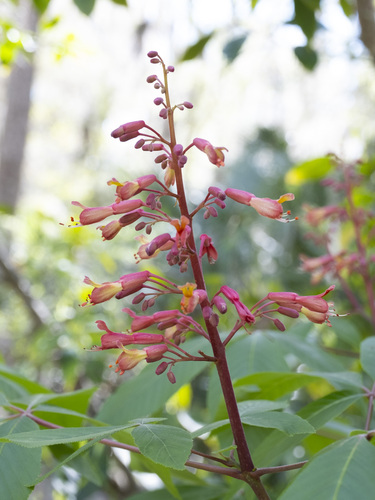
Hier kann man sehen Red Buckeye, Prairie Trillium und Largeflower Bellwort.
Führer anzeigen →
Tennessee, US
Hier kann man sehen Red Buckeye, Aniseroot und Christmas Fern.
Führer anzeigen →




.jpg&width=800)










