

Larinioides Cornutus
larinioides cornutus
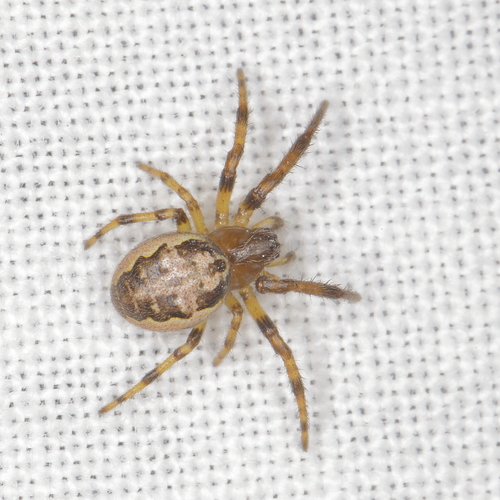
The Furrow Orbweaver, scientifically known as Larinioides cornutus, is a captivating and highly adaptable nocturnal spider commonly spotted near aquatic environments. This industrious arachnid is beloved by nature enthusiasts for its intricate web-weaving skills and its remarkable ability to coexist alongside human structures. During the day, they remain safely tucked away in silken retreats, only to emerge at dusk to construct or repair their large, geometrically perfect wheel-shaped webs. Because they are highly attracted to artificial lights that draw in insects, they frequently establish themselves near outdoor lamps, bridges, and docks. They play an essential role in regulating local flying insect populations, making them a beneficial neighbor in urban and natural wetlands alike.
Lebensraum: Commonly found in moist areas near water sources, such as lakes, rivers, and marshes, where they construct webs on reeds, tall grasses, docks, and bridge railings.
Larinioides cornutus is characterized by its bulbous, oval-shaped abdomen, which displays a distinctive wavy pattern known as a folium. This pattern is typically outlined in dark brown or black against a lighter grey, tan, or reddish-brown background, resembling deep furrows. Their legs are stout, translucent, and conspicuously banded with alternating rings of dark brown and light grey or yellow. Females are noticeably larger, measuring between 6 to 14 millimeters in body length, while the more slender males generally range from 5 to 9 millimeters.
Kategorie
InvertebrateSeltenheit
Common
Gefahr
1/5 · Sehr gering
Snaps
Mach den ersten Snap!
During the day, they hide in a silk retreat which they camouflage with plant debris or tuck into structural crevices to avoid visual predators like birds.
The species name 'cornutus' is Latin for 'horned', which refers to the distinct lobe-like shapes on the anterior portion of the spider's abdomen.
They build a brand new web almost every single day, usually taking less than an hour to complete the entire structure.
To conserve energy, this spider frequently eats its own old web at the end of the night to recycle the complex proteins and amino acids for spinning a new web.
Utilizes specialized, extra-strong bridge lines to anchor webs across large gaps over water, withstanding strong winds and rain.
Produces cryoprotective compounds (polyols and proteins) in its hemolymph, allowing it to survive sub-zero temperatures during winter.
Mainly feeds on nocturnal flying insects that emerge from or live near water bodies, catching them in vertical orb webs.
Altersunterschiede: Spiderlings eat tiny insects like gnats and fruit flies, whereas mature adults target larger aquatic flies and moths.
Chironomus plumosus
Preys heavily on this insect when it emerges in large swarms over lakes and slow-moving rivers.
Chalybion californicum
Frequently hunted by this predatory wasp to paralyze and use as food for its developing larvae.
Cyanocitta cristata
Forages on shrubs and structures near water, opportunistically feeding on orbweavers.
Für dieses Objekt sind noch keine Merkmal-Badges vergeben.
Noch keine Alternativnamen vorhanden.
Sammlungen für dieses Objekt erscheinen hier, wenn weitere Themen hinzugefügt werden.
Gefahr
1/5 · Sehr gering
Noch keine besonderen Sicherheitshinweise.
Der einfachste Weg, Larinioides Cornutus zu bestimmen, ist die Verwendung der Naturführer-App Snappit.
0+ cm
0+ kg
1+ Jahre
Mainly feeds on nocturnal flying insects that emerge from or live near water bodies, catching them in vertical orb webs.
Commonly found in moist areas near water sources, such as lakes, rivers, and marshes, where they construct webs on reeds, tall grasses, docks, and bridge railings.
Ambush
100+
Zoome hinein, um Cluster aufzulösen und zu sehen, wo dieses Objekt fotografiert wurde.
Neueste Snaps erscheinen hier, wenn neue Beobachtungen hinzukommen.














_(14534156278).jpg&width=800)


