



Lesser spot-nosed monkey
Cercopithecus petaurista
The lesser spot-nosed monkey is a playful and curious animal with a special nose that has spots! They love to swing through trees and eat fruits and leaves in their forest homes.
Lebensraum: Forests
The Lesser spot-nosed monkey has reddish-brown fur with darker limbs and a lighter belly. Its most striking feature is a distinct white triangular spot on its nose. Males often display a vibrant blue scrotal sac, making them visually unique among forest primates.
Kategorie
SäugetiereSeltenheit
Common
Gefahr
2/5 · Gering
Snaps
Mach den ersten Snap!
Each monkey's nose spot pattern is unique, like a fingerprint for identification.
Males show off a super bright blue scrotum to attract a mate!
These clever monkeys can make over ten different types of sounds to chat!
They have special pouches in their cheeks to store extra food for later snacks!
Lesser spot-nosed monkeys use their unique white nose spot to help recognize each other, crucial for troop cohesion.
Lesser spot-nosed monkeys can leap between branches using their long tail for balance, helping them move through the forest.
Lesser spot-nosed monkeys have varied calls, like chirps and barks, that help them warn their troop of danger.
These clever monkeys enjoy a varied diet of fruits, insects, and leaves found high in the forest trees.
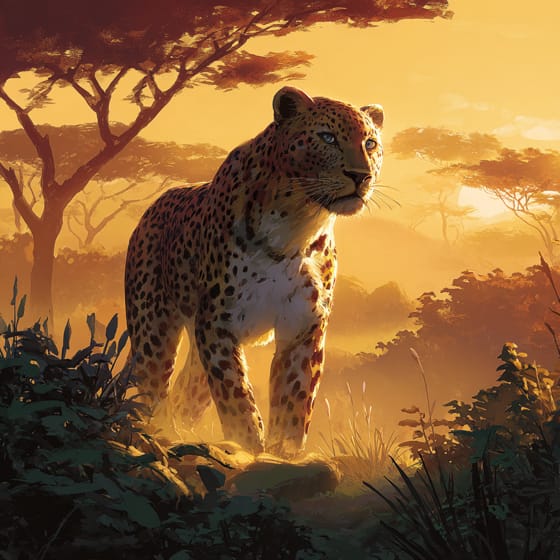
Panthera pardus
A primary predator, preying on unwary monkeys in the forest.
%2C_at_Ndumo_Nature_Reserve%2C_KwaZulu-Natal%2C_South_Africa_(28947411865).jpg&width=800)
Stephanoaetus coronatus
A powerful avian predator that can snatch monkeys from the canopy.
Ficus sur
Monkeys consume its fruits, helping to disperse seeds throughout the forest.
Spathodea campanulata
Monkeys feed on its flowers and nectar, providing them with energy.
Pelzig beschreibt Tiere, die eine dichte Schicht aus weichen Haaren oder Fell besitzen.
Mit Flecken oder farblich abgesetzten Bereichen gezeichnet.
Soziale Tiere leben in organisierten Gruppen und kooperieren, um ihr Überleben zu sichern, beispielsweise bei der Nahrungssuche, Verteidigung und Aufzucht der Jungen.
Dieses Merkmal kennzeichnet Lebewesen, deren Ernährung vollständig oder hauptsächlich aus pflanzlichem Material besteht.

Waldlebensräume sind terrestrische Lebensräume, die von dichtem Baumbestand dominiert werden und eine große Vielfalt an Pflanzen- und Tierarten beherbergen.

Tagaktive Tiere sind hauptsächlich bei Tageslicht aktiv und ruhen oder schlafen in der Regel nachts.

Der Status 'Stark gefährdet' bedeutet, dass eine Art in naher Zukunft einem sehr hohen Risiko ausgesetzt ist, in freier Wildbahn auszusterben.
Noch keine Alternativnamen vorhanden.
Gefahr
2/5 · Gering
Always watch these monkeys from a distance and never try to touch or feed them.
40-50 cm
2.5-4.5 kg
15-25 Jahre
30 km/h
These clever monkeys enjoy a varied diet of fruits, insects, and leaves found high in the forest trees.
Forests
Foraging
1
Zoome hinein, um Cluster aufzulösen und zu sehen, wo dieses Objekt fotografiert wurde.
Neueste Snaps erscheinen hier, wenn neue Beobachtungen hinzukommen.







%2C_Almuradiel%2C_Ciudad_Real%2C_Espa%C3%B1a%2C_2021-12-19%2C_DD_07.jpg&width=800)