
.jpeg&width=800)





Mainland Clouded Leopard
neofelis nebulosa
The Mainland Clouded Leopard is a beautiful big cat with large, cloud-like spots on its fur. It loves to climb trees and is a great hunter in the forests of Southeast Asia!
Lebensraum: Tropical and subtropical forests in Southeast Asia.
The Mainland Clouded Leopard has a gorgeous yellowish-brown to greyish coat covered in distinctive black-bordered, cloud-like markings. It possesses a very long, thick tail and relatively short, powerful legs. Its unique markings and stocky build differentiate it from other forest cats.
Kategorie
SäugetiereSeltenheit
Common
Gefahr
3/5 · Mittel
Snaps
Mach den ersten Snap!
Despite their name, they are not actually "true" leopards, but a distinct ancient cat species.
Their "cloud" spots are unique to each cat, like a fingerprint, helping scientists tell them apart!
Their long canine teeth are bigger proportionally than even a tiger's, perfect for piercing prey!
They can hang upside down from branches using just their back paws, like a giant jungle gymnast!
Mainland Clouded Leopards can rotate their ankles 180 degrees, allowing them to climb down trees headfirst like a squirrel.
Mainland Clouded Leopards have a tail almost as long as their body, which acts as a perfect counterweight for incredible agility in trees.
Mainland Clouded Leopards have the longest canine teeth relative to their body size of any living wild cat, helping them secure prey.
A silent hunter, it pounces on small mammals and birds in the forest canopy and on the ground.
Macaca mulatta
Preys on these monkeys in the forest canopy.
Axis porcinus
Hunts smaller deer found in their forest habitat.
.jpg&width=800)
Manis pentadactyla
Preys on pangolins on the forest floor.
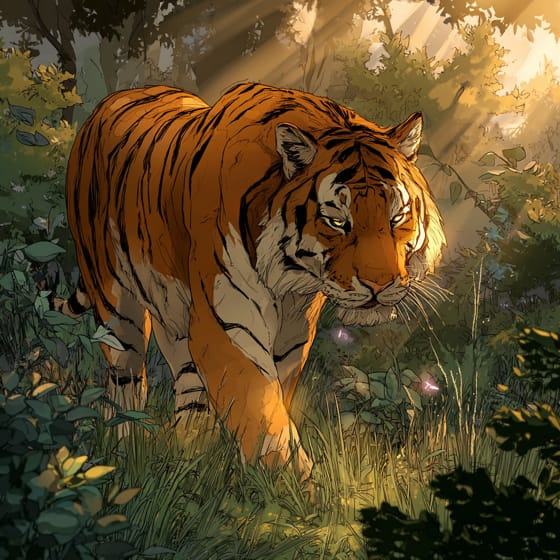
Panthera tigris
Adult tigers may occasionally prey on juvenile clouded leopards.
Mit Flecken oder farblich abgesetzten Bereichen gezeichnet.
Einzelgänger leben den größten Teil ihres Lebens allein und interagieren mit Artgenossen nur zur Paarung oder zur Aufzucht der Jungen.
Baumbewohnende Tiere leben hauptsächlich in Bäumen und nutzen diese als Unterschlupf, Nahrungsquelle und zum Schutz vor Raubtieren.
Dieses Merkmal kennzeichnet Organismen, deren Ernährung vollständig oder hauptsächlich aus tierischem Gewebe besteht.

Nachtaktive Tiere sind hauptsächlich in den Nachtstunden aktiv und ruhen oder schlafen normalerweise tagsüber.
Gefahr
3/5 · Mittel
Noch keine besonderen Sicherheitshinweise.
60-110 cm
11-23 kg
10-18 Jahre
50 km/h
A silent hunter, it pounces on small mammals and birds in the forest canopy and on the ground.
Tropical and subtropical forests in Southeast Asia.
Ambush
1-5
Zoome hinein, um Cluster aufzulösen und zu sehen, wo dieses Objekt fotografiert wurde.
Neueste Snaps erscheinen hier, wenn neue Beobachtungen hinzukommen.

Tennessee, US
Hier kann man sehen Parachromis Managuensis, Giraffen und Common Ostrich.
Führer anzeigen →

Arkansas, US
Hier kann man sehen Afrikanischer Löwe, Rotfuchs und Common Ostrich.
Führer anzeigen →
Ohio, US
Hier kann man sehen Afrikanischer Löwe, Giraffen und Grauwolf.
Führer anzeigen →
Georgia, US
Hier kann man sehen Afrikanischer Löwe, Giraffen und Common Ostrich.
Führer anzeigen →
Texas, US
Hier kann man sehen Afrikanischer Löwe, Komodowaran und Common Ostrich.
Führer anzeigen →
Alabama, US
Hier kann man sehen Afrikanischer Löwe, Komodowaran und Common Ostrich.
Führer anzeigen →














.jpg&width=800)
