Malagasy giant rat
Hypogeomys antimena
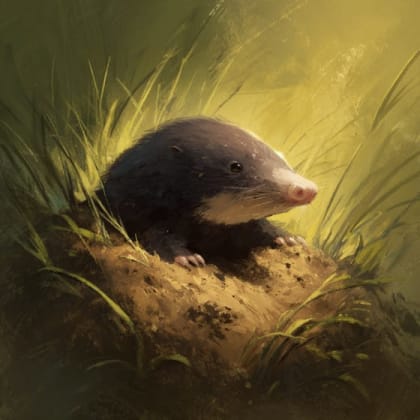
The Malagasy giant rat is a big, fluffy rodent from Madagascar! It loves to dig and find tasty roots and fruits in its forest home. These special rats are very friendly and curious.
Lebensraum: Forests
The Malagasy giant rat has a distinct appearance with large ears, big eyes, and powerful, long hind legs designed for hopping. Its soft fur is grey-brown on top, fading to white underneath, and it has a long, mostly hairless tail.
Kategorie
SäugetiereSeltenheit
Rare
Gefahr
1/5 · Sehr gering
Snaps
Mach den ersten Snap!
Malagasy giant rats can leap over one meter, almost like a mini kangaroo!
They often clean each other's fur, a sign of their strong family bonds!
They only live in a tiny part of Madagascar, making them super rare!
This rat is one of the largest rodents in the world!
Malagasy giant rat can leap like a rabbit because its powerful hind legs help it escape danger quickly.
Malagasy giant rat can dig intricate tunnel systems that provide safe homes and nurseries for its family.
Malagasy giant rat has big ears and eyes that help them find food and spot predators in the dark forest.
Malagasy giant rat can stay with the same partner for life, raising babies together in their shared burrow.
They munch on plants, finding fruits, leaves, and roots to keep their energy up!
Altersunterschiede: Young rats drink mother's milk and gradually start eating solid plant foods.

Cryptoprocta ferox
Its main natural predator in the Malagasy forests.
Tyto alba
Hunts the giant rat, especially vulnerable young, from the air.
Felis catus
An introduced predator, posing a significant threat to populations.
Pelzig beschreibt Tiere, die eine dichte Schicht aus weichen Haaren oder Fell besitzen.
Soziale Tiere leben in organisierten Gruppen und kooperieren, um ihr Überleben zu sichern, beispielsweise bei der Nahrungssuche, Verteidigung und Aufzucht der Jungen.
Grabende Tiere heben Tunnel und Kammern im Erdboden aus und nutzen diese unterirdischen Strukturen als Unterschlupf, zur Jagd oder zur Fortpflanzung.
Dieses Merkmal kennzeichnet Lebewesen, deren Ernährung vollständig oder hauptsächlich aus pflanzlichem Material besteht.

Waldlebensräume sind terrestrische Lebensräume, die von dichtem Baumbestand dominiert werden und eine große Vielfalt an Pflanzen- und Tierarten beherbergen.

Riesig beschreibt Organismen oder Objekte, die deutlich größer sind als der Durchschnitt ihrer Art oder ihres Typs.

Der Status 'Gefährdet' bedeutet, dass eine Art ohne wirksame Schutzmaßnahmen in absehbarer Zukunft vom Aussterben bedroht sein wird.
Noch keine Alternativnamen vorhanden.
Gefahr
1/5 · Sehr gering
Always watch from a distance and don't try to touch wild animals.
50-60 cm
1-1.5 kg
5-8 Jahre
18 km/h
They munch on plants, finding fruits, leaves, and roots to keep their energy up!
Forests
Foraging
1-2
Zoome hinein, um Cluster aufzulösen und zu sehen, wo dieses Objekt fotografiert wurde.
Neueste Snaps erscheinen hier, wenn neue Beobachtungen hinzukommen.










.jpg&width=800)