Mata mata
Chelus fimbriatus
The mata mata is a unique turtle that looks like a piece of wood or a leaf! It has a flat, wide shell and a funny face, making it one of the most interesting turtles in the world.
Lebensraum: Wetlands
The Mata mata has an incredibly flat, triangular head with a distinctive snorkel-like snout and a wide, frog-like mouth. Its irregular, bumpy shell and rough, leafy skin flaps provide exceptional camouflage, making it look like a pile of decaying leaves on the riverbed.
Kategorie
ReptilienSeltenheit
Rare
Gefahr
1/5 · Sehr gering
Snaps
Mach den ersten Snap!
Its super-flat, leaf-like head makes it perfectly invisible among river debris.
Mata matas smell prey by sensing tiny chemicals in the water.
They never chase food, instead patiently waiting for hours to ambush unlucky fish.
This turtle cannot pull its head completely inside its shell for protection.
Mata mata has rough, leaf-like skin and a bumpy shell that help them camouflage perfectly among riverbed debris.
Mata mata can suddenly open its wide mouth, creating a powerful vacuum that sucks in unsuspecting fish and prey instantly.
Mata mata has a tube-like snout that works like a snorkel, letting it breathe air while remaining completely hidden underwater.
This sneaky turtle waits perfectly still to ambush small fish and amphibians with a quick gulp!
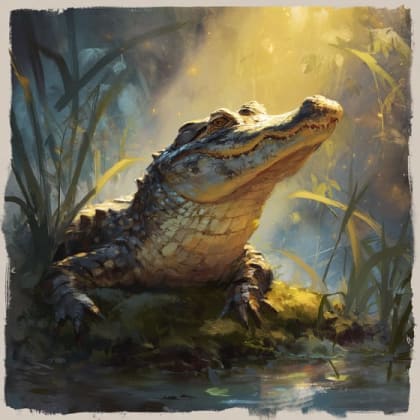
Caiman crocodilus
Juvenile Mata matas can be prey for caimans.
Eunectes murinus
Large anacondas may prey on adult Mata matas.
Hyphessobrycon herbertaxelrodi
One of many small fish species hunted by the turtle.
Rhinella marina
Mata matas ambush tadpoles of various amphibian species.
Einzelgänger leben den größten Teil ihres Lebens allein und interagieren mit Artgenossen nur zur Paarung oder zur Aufzucht der Jungen.
Fischfressende Organismen sind Tiere, die sich hauptsächlich von Fisch ernähren.
Getarnt beschreibt Organismen, die über eine Färbung oder Musterung verfügen, durch die sie mit ihrer Umgebung verschmelzen.
Dieses Lebensraummerkmal kennzeichnet Arten, die in Feuchtgebieten vorkommen. Dies sind Landflächen, die dauerhaft oder saisonal mit Wasser gesättigt sind, darunter Marschland, Sümpfe und Moore.

Ein Lauerjäger jagt, indem er geduldig wartet und sich versteckt, um dann einen plötzlichen Angriff zu starten, wenn arglose Beute in Reichweite kommt.

Dieses Merkmal kennzeichnet Organismen, deren Ernährung vollständig oder hauptsächlich aus tierischem Gewebe besteht.

Aquatische Lebensräume umfassen Umgebungen, in denen Organismen überwiegend im Wasser leben, darunter Ozeane, Flüsse, Seen und Feuchtgebiete.

Der Status 'Stark gefährdet' bedeutet, dass eine Art in naher Zukunft einem sehr hohen Risiko ausgesetzt ist, in freier Wildbahn auszusterben.
Gefahr
1/5 · Sehr gering
Always watch turtles from a distance and never try to touch them in the wild.
30-50 cm
1-5 kg
15-30 Jahre
0.2 km/h
This sneaky turtle waits perfectly still to ambush small fish and amphibians with a quick gulp!
0.5 km/h
Wetlands
Ambush
Zoome hinein, um Cluster aufzulösen und zu sehen, wo dieses Objekt fotografiert wurde.
Neueste Snaps erscheinen hier, wenn neue Beobachtungen hinzukommen.