Morning-glory Plume Moth
Emmelina monodactyla
The Morning-glory Plume Moth is a tiny, delicate moth with long, feather-like wings. It loves to flutter around morning-glory flowers, making it a beautiful sight in gardens.
Lebensraum: Urban areas
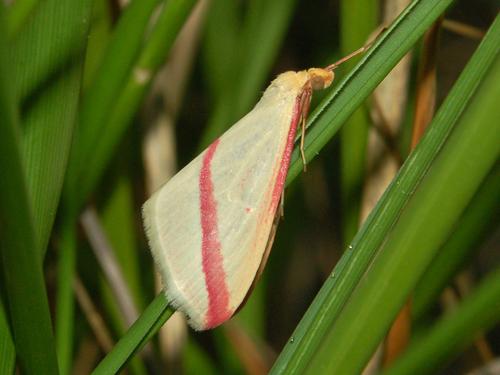
The Morning-glory Plume Moth has a slender, pale brown or grayish body and distinctive wings. Each of its forewings and hindwings are deeply split into feathery plumes, giving them a delicate, fragmented appearance unlike typical solid moth wings. It often rests in a unique 'T-shape' posture.
Kategorie
InsektenSeltenheit
Common
Gefahr
1/5 · Sehr gering
Snaps
Mach den ersten Snap!
Caterpillars munch on plants that are related to sweet potatoes!
Even in winter, you might spot an adult Morning-glory Plume Moth!
Its wings are split into six separate feathery plumes!
This moth rests with its wings wide open, looking like a tiny airplane!
Morning-glory Plume Moth has deeply split, feather-like wings that help them glide and maneuver through dense vegetation with agility.
Morning-glory Plume Moth can rest with its wings extended in a 'T' shape, making it look like a twig or dried leaf to avoid predators.
Morning-glory Plume Moth caterpillars can eat common weed plants like bindweed, helping to control these fast-growing vines in gardens.
Morning-glory Plume Moths can overwinter as adults, allowing them to appear earlier in spring than many other insect species.
Caterpillars munch on morning-glory and bindweed leaves, while adults rarely eat.
Altersunterschiede: Caterpillars actively feed on host plants; adults primarily reproduce and consume little to no food.
.jpg&width=800)
Convolvulus arvensis
Caterpillars feed on its leaves.

Ipomoea purpurea
Larvae consume its foliage.
Calystegia sepium
A primary food source for larvae.
Myotis lucifugus
Bats are common nocturnal predators.
Turdus migratorius
Birds may prey on resting adults.
Gefiedert beschreibt Tiere, hauptsächlich Vögel, die ein Federkleid besitzen.
Einzelgänger leben den größten Teil ihres Lebens allein und interagieren mit Artgenossen nur zur Paarung oder zur Aufzucht der Jungen.
Beschreibt Pflanzen, die für eine Vielzahl von bestäubenden Organismen besonders attraktiv und nützlich sind.
Getarnt beschreibt Organismen, die über eine Färbung oder Musterung verfügen, durch die sie mit ihrer Umgebung verschmelzen.

Dieses Merkmal kennzeichnet Lebewesen, deren Ernährung vollständig oder hauptsächlich aus pflanzlichem Material besteht.

Tagaktive Tiere sind hauptsächlich bei Tageslicht aktiv und ruhen oder schlafen in der Regel nachts.

Dieses Lebensraummerkmal weist auf Arten hin, die in städtischen und vorstädtischen Umgebungen mit Menschen zusammenleben können und von Menschen geschaffene Strukturen sowie Grünflächen nutzen.

Beschreibt Organismen, die Pollen übertragen und so die Befruchtung und Fortpflanzung von Pflanzen ermöglichen.
Noch keine Alternativnamen vorhanden.
Gefahr
1/5 · Sehr gering
Always watch moths from a distance and don't touch them, as they are delicate.
22-26 mm
10-14 mm
14-60 Tage
Caterpillars munch on morning-glory and bindweed leaves, while adults rarely eat.
Urban areas
Foraging
6
Zoome hinein, um Cluster aufzulösen und zu sehen, wo dieses Objekt fotografiert wurde.
Neueste Snaps erscheinen hier, wenn neue Beobachtungen hinzukommen.






_(8-2-12)_san_rafael_grassland%2C_scc%2C_az_-01_(7701313806).jpg&width=800)